Author: sitemill

  • Outbound and the Gentle Art of the Off-Grid Road Trip

    Outbound and the Gentle Art of the Off-Grid Road Trip

    Survival-crafting games almost always rely on the threat of death to keep you moving. They drop you into a hostile wilderness and demand that you struggle against starvation, wildlife, or zombies just to secure a basic wooden shack. Outbound completely rejects this anxiety. Instead of fighting a hostile environment, your main goal is to build a cozy, sustainable tiny home on top of an electric camper van, powered entirely by wind, sun, and water. It is a game about the quiet joy of off-grid living, where the road ahead is your only real guide.

    At its core, Outbound plays like a land-bound relative of the ocean survival game Raft. You begin with a completely empty vehicle and a vast, colorful, utopian world to explore. Your progression is tied directly to your vehicle’s upgrades. Using a modular building system, you physically construct your living space on and around your van. You can install solar panels to power your crafting stations, build small garden plots on the roof to grow mushrooms and vegetables, and decorate the interior with custom furniture to make it feel like home. The loop is simple: drive to a new biome, park, harvest resources, upgrade your mobile base, and move on.

    This lack of traditional survival pressure is exactly what makes the game stand out, but it also creates its own unique friction. According to player reviews, the game is incredibly meditative. There are no enemies to fight and no ticking clocks to worry about, allowing players to sink dozens of hours into simply optimizing their mobile power grids or customizing their interior layouts. The developers have also built in wholesome touches, like the ability to adopt, pet, and train a companion animal from the Paws & Whiskers Lodge to help you gather materials.

    Outbound gameplay screenshot
    Image courtesy of Square Glade Games via Steam

    However, this stress-free environment comes with a catch. Some players note that without any external threat or narrative push, Outbound can sometimes feel like it lacks urgency. If you play solo, the silence of the road can occasionally cross the line from peaceful to lonely. Currently, the world is entirely devoid of non-player characters (NPCs)—a detail that feels a bit eerie to some, though players have humorously rationalized it by imagining that the rest of humanity has moved on to airships while they stick to the old roads. The developer has confirmed that NPCs are on the roadmap, but for now, the world can feel a bit empty.

    The game’s pacing also faces some early-game speed bumps. Players have pointed out that the initial hours can feel like a grind, particularly when managing fuel and raw materials like wood and clay. Fortunately, the developers have been highly responsive, quickly pushing patches to rebalance resources (such as easing the clay grind) shortly after launch. Once you push past the early stages and transition to clean energy like wind and solar, the resource bottlenecks largely disappear, and the game’s automation loop truly begins to sing.

    Where Outbound truly shines is in co-op. Playing with up to four players—or as a cozy duo—turns the journey into a shared road trip. Cooperatively dividing up the labor of cooking, driving, and building makes the lack of NPCs far less noticeable and turns the modular van-building into a collaborative puzzle. If you have a partner to share the driver’s seat with, the chill vibes and steady progression make it incredibly easy to lose track of time.

    The Verdict

    Outbound is a charming, low-stress simulation of the ultimate van-life fantasy. It won’t satisfy players looking for a punishing survival challenge or a deep, story-driven RPG. But if you want a beautiful, slow-paced crafting game to play with a partner, or a cozy virtual space to design your dream home on wheels while listening to the wind, Outbound is a trip worth taking.

    Key Facts

    • Developer: Square Glade Games
    • Publisher: Square Glade Games
    • Release Date: May 11, 2026
    • Price: $22.49
  • Greenhearth Necromancer: The Cozy Garden of Death That Welcomes Your Mistakes

    Greenhearth Necromancer: The Cozy Garden of Death That Welcomes Your Mistakes

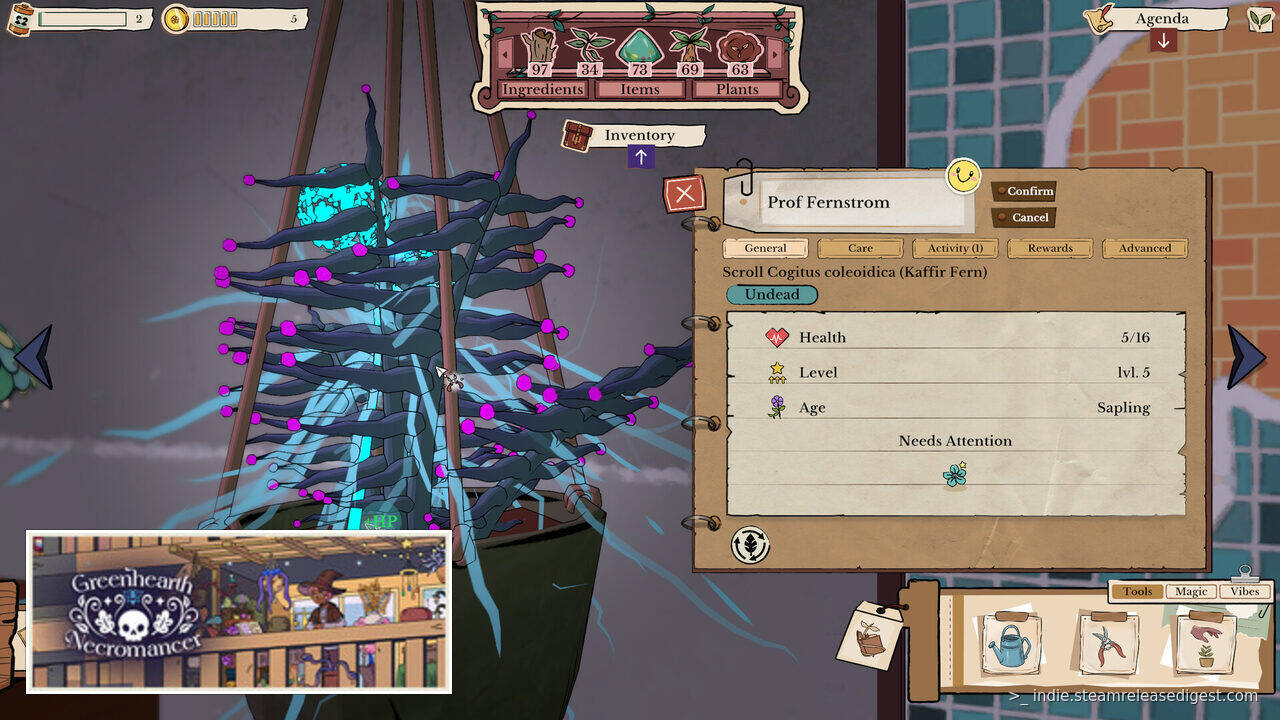
    You stand on a cramped apartment balcony, looking down at a withered, brown sprout that you forgot to water. In any other gardening game, this would be a failure—a waste of time and digital seeds. But here, you simply channel a burst of dark energy, and with a quiet crackle of magic, the shriveled plant shudders back to (un)life, its leaves taking on a beautiful, spectral glow. Standing beside you, a friendly garden spirit named Compostifer looks on in silent, leafy approval.

    This is the strange, comforting loop of Greenhearth Necromancer, a “semi-idle” simulation game about tending your late grandmother’s balcony. You play as a young necromancer who, lacking her legendary green thumb, must rely on the dark arts to keep her beloved garden thriving—or rather, haunting. It is a game that deliberately redefines failure, making every dead leaf the start of a new, magical transformation.

    Cultivating the Afterlife

    At its heart, Greenhearth Necromancer is designed to be a companion to your daily routine. The gameplay balances light, active management with long stretches of peaceful observation. You water your living flora, apply fertilizer, ward off common pests, and learn spells to alter plant traits or speed up growth. But when you inevitably neglect them, death is not the end. Resurrecting your withered crops unlocks unique undead traits and yields that you can use to brew magical potions and advance your late grandmother’s research.

    The game’s pacing is explicitly “semi-idle.” Unlike mobile idle games that continue to stack up resources and progress while you are completely offline, Greenhearth Necromancer requires the game to be running. It is meant to sit comfortably on a second monitor while you work, study, or take care of daily chores. It even features a built-in music player that lets you customize the atmosphere, shifting from relaxing lofi beats to productivity-focused drum and bass depending on your real-life task.

    Greenhearth Necromancer gameplay screenshot
    Image courtesy of Silverstring Media Inc. via Steam

    What Players Love (and What They Don’t)

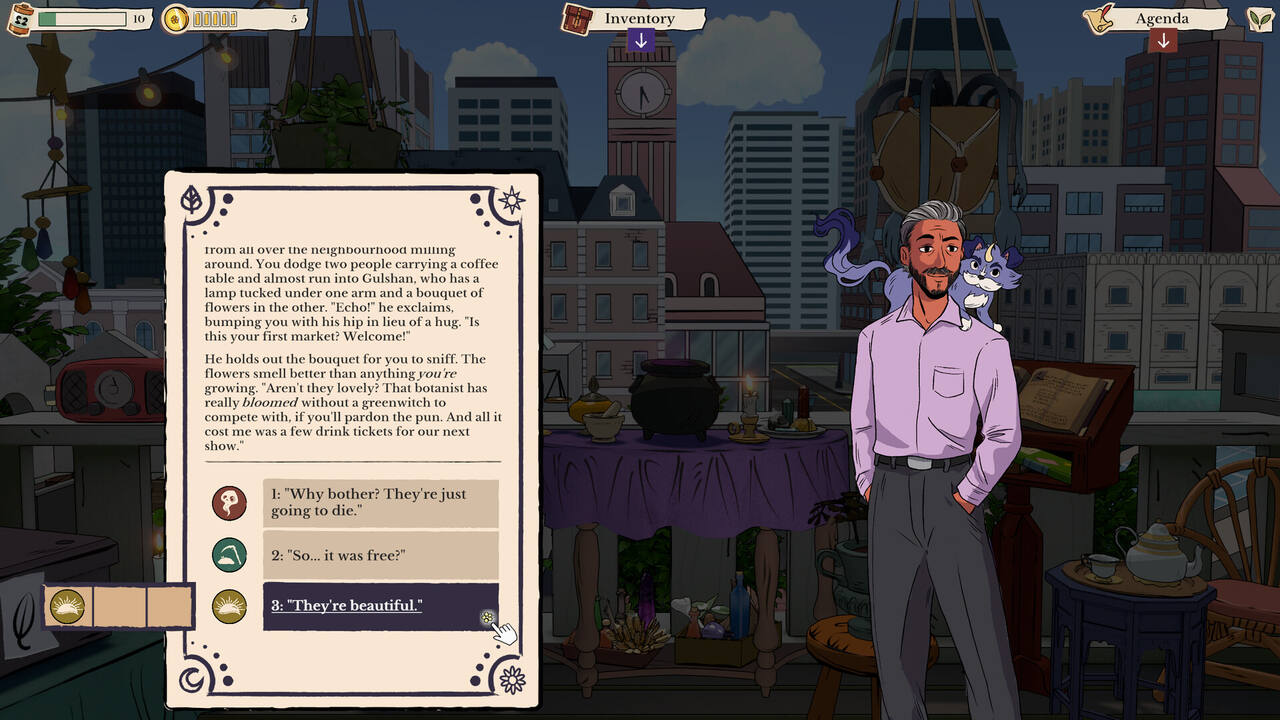
    With an overwhelmingly positive reception on Steam, the game has clearly struck a chord with cozy gaming enthusiasts. Players frequently praise the game’s emotional core, which features a heartfelt narrative penned by the BAFTA-nominated writer behind I Was a Teenage Exocolonist. The story deals gently but honestly with themes of grief, community, and the awkward transitions of early adulthood. Players note that the dialogue with neighbors feels rewarding, offering useful progression items no matter how you choose to respond.

    The visual charm of the undead plants and the presence of Compostifer have also won over many fans. For players who struggle to keep real-world houseplants alive, the game offers a guilt-free sanctuary where neglect is actively rewarded. It has become a favorite background companion for players managing busy real lives—whether they are keeping the game running between infant nap times or letting it idle during tabletop D&D sessions.

    However, the game’s distinct rhythm has caused minor friction for some. Players expecting a traditional idle game have been disappointed to find that resources do not accumulate while offline; you must keep the application open to progress. On the other end of the spectrum, some active players wish there was a faster-paced “story mode” that allowed them to actively visit other apartments or visually explore the wider neighborhood, rather than interacting with NPCs purely through text interfaces. There are also passionate pleas for the developer to add more plant pots, as dedicated gardeners quickly run out of space for their growing undead collections.

    The Verdict

    Greenhearth Necromancer is a brilliant “second-monitor game.” If you are looking for a high-intensity management simulator or an offline idle clicker that plays itself, you will likely find the pacing frustratingly slow or the systems too passive. But if you want a beautiful, low-pressure backdrop for your workday—something that blends the melancholy of grief with the warmth of a cozy community—this witchy balcony is well worth tending.

    Key Facts

    • Developer: Silverstring Media Inc.
    • Publisher: indie.io
    • Release Date: May 11, 2026
    • Price: $8.79
  • Red Door Yellow Door: Escaping the Creepiest, Shifting Ikea Maze of the Mind

    Red Door Yellow Door: Escaping the Creepiest, Shifting Ikea Maze of the Mind

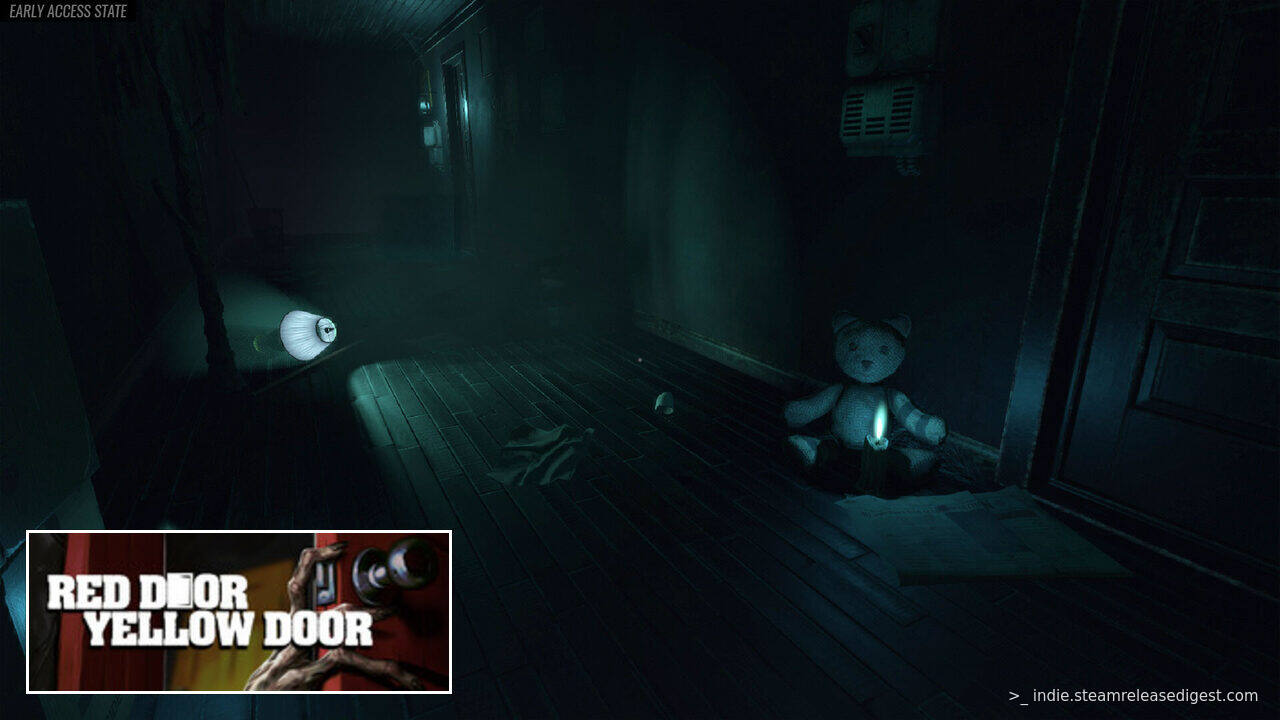
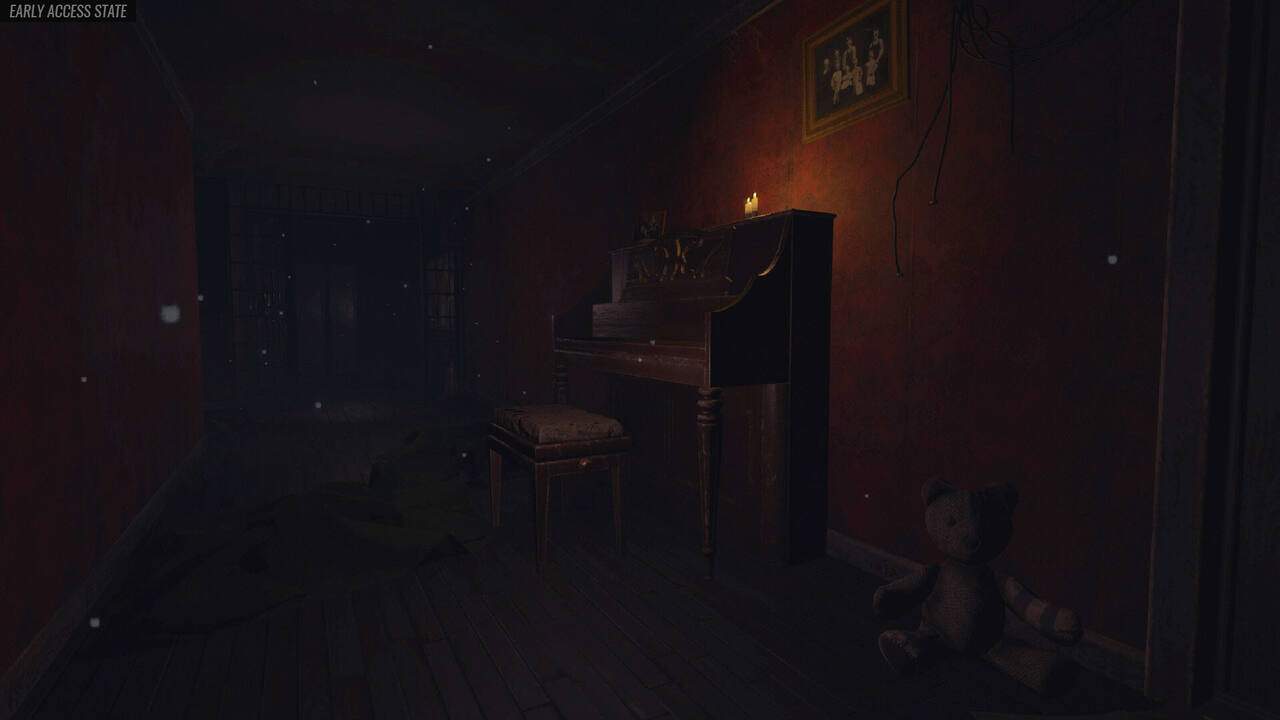
    Playing Red Door Yellow Door feels less like navigating a traditional haunted house and more like being trapped inside a supernatural Ikea showroom that actively rearranges itself behind your back. One moment you are walking down a dimly lit corridor, and the next, the doorway you just exited has vanished, replaced by a solid wall or an identical room that makes you question your own memory. It is a disorienting, deeply atmospheric experience that leverages the unpredictability of procedural generation to keep players perpetually off-balance.

    The Mechanics of Mind Games

    At its core, Red Door Yellow Door challenges you to escape an ever-changing labyrinth representing your own subconscious. The game drops you into these shifting corridors with zero instructions. You are forced to observe your surroundings, figure out puzzles on the fly, and complete unspecified tasks to find a way out. This complete lack of hand-holding creates a genuine sense of vulnerability. You never know if the lever you just pulled opened an exit or unlocked something far worse.

    You are not alone in this maze. Relentless creatures patrol the hallways, and they are highly reactive—they can hear you, see you, and track your movements. However, Red Door Yellow Door avoids the tedious “hide-in-a-locker” loop that plagues so many modern horror titles. Instead, players can actually mitigate or even destroy many of the monsters hunting them. This mechanical layer transforms the game from a passive stress simulator into an active, strategic puzzle where you must weigh the risk of confronting a creature against the cost of sneaking around it.

    Red Door Yellow Door gameplay screenshot
    Image courtesy of Burnout Industries UG via Steam

    High Performance and Early Access Quirks

    From a technical standpoint, the game is built on Unity and runs remarkably well. Players report getting smooth performance, often clocking between 150 to 200 frames per second. For a horror game where a sudden stutter can mean the difference between dodging a monster and a sudden death screen, this level of optimization is highly appreciated. Furthermore, the developer has opted for a slow-burn creepiness over cheap jump scares and quick-time events, allowing the eerie, ghoulish environment to do the heavy lifting.

    However, because the game is currently in Early Access, it still has some rough edges. The procedural generation, while effective at keeping layouts fresh, occasionally stumbles. Players have noted instances of walking into identical rooms back-to-back, which can temporarily break the illusion of an infinite, organic maze. There are also minor optical glitches, and the absolute lack of context at the beginning has polarized some players. While many enjoy the mystery of figuring out who they are and what they are trying to achieve, others have found the lack of direction frustratingly obscure, with one reviewer simply dismissing the experience as “unclear.” Additionally, players are already clamoring for a wider variety of rooms, more diverse monster designs, and unique death animations to flesh out the game’s replayability.

    It is also worth noting that the developers have a dark sense of humor. Tucked away in this psychological horror landscape is an Easter egg featuring a horrifying representation of pineapple pizza—a detail that players have hilariously called “the most gruesome thing ever” and proof that the creator has “no mercy.” It is this kind of charming, indie quirkiness that prevents the game’s tense atmosphere from becoming overwhelmingly bleak.

    The Verdict

    Red Door Yellow Door is an easy recommendation for horror fans who are tired of scripted jump scares and linear hallways. If you enjoy the challenge of figuring out mechanics on your own, don’t mind a few Early Access rough spots, and love the tension of a shifting layout, this $7.99 title offers a highly replayable and genuinely creepy loop. However, if you require a clear narrative structure, hand-holding tutorials, or a fully polished, final-release experience, you might want to wait until it spends a bit more time in the development oven.

    Key Facts

    • Developer: Burnout Industries UG
    • Publisher: Burnout Industries UG
    • Release Date: May 8, 2026
    • Price: $7.99
  • Rogue Voltage: Sparking Chaos in the Ultimate Engineering Roguelike

    Rogue Voltage: Sparking Chaos in the Ultimate Engineering Roguelike

    Rogue Voltage: Engineering the Perfect Roguelike Disaster

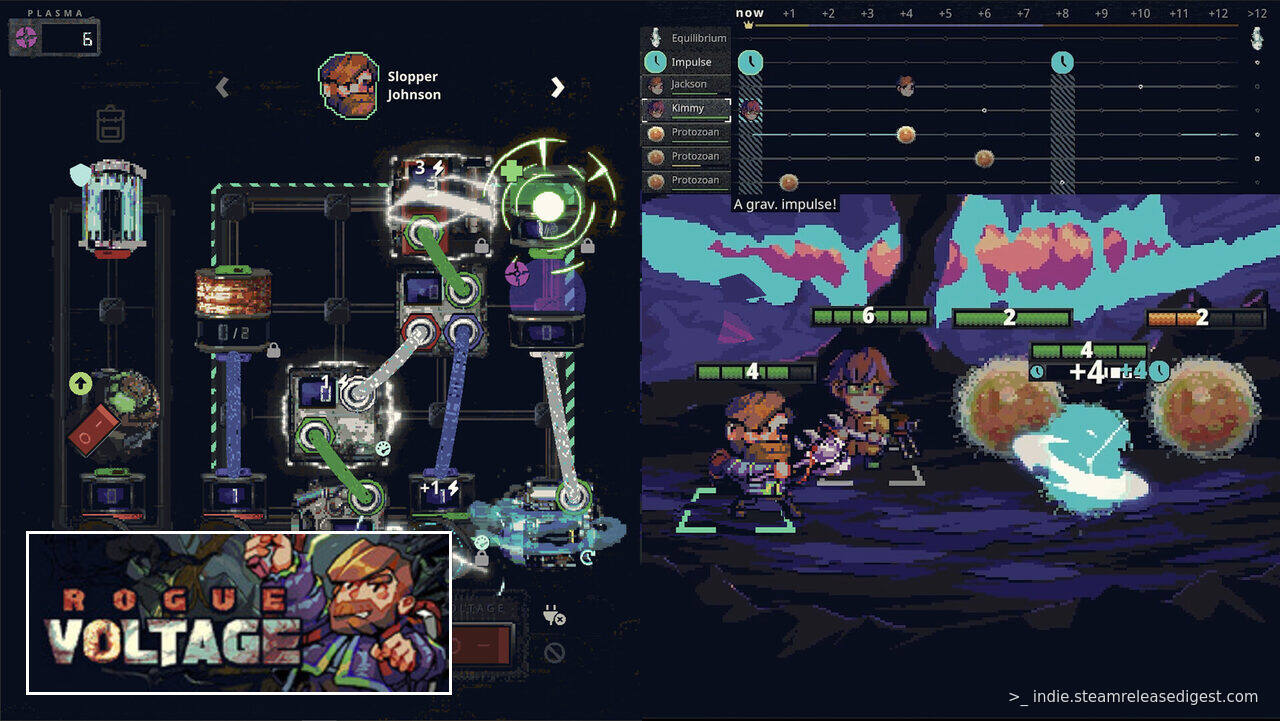
    Most roguelikes ask you to collect cards or pick up passive items. Rogue Voltage asks you to be an electrical engineer, a mad scientist, and a tactical mastermind all at once. If you’ve ever looked at a complex breadboard and thought, “This would be much more effective if it could incinerate a goblin,” then you have finally found your home.

    In a gaming landscape cluttered with “deckbuilder” clones, Rogue Voltage stands out by literally ripping up the deck and replacing it with a box of circuit components. You aren’t just playing cards; you are wiring up individual modules—energy generators, amplifiers, converters—to create a machine that doesn’t just function, but absolutely explodes with synergistic potential.

    More Than Just Wires and Volts

    The core loop is brilliant in its simplicity and deep in its execution. Every turn, you are managing a precarious flow of energy. Do you dump your current charge into a blaster, or store it in a battery to unleash a massive, screen-clearing feedback loop next turn? The game introduces a timeline manipulation mechanic that is nothing short of genius. You can push, pull, and delay actions, letting you dodge a lightning strike or throw an enemy into a “Grav-Spike” at the exact moment it hurts the most.

    The “engineering” aspect isn’t just flavor text. The game enforces a harsh reality: no single module is powerful on its own. You are forced to combine disparate pieces—a resistor here, an amplifier there—to turn junk into a weapon of mass destruction. When you finally hit that perfect combination and watch the energy cascade through your circuits, triggering a chain reaction that deletes a boss in a single turn, the dopamine hit is instantaneous. It makes you feel like you’ve hacked the game itself.

    What the Community Thinks: Gritty Complexity vs. Design Hiccups

    The feedback for Rogue Voltage is overwhelmingly positive, sitting at a glowing 97% approval rating, and it’s easy to see why. Players are obsessed with the mechanical depth. There is a genuine sense of discovery as you find new synergies, and the freedom to craft custom characters and upgrade your home base adds a satisfying layer of permanence to the chaos.

    However, it isn’t perfect. The game demands a lot of you; it’s a “thinker” that doesn’t hold your hand. Some players have voiced frustration regarding the end-game loop. Specifically, there’s a recurring complaint about the late-game economy—accumulating resources like Plasma that become effectively useless toward the end of a run, making those final stretches feel a bit hollow. While the core system is rock-solid, those looking for a perfectly polished progression curve might find the current meta-unlock system a little stingy at high levels.

    The Verdict: Who Should Play This?

    If you are a fan of Slay the Spire but find yourself bored by the card-drawing monotony, Rogue Voltage is the palate cleanser you need. It is for the tinkerers, the builders, and the players who enjoy “breaking” a game by discovering an accidental interaction that turns them into a god. It requires patience and a willingness to learn, but for $9.91, the sheer amount of mechanical innovation on display is staggering.

    This is a game for people who prefer depth over flashy cinematics. It’s for the players who want to spend fifteen minutes in a shop menu, fine-tuning their build, only to watch it pay off in a spectacular display of digital fireworks. If that sounds like your weekend, plug in and get to work.

    Key Facts

    • Developer: Horizont Computergrafik
    • Release Date: May 1, 2026
    • Price: $9.91
    • Genres: Indie, RPG, Simulation, Strategy
    • Platform: PC (Steam)
  • CHESST and the Art of the Magical Bluff

    CHESST and the Art of the Magical Bluff

    Your opponent slides their Rook across the board, but it isn’t traveling alone. A tiny pixelated pawn is riding piggyback on top of it, hitching a ride via the “Rook Express” to land deep inside your territory. You move your Sage to capture the threat, only to trigger a hidden magical artifact tucked inside the pawn’s chest. Suddenly, your carefully planned defense evaporates. In this fantasy variant, every pawn is a literal treasure chest of hidden rules, and your opponent’s bluff just cost you the game.

    Developed by Ancient Moai Cooperative, the game takes the ancient game of chess and wraps it in a cozy, pixelated shroud of fantasy and hidden-information mechanics. The most radical shift is the complete elimination of check and checkmate. Here, kings are simply captured like any other piece. Traditional bishops are gone, replaced by Sages and Sorcerers, and players can win through two distinct victory conditions rather than just one.

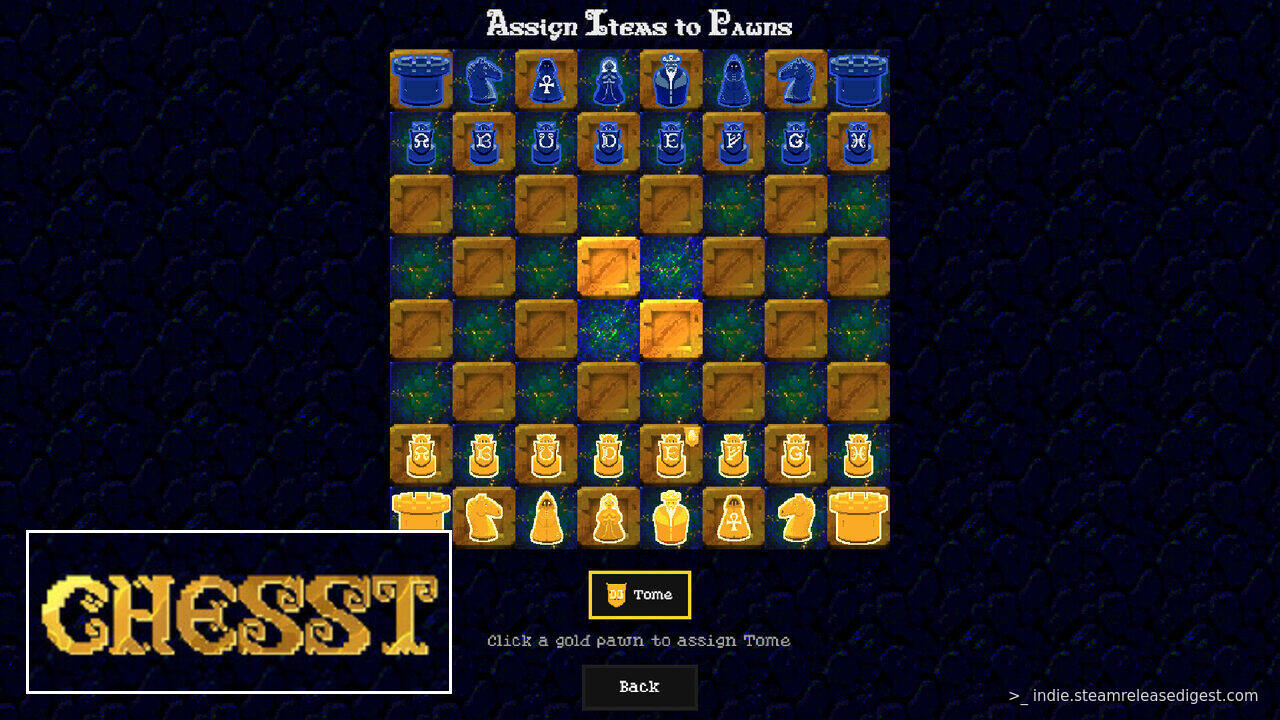
    Before a match begins, players visit the Magic Item Mart. Here, you can secretively equip up to three of your pawns with one of seven distinct magical items. Because your opponent cannot see which pawns are armed and which are ordinary, the opening phase of the game transforms into a psychological battle of bluffing and deduction. Only you know which chests are empty and which carry mighty secrets. To add to the tactical chaos, pawns can hitch rides on Rooks to cross the board instantly, and players can work toward hatching dragons or transforming pesky enemy threats into harmless unicorns.

    CHESST gameplay screenshot
    Image courtesy of ANCIENT MOAI COOPERATIVE via Steam

    A Delightful Twist with a Learning Curve

    With its warm, nostalgic 2D pixel art and a soundtrack players describe as “chill and regal,” the game cultivates a surprisingly cozy atmosphere for a competitive strategy game. However, early player feedback highlights a crucial friction point: you cannot play this like traditional chess. Those who skip the rules and jump straight into a match find themselves utterly bewildered by how pieces move and interact. The replacement of bishops with the Sage and Sorcerer, in particular, completely upends traditional board control and can frustrate players who expect standard FIDE rules.

    Thankfully, the developers have included an easy-to-follow, graphic-heavy in-game guide to ease the transition. Players who take the few minutes required to read it find a deeply rewarding and balanced experience. The magical buffs do not make matches overly easy or chaotic; instead, they are offset by nerfs to other standard pieces, keeping matches tight and strategically diverse. Furthermore, with millions of potential starting configurations, the game actively prevents players from relying on memorized opening book moves, leveling the playing field for newcomers and veterans alike.

    Designed primarily as a local experience, the game relies on pass-and-play multiplayer. There are no online matchmaking lobbies or strangers here; it is built for sharing a screen across a couch, a kitchen table, or a quiet café. For solo players, a built-in AI offers three distinct difficulty tiers named Jester, Bard, and Wizard, allowing you to test your strategies in private before springing your traps on a friend.

    The Verdict

    This is not a game designed to appeal to rigid chess purists who crave the predictable, centuries-old calculus of the classic game. Instead, it is a delightful, mischievous reimagining built for casual strategy fans, local co-op gamers, and players who want to inject surprise, bluffing, and cozy fantasy aesthetics into their tactical matches. If you are willing to spend five minutes reading the rulebook before making your first move, you will find a remarkably clever strategy game that turns familiar patterns on their head.

    Key Facts

    • Developer: ANCIENT MOAI COOPERATIVE
    • Publisher: ANCIENT MOAI COOPERATIVE
    • Release Date: May 8, 2026
    • Price: $9.99
  • The Pyramid’s Whispers: Cracking the Code of The Hidden Room – Pyramid

    The Pyramid’s Whispers: Cracking the Code of The Hidden Room – Pyramid

    Welcome back, fellow adventurers and digital archaeologists! Today, we’re diving deep into the heart of a digital pyramid, not for its gold, but for its secrets. Forget your flashy AAA epics for a moment; we’re talking about a game that promises to transport you to ancient Mesoamerica, armed only with your wits and a thirst for knowledge. Get ready to unearth
    The Hidden Room – Pyramid: A Janky but Enchanting Expedition into Ancient Riddles

    The Echoes of a Forgotten Empire

    In a world saturated with quest markers and flashing objective pointers, sometimes you just crave a game that respects your intelligence. *The Hidden Room – Pyramid* isn’t here to hold your hand; it’s here to challenge your mind, immerse you in history, and occasionally, test your patience with its quirks. But don’t let the rough edges deter you, because beneath the surface lies a genuinely intriguing first-person puzzle adventure that harkens back to the golden age of point-and-click mysteries.

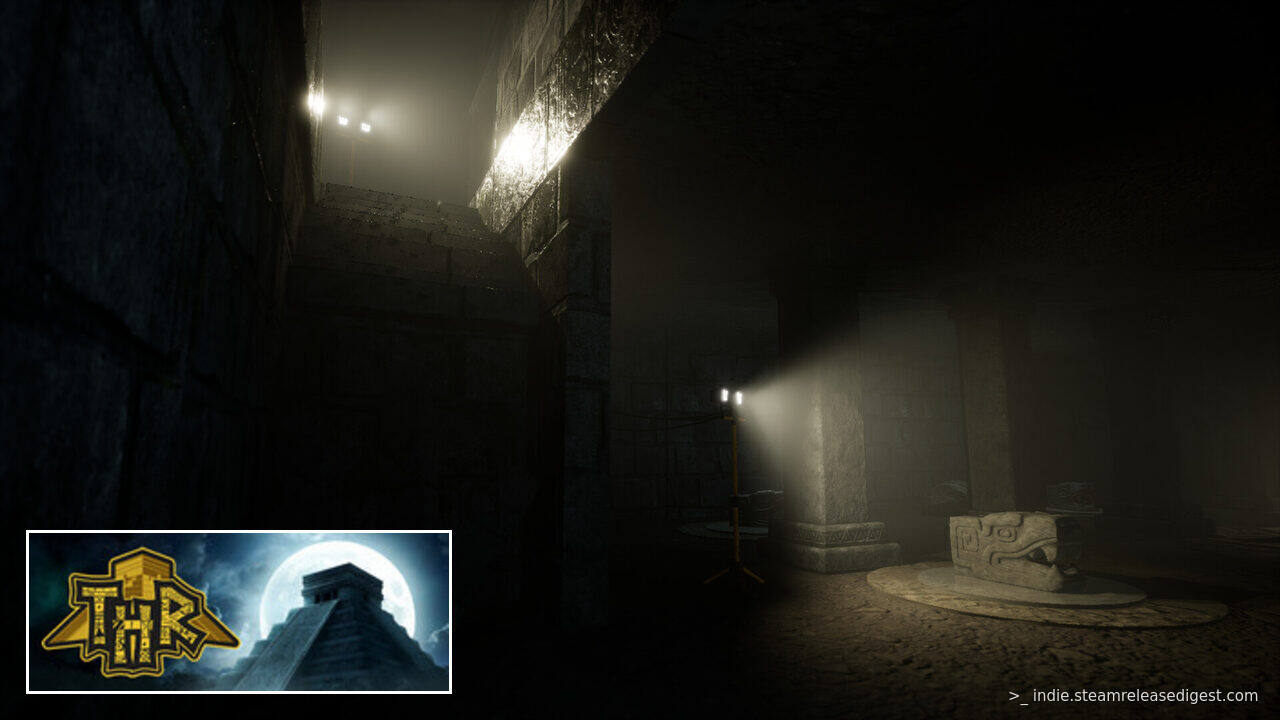
    This isn’t just another escape room clone. *The Hidden Room – Pyramid* invites you to step inside a meticulously imagined ancient Mesoamerican pyramid, where every carving, every symbol, and every architectural detail whispers tales of forgotten civilizations. The premise is simple yet compelling: solve ancient riddles, inspired by real myths, astronomy, and daily life, to uncover the secrets of a long-lost hidden room. What truly sets this game apart is its commitment to cultural discovery. As you progress, you’re not just moving levers; you’re deciphering historical facts, learning about remarkable societies, and engaging with a world that feels genuinely alive with history.

    Logic, Observation, and a Dash of Perseverance

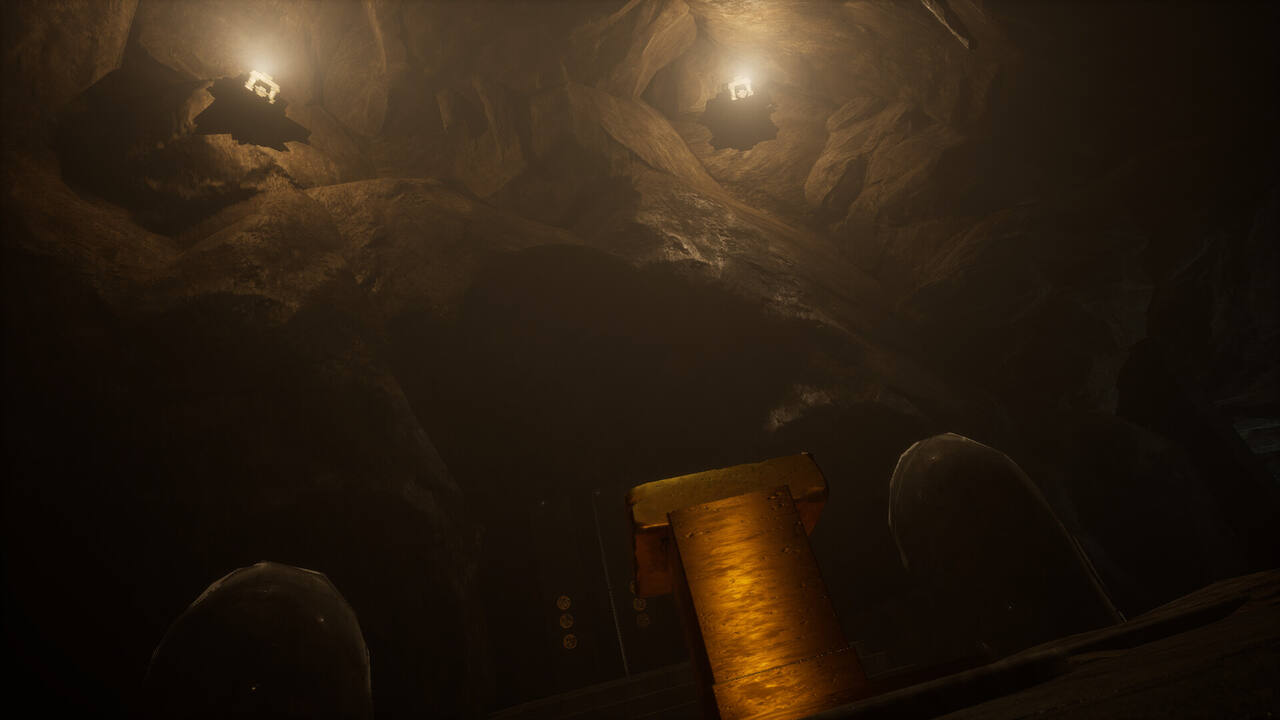
    So, what does that actually *look* like in gameplay? Imagine yourself deep within a dimly lit pyramid, navigating its grand ceremonial chambers, winding corridors, and secret passages. You’ll encounter environmental puzzles that demand keen observation and logical deduction. Decipher symbolic murals, align celestial patterns by studying ancient star charts, and activate mechanisms that have lain dormant for centuries. The game rewards curiosity and a willingness to truly *look* at your surroundings. There’s a profound satisfaction in connecting the dots between an ancient carving and a lever hidden in plain sight, all without a helpful arrow pointing the way.

    The Hidden Room - Pyramid gameplay screenshot
    Image courtesy of Mario Amato, Emanuele Avallone via Steam

    The developers, Mario Amato and Emanuele Avallone, have crafted an experience that prioritizes thoughtful interaction over fast-paced action. It’s a game for those who enjoy stopping to read, to examine, and to ponder. The atmosphere is thick with mystery and reverence for its historical inspirations. You’ll find yourself slowly unraveling the pyramid’s layers, not just to solve a puzzle, but to absorb the fascinating legacy it represents. It’s a single-player journey focused purely on discovery, offering a relaxing (mostly!) yet rewarding experience for history buffs and puzzle enthusiasts alike.

    What the Explorers Are Saying

    Our fellow indie game archeologists have been digging through *The Hidden Room – Pyramid*, and their findings paint a picture of a game with immense potential, albeit one that requires a bit of tolerance for its unique brand of indie jank. With an 80% positive rating, it’s clear many players have found something special here.

    On the positive side, players absolutely adore the nostalgic feeling it evokes. One explorer raved, “This is a nice callback to some of the earlier point-and-click games of the 90s, where there was very little to no hand-holding when it came to solving puzzles.” This sentiment echoes a widespread appreciation for its challenging, unassisted gameplay. The low price point is also a huge draw, with many feeling it offers significant value despite its brevity. The deep dive into Mesoamerican culture and history is another major win, providing a unique backdrop often overlooked in gaming.

    However, the journey isn’t without its bumps in the ancient road. Several players encountered technical hiccups that could frankly try the patience of a saint. Performance issues, even on medium settings, led to “jerky” animations and transitions, prompting one player to suggest lowering all settings to “Low” for a smoother experience. More critically, bugs were reported, particularly with the inventory system: documents appearing blank, or items like a “whs tape” being found but completely unusable, leading to frustrating dead ends and unreadable clues. There’s also feedback that some puzzles lean towards the “vague” or “brute force” side, lacking the elegant logic that the best puzzle games embody. One player bluntly stated, “the more I think about it the worse I think the game was,” specifically citing puzzles that “make no sense at all.” The game’s relatively short length was also noted, though for many, the ultra-low price tag made it a minor quibble.

    The Verdict: Who Should Step Inside?

    So, is *The Hidden Room – Pyramid* for you? Absolutely, if you’re the kind of gamer who:

    • Craves a classic, no-hand-holding puzzle experience reminiscent of 90s adventures.
    • Has a genuine passion for history and learning about ancient cultures, particularly Mesoamerican civilizations.
    • Is willing to overlook some rough edges, minor bugs, and performance quirks for a truly unique concept and atmospheric journey.
    • Appreciates a game that encourages observation and logic over flashy graphics or combat.
    • Is on a budget and looking for a rewarding experience that won’t break the bank.

    If you demand AAA polish, perfectly smooth performance, or constant action, then you might find yourself frustrated. But for those of us who cherish the quirky, the ambitious, and the genuinely thoughtful side of indie gaming, *The Hidden Room – Pyramid* offers a captivating escape. It’s a testament to how creative vision, even with limited resources, can still deliver a memorable and enriching experience. Just bring your thinking cap, a sense of adventure, and maybe a little extra patience for the occasional glitch.

    Key Expedition Facts:

    • Price: $1.69
    • Developer: Mario Amato, Emanuele Avallone
    • Publisher: Emanuele Avallone
    • Release Date: May 8, 2026
  • HOLY GRAIL for DUMMIES: Your Hilarious Guide to Gaming Enlightenment

    HOLY GRAIL for DUMMIES: Your Hilarious Guide to Gaming Enlightenment

    HOLY GRAIL for DUMMIES: An Absurd Adventure That Might Just Be Your New Obsession

    Alright, fellow explorers of the digital unknown, gather ’round! Today, we’re diving headfirst into a game that proves you don’t need a AAA budget or photorealistic graphics to deliver a genuinely unique, laugh-out-loud, and utterly memorable experience. Forget your grim, gritty epics for a moment, because doctor_hummer and Emotional Bytes are here to inject some much-needed absurdity into your gaming life with HOLY GRAIL for DUMMIES. This isn’t just another platformer; it’s a vibrant, chaotic, meme-fueled fever dream that dares you not to smile, even when you’re scratching your head.

    From the moment you meet Buckethead, our titular “hero past his prime,” you know you’re in for something special. This isn’t a story about a chosen one with destiny etched into their biceps; it’s about a bewildered old-timer trying to navigate a world that’s gone utterly bonkers. The premise alone – returning the HOLY GRAIL to prevent *another* global crisis – is delivered with such a tongue-in-cheek casualness that you immediately get the vibe: this game doesn’t take itself seriously, and neither should you. And honestly, that’s incredibly refreshing.

    What Even IS This Holy Grail for DUMMIES?

    At its core, HOLY GRAIL for DUMMIES is a 2D action-platformer, but describing it purely by genre feels like calling a gourmet meal “food.” You’ll be doing a lot of classic platforming – jumping, running, and navigating treacherous environments. But wrapped around that familiar loop is a world overflowing with personality. Combat involves taking down bizarre monsters, often with a satisfying thwack or a clever environmental interaction. Treasure collection is, of course, a must, feeding into that delicious sense of progression and discovery.

    One aspect that immediately grabs you is the game’s commitment to its “absurd, crazy world.” This isn’t just window dressing; it’s woven into every pixel and every line of dialogue. And speaking of dialogue, prepare for a lot of it. The game thrives on its eccentric characters and hilarious situations, demanding your attention not just with your platforming prowess but with your willingness to engage with its truly unique narrative. Think less about a silent protagonist and more about a verbose, bewildered hero making “intriguing acquaintances” as he tries to preserve what little humanity he has left.

    HOLY GRAIL for DUMMIES gameplay screenshot
    Image courtesy of doctor_hummer via Steam

    The developers promise “heavy themes” alongside the hilarity, which is a fascinating contradiction that hints at layers beneath the comedic surface. But whether you’re pondering the meaning of existence or just laughing at a particularly well-placed meme, the experience is underscored by “music that makes you wanna dance!” – and honestly, who can argue with that?

    The Verdict From the Digital Trenches

    So, what are the early adventurers saying about their time with Buckethead? Unsurprisingly, the consensus is overwhelmingly positive, with all initial reviews singing its praises. Players are drawing comparisons to classic platforming greats, with one reviewer noting it plays “a lot like Shovel Knight: King of Cards,” albeit with longer, more expansive levels instead of many short ones. Another reviewer affectionately points to “og Wario Land vibes,” highlighting the game’s unique brand of humor and its ability to make “every moment enjoyable, even when you’re stuck.”

    The writing, in particular, is a standout for many, described as “wonderful and comical” and even “some of my favorite kind of writing.” The game’s ability to “make it fun for you” no matter the situation seems to be a recurring theme, which is a testament to its strong personality and engaging design. The pixel art graphics are universally praised as “very well made,” perfectly capturing the game’s quirky aesthetic, and the music is consistently lauded as “very good.”

    However, no game is perfect, and a key element that might divide players is the humor itself. While many find it hilarious, one reviewer astutely points out that the game’s comedy “relies a lot on memes. The kind of memes you’d see in a stereotypical Discord group chat.” If that brand of internet humor doesn’t “vibe” with you, then it “will probably be annoying” because, as they warn, “They show up a lot by the way.” It’s a fair warning: this game knows its comedic niche and leans into it hard. Another point to note is the current game time, which reviewers estimate at 3-4 hours. While typical for an Early Access title with “more to come,” it’s worth managing expectations if you’re looking for an epic, sprawling adventure *right now*.

    Who Should Grab This Holy Grail?

    HOLY GRAIL for DUMMIES is for the gamer who’s utterly done with cynicism and yearns for something genuinely fresh and laugh-out-loud fun. If you appreciate games that prioritize creativity and unique atmosphere over cutting-edge graphics, if you’re a fan of classic 2D platformers with a modern, meme-infused twist, and especially if you cherish witty, absurd dialogue, then this game is absolutely for you. It’s an Early Access title, so go in knowing that the adventure is still unfolding, but what’s already there is a charming, often hilarious, and undeniably engaging experience. If you’re willing to embrace the weird and aren’t afraid of a healthy dose of internet humor, then prepare to fall in love with Buckethead and his wonderfully bizarre world. This is precisely the kind of under-the-radar gem we live for!

    Key Facts

    • Price: $9.99
    • Developer: doctor_hummer
    • Publisher: Emotional Bytes
    • Release Date: May 8, 2026 (Early Access)
  • A summer in Oneeshota Town: Cozy Nostalgia Meets an Addictive Card-Battling Guilty Pleasure

    A summer in Oneeshota Town: Cozy Nostalgia Meets an Addictive Card-Battling Guilty Pleasure

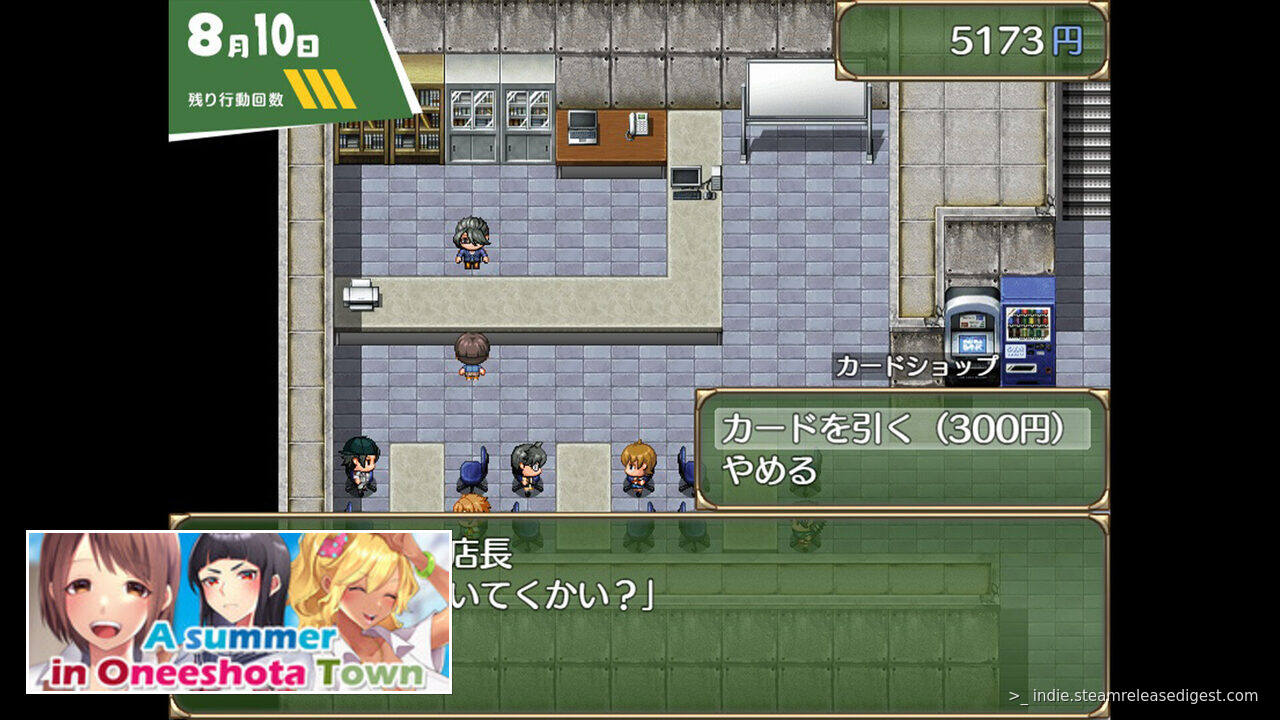
    A summer in Oneeshota Town is a cozy, unapologetically niche slice-of-life simulator that pairs a surprisingly addictive card-collecting loop with a classic coming-of-age fantasy.

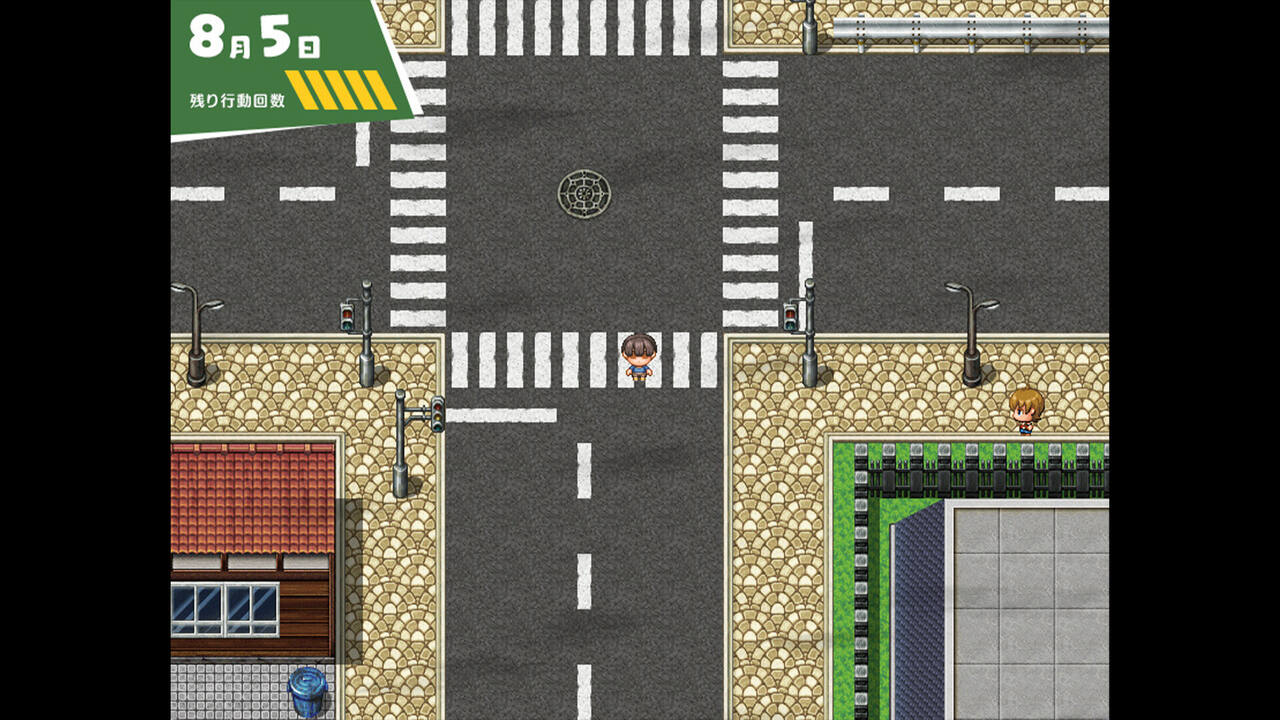
    Set in a quiet, slightly fading town, the game places you in the sneakers of Shota, a young boy embarking on his 31-day summer vacation. This is not a grand adventure about saving the world; instead, your daily routine consists of wandering the local streets, collecting items scattered across the map, and doing odd jobs for residents to earn pocket money. This pocket money is then funneled into buying food and, most importantly, feeding a card-collecting habit that forms the mechanical backbone of your summer break.

    But the real draw for most players is the town’s cast of eight distinct heroines. From the girl next door and a trendy gyaru to a clumsy student council president and even a friend’s mother, the game features a variety of mature women who take an interest in Shota. As you spend your daily action points interacting with these characters, their affection grows, unlocking specific narrative events that deepen your bond over the course of the month. It is a game that thrives on a highly specific, late-night anime aesthetic, balancing cozy domesticity with overt fan service.

    While the game has garnered an impressive 96% positive rating from its players, it is far from a flawless experience. The community’s praise is heavily centered on its character art and the sheer addictive quality of its card-collecting mini-game. Players note that building connections with the eight heroines feels genuinely rewarding over the 31-day cycle, and the game offers a surprisingly high degree of freedom in how you choose to spend your time each day.

    A summer in Oneeshota Town gameplay screenshot
    Image courtesy of アイオライト via Steam

    However, the criticisms are just as specific. Several players point out that underneath the eye-catching artwork lies a fairly “barebones” dating sim. The core gameplay loop can feel repetitive, relying on tedious RNG elements that might frustrate completionists trying to unlock every single event. Navigating the town also poses minor annoyances; the lack of a mini-map guide makes tracking down specific quests and character dialogues more inconvenient than it needs to be. Furthermore, with a total playtime of around three hours to clear most of the content, some players felt the experience was a bit brief for its price point. It is also worth noting that there is no “harem” route—each character’s storyline remains strictly self-contained.

    Perhaps the most critical hurdle for new players is a technical one. Out of the box, the Steam version may require an external update patch to display the full character illustrations. Without this patch, players are left with only the base pixel art, a frustration that has already led to at least one early refund from a user unable to find the necessary link. If you pick this up, be prepared to do a quick internet search to ensure you are getting the complete visual experience.

    The Verdict

    A summer in Oneeshota Town is a highly targeted guilty pleasure. If you are looking for a deep, mechanically complex RPG or a highly polished, mainstream dating sim, you will likely find this experience too shallow and repetitive. However, if you have a soft spot for cozy summer-vacation aesthetics, enjoy light card-collecting mini-games, and are specifically looking for a short, well-illustrated, and unashamedly niche romance game, this brief summer getaway is well worth the trip—just make sure you grab the update patch before you start packing your bags.

    Key Facts

    • Developer: アイオライト
    • Publisher: 072 Project, 072 News
    • Release Date: May 8, 2026
    • Price: $13.49
  • Firefield: The AI-Built Dungeon Crawler That Chases the Ghost of 1997

    Firefield: The AI-Built Dungeon Crawler That Chases the Ghost of 1997

    “You can feel the love almost in every step of the way,” writes one Early Access player of Firefield, a statement that feels almost paradoxical for a retro action RPG built entirely using artificial intelligence. Written by a 45-year-old developer with zero prior programming experience in just three months, the game has emerged as a surprisingly robust, slow-burning tribute to the foundational eras of Diablo and Ultima Online.

    The Lore of 1997 and Core Dungeon Crawling

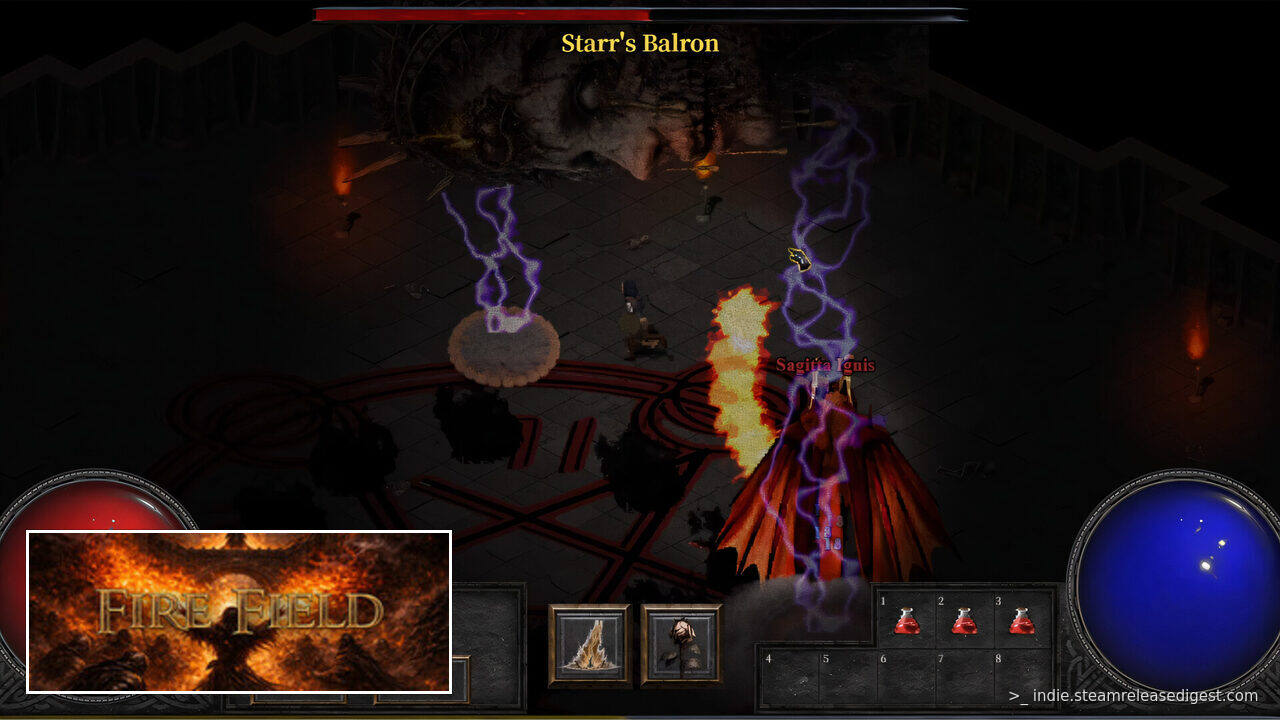
    Firefield anchors its world-building in a legendary moment of PC gaming history: the 1997 “Rainz incident,” in which a player famously assassinated Lord British during a public beta test of Ultima Online. In Firefield, this event is recontextualized into a dark fantasy myth. A great king has been slain by a flame called the Fire Field, cast by a figure named Rainz. While the world reviles Rainz, a desperate few worship him as a savior. As one of these loyalists, you descend into a northern cemetery where the dead king is buried, searching for truths hidden deep beneath the soil.

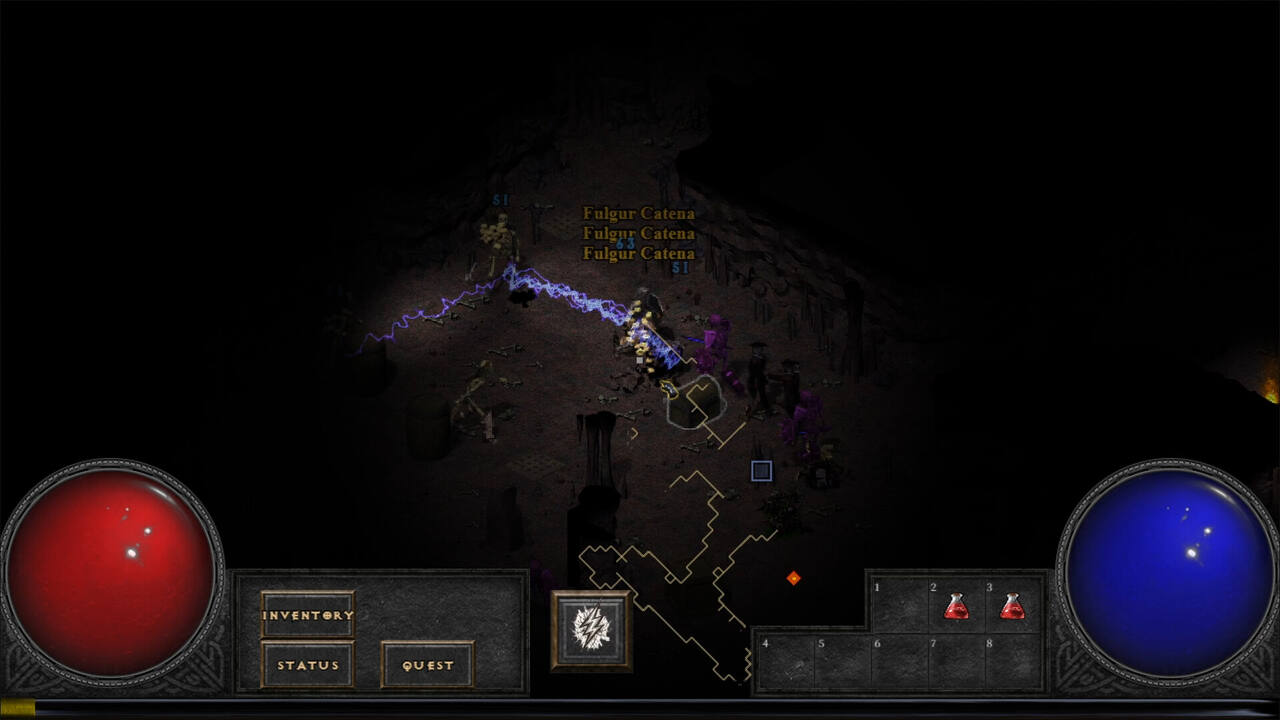
    At its heart, Firefield is a methodical, atmospheric dungeon crawler. In its current Early Access build, you explore five increasingly difficult underground floors. The gameplay loop is deliberately traditional: you gear up in the city, descend into shifting, procedurally generated layouts, and fight monsters. Combat here lacks the screen-clearing, hyper-fast chaos of modern ARPGs. Instead, it is a slower, heavier affair that prioritizes careful exploration and survival over flashy combos. It feels less like destroying an entire ecosystem and more like carefully stepping into the unknown.

    Loot is the driving engine of the experience. The game features an expansive item system with over 100,000 potential equipment variations, each offering different stat alterations and visual changes to your character’s avatar. The emotional peak of this loop lies in the tension of finding unidentified gear with varying rarities and unique properties, carrying it back to safety, and finally uncovering its true power. Should you fall in battle, the game employs a unique death mechanic where you become a ghost, forced to wander through the reverberations that remain deep underground.

    Firefield gameplay screenshot
    Image courtesy of Robe of Fire via Steam

    What Players Love

    Player reception is unanimously positive, with early adopters praising the game’s distinct, nostalgic texture. Many note that the slower pacing is a refreshing change of pace, offering a tense and rewarding loop that captures the core appeal of classic hack-and-slash games. Players are deeply invested in the nostalgic, gritty art direction and the satisfying dopamine rush of identifying rare items.

    The technical achievement is another major point of praise. Using Anthropic’s Claude Code to write roughly 120,000 lines of code and 100 achievements, the solo developer built a custom engine and map editor from scratch, bypassing modern engines like Unity or Unreal entirely. This lightweight design means Firefield requires no dedicated GPU and can run on practically any computer. Additionally, the AI integration has allowed the developer to implement subtitles in 95 languages and full voice dubbing in 70 languages, making the dark halls of the cemetery accessible to a massive global audience.

    What Frustrates Players

    While the game has won over its initial audience, it does have rough edges. The narrative delivery can feel disjointed. One player noted that they managed to defeat the final boss of the fifth floor “without really understanding what was going on,” expressing a desire for a clearer, more comprehensible story presentation.

    Furthermore, players looking for modern gameplay innovations, high-fidelity 3D graphics, or lightning-fast combat will find the game lacking. It is unashamedly a 90s-style experience, which means dealing with simpler mechanics, retro visual assets, and a gameplay loop that relies heavily on a slow, deliberate grind. The game’s current scope is also limited, offering only five floors of exploration in its current Early Access state.

    The Verdict

    Firefield is a compelling proof-of-concept for the future of solo game development, but more importantly, it is a solid, atmospheric dungeon crawler in its own right. It is specifically designed for players who miss the cold, unforgiving, and mysterious atmosphere of early Diablo and the deep lore of classic Ultima. If you are looking for a flashy, fast-paced modern action game, this will not be for you. But if you want to spend ten dollars to crawl through a dark, grid-based dungeon, identify mysterious loot, and experience an intriguing piece of AI-driven design, Firefield is well worth your time.

    Key Facts

    • Developer: Robe of Fire
    • Publisher: Robe of Fire
    • Release Date: May 8, 2026
    • Price: $9.99
  • Finding Peace in the Chaos: Why 101 Dogs Hidden in New Delhi is the Perfect Two-Dollar Detour

    Finding Peace in the Chaos: Why 101 Dogs Hidden in New Delhi is the Perfect Two-Dollar Detour

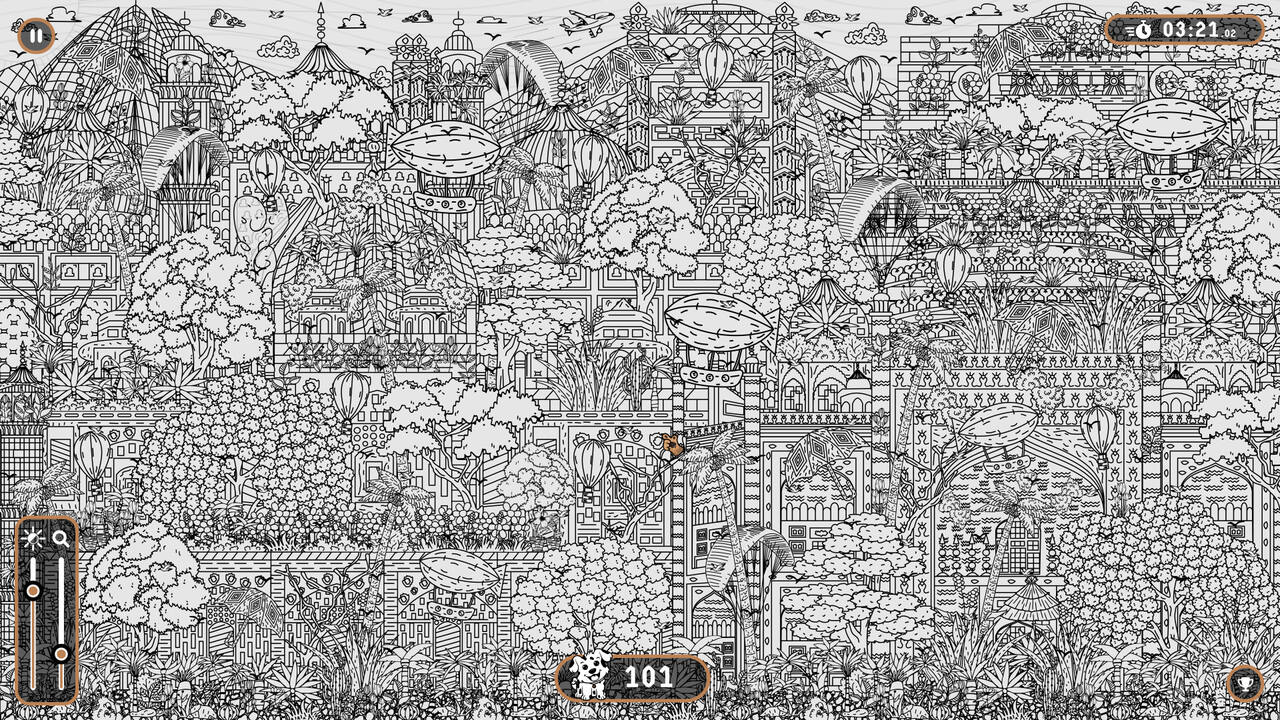
    Every single dog hidden in the sprawling, hand-illustrated landscape of NaipSoft’s casual puzzle game has a name, and more than a few of them are fully animated—wagging their tails or peeking out from behind busy urban structures in a digital recreation of India’s capital. This tiny detail transforms what could have been a static “point-and-click” chore into a living, breathing illustration that feels remarkably personal.

    At its core, the game is a highly focused digital search-and-find adventure. There is no sprawling campaign or complex progression system; instead, players are presented with a single, massive, hand-crafted landscape packed with architectural details and cultural nods to New Delhi. The gameplay loop is straightforward: you use a smooth zoom tool to scan the busy environment, adjusting the screen brightness to ease eye strain, and click on every canine you manage to spot. There are no timers forcing your hand, unless you actively choose to engage in the speedrun mode to challenge friends. Instead, the game encourages you to move at your own pace, supported by a tranquil, looping soundtrack designed to facilitate a state of flow.

    101 Dogs Hidden in New Delhi gameplay screenshot
    Image courtesy of NaipSoft via Steam

    The reception from players has been unanimously warm, sporting a flawless positive review ratio. Steam users frequently praise the game’s cozy atmosphere and artistic charm. Reviewers point out that the visual details are incredibly pleasing, noting that the simple act of hunting for dogs in a dense urban setting feels surprisingly rewarding. The inclusion of names for every single pup is a massive hit among pet lovers, adding a layer of personality that makes each discovery feel like a genuine introduction rather than just crossing an item off a checklist.

    However, players are also clear about what the game is not. As one dedicated player with over thirteen hours of playtime pointed out, the experience “does not attempt to become mechanically deep.” This is a game built on a singular, very simple concept. There are no physics puzzles, no hidden narrative layers, and no complex mechanics to master. Once you find the 101 dogs, you have experienced the bulk of what the game has to offer, aside from unlocking Steam achievements. For players who demand mechanical complexity or high-stakes challenge, this extreme simplicity might feel more like a interactive coloring book than a traditional video game.

    Ultimately, this game knows exactly what it wants to be and executes that vision flawlessly. It is a low-stress, low-cost digital palate cleanser. If you are a pet lover, a fan of cozy hidden-object games, or simply someone who needs a quiet, thirty-minute break from the stresses of daily life, this charming search-and-find is well worth the pocket change.

    Key Facts

    • Developer: NaipSoft
    • Publisher: NaipSoft
    • Release Date: May 7, 2026
    • Price: $1.99