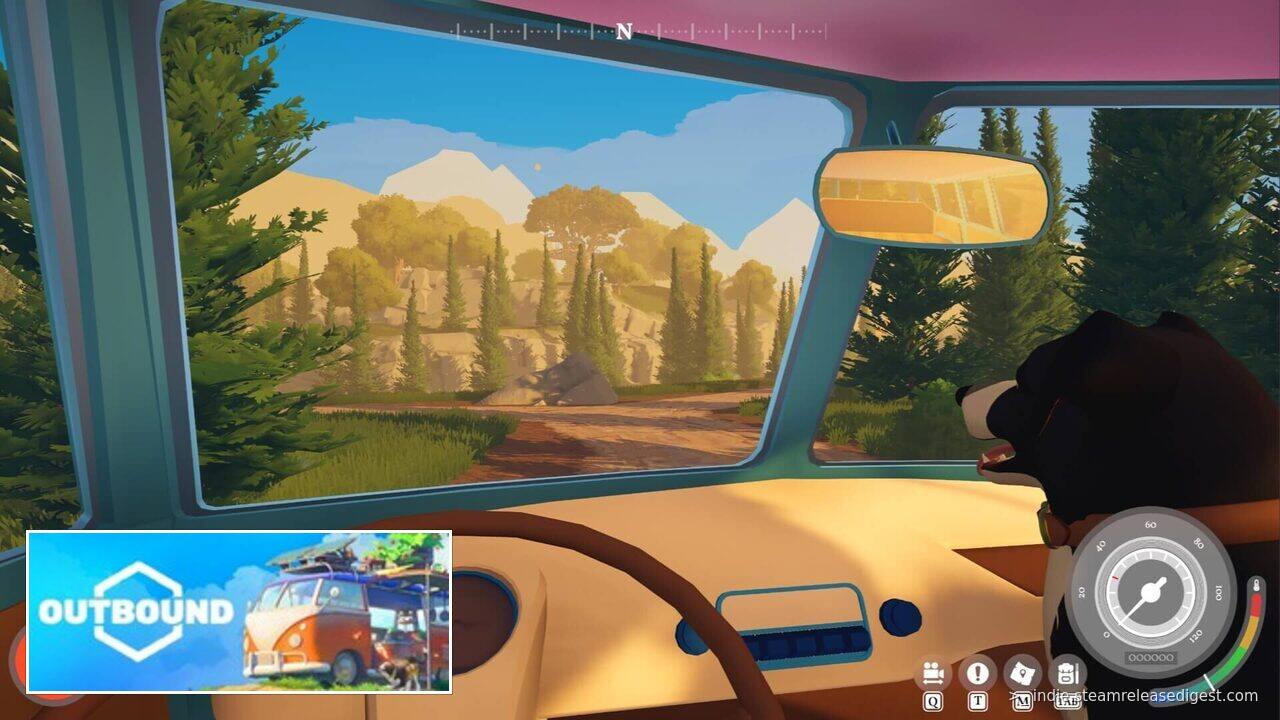
Survival-crafting games almost always rely on the threat of death to keep you moving. They drop you into a hostile wilderness and demand that you struggle against starvation, wildlife, or zombies just to secure a basic wooden shack. Outbound completely rejects this anxiety. Instead of fighting a hostile environment, your main goal is to build a cozy, sustainable tiny home on top of an electric camper van, powered entirely by wind, sun, and water. It is a game about the quiet joy of off-grid living, where the road ahead is your only real guide.
At its core, Outbound plays like a land-bound relative of the ocean survival game Raft. You begin with a completely empty vehicle and a vast, colorful, utopian world to explore. Your progression is tied directly to your vehicle’s upgrades. Using a modular building system, you physically construct your living space on and around your van. You can install solar panels to power your crafting stations, build small garden plots on the roof to grow mushrooms and vegetables, and decorate the interior with custom furniture to make it feel like home. The loop is simple: drive to a new biome, park, harvest resources, upgrade your mobile base, and move on.
This lack of traditional survival pressure is exactly what makes the game stand out, but it also creates its own unique friction. According to player reviews, the game is incredibly meditative. There are no enemies to fight and no ticking clocks to worry about, allowing players to sink dozens of hours into simply optimizing their mobile power grids or customizing their interior layouts. The developers have also built in wholesome touches, like the ability to adopt, pet, and train a companion animal from the Paws & Whiskers Lodge to help you gather materials.
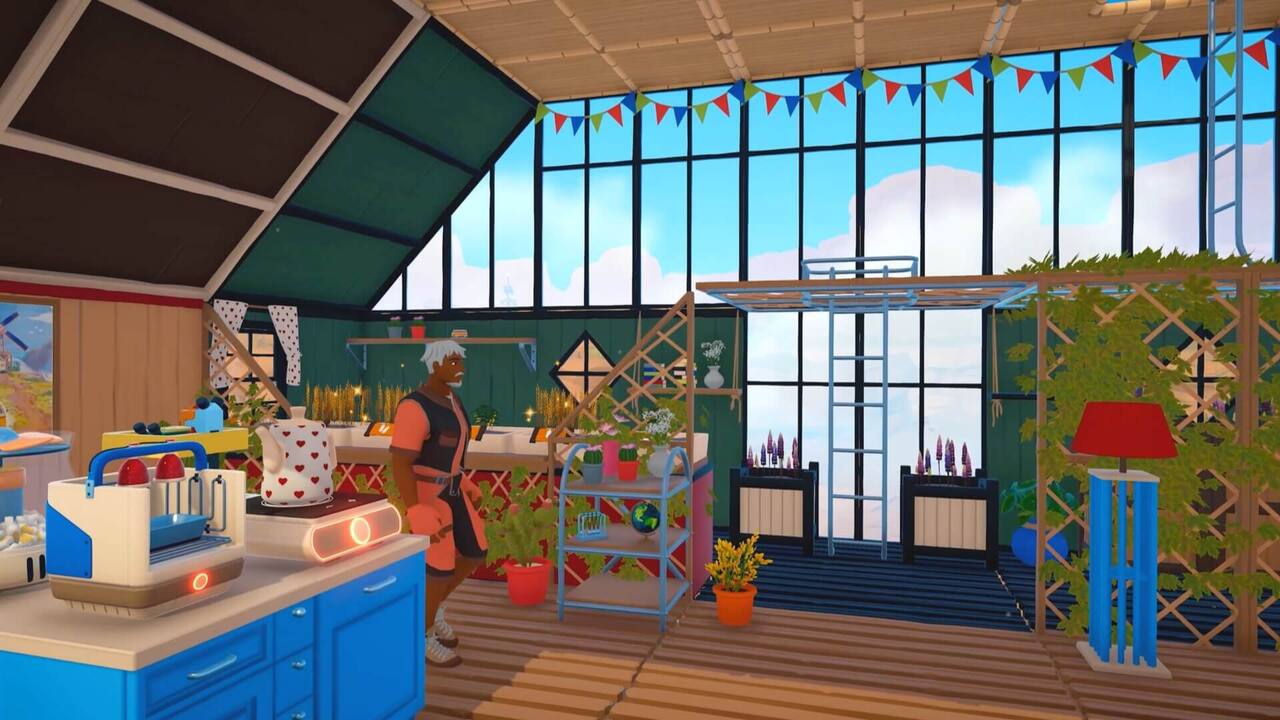
However, this stress-free environment comes with a catch. Some players note that without any external threat or narrative push, Outbound can sometimes feel like it lacks urgency. If you play solo, the silence of the road can occasionally cross the line from peaceful to lonely. Currently, the world is entirely devoid of non-player characters (NPCs)—a detail that feels a bit eerie to some, though players have humorously rationalized it by imagining that the rest of humanity has moved on to airships while they stick to the old roads. The developer has confirmed that NPCs are on the roadmap, but for now, the world can feel a bit empty.
The game’s pacing also faces some early-game speed bumps. Players have pointed out that the initial hours can feel like a grind, particularly when managing fuel and raw materials like wood and clay. Fortunately, the developers have been highly responsive, quickly pushing patches to rebalance resources (such as easing the clay grind) shortly after launch. Once you push past the early stages and transition to clean energy like wind and solar, the resource bottlenecks largely disappear, and the game’s automation loop truly begins to sing.
Where Outbound truly shines is in co-op. Playing with up to four players—or as a cozy duo—turns the journey into a shared road trip. Cooperatively dividing up the labor of cooking, driving, and building makes the lack of NPCs far less noticeable and turns the modular van-building into a collaborative puzzle. If you have a partner to share the driver’s seat with, the chill vibes and steady progression make it incredibly easy to lose track of time.
The Verdict
Outbound is a charming, low-stress simulation of the ultimate van-life fantasy. It won’t satisfy players looking for a punishing survival challenge or a deep, story-driven RPG. But if you want a beautiful, slow-paced crafting game to play with a partner, or a cozy virtual space to design your dream home on wheels while listening to the wind, Outbound is a trip worth taking.
Key Facts
- Developer: Square Glade Games
- Publisher: Square Glade Games
- Release Date: May 11, 2026
- Price: $22.49