Author: sitemill

  • Call of the Elder Gods: Translating the Beautiful Logic of the Cosmos

    Call of the Elder Gods: Translating the Beautiful Logic of the Cosmos

    Solving the puzzles in this narrative adventure is less about surviving cosmic jump-scares and more about learning to speak a foreign language, swapping between a haunted student and an aging professor to piece together clues left behind by entities that defy human comprehension.

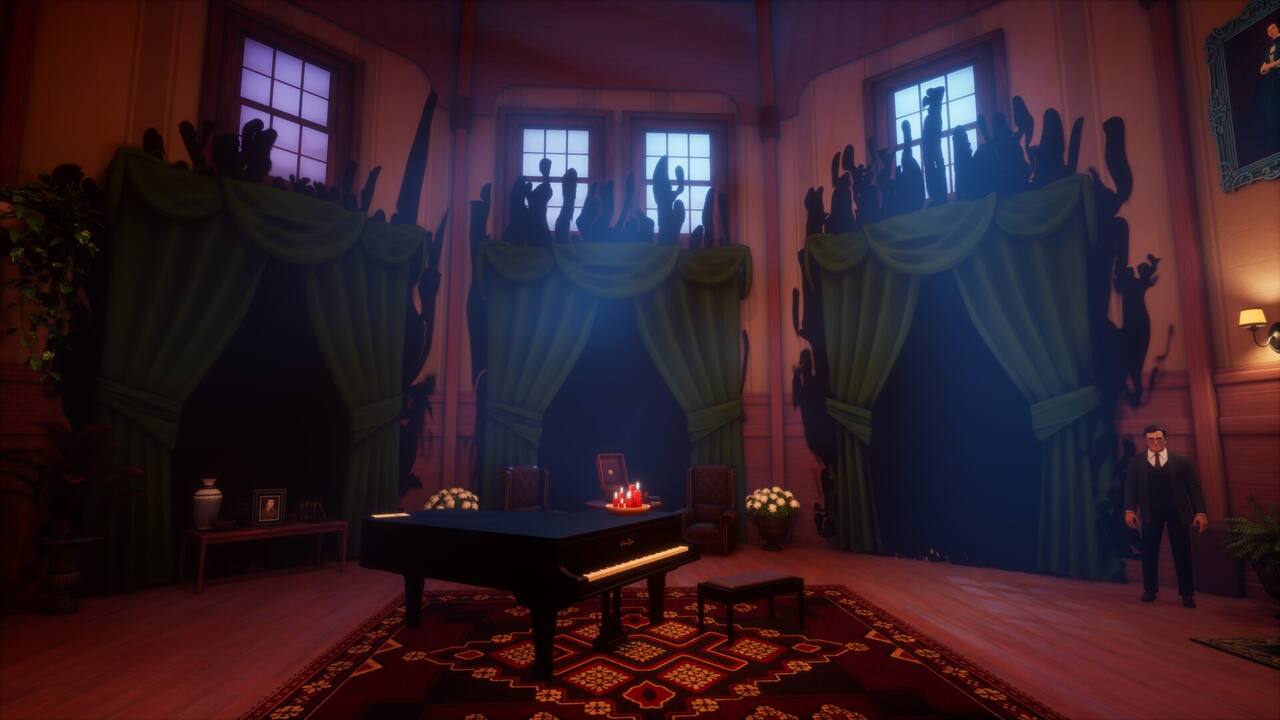
    As a direct sequel to 2020’s Call of the Sea, this game steps back into a world of scholarly obsession and ancient mysteries. Players split their time between two distinct protagonists at Miskatonic University: Professor Harry Everhart, who is struggling to ignore the shadows creeping into his vision, and student Evangeline Drayton, haunted by dreams of an artifact unearthed a decade ago. Mechanically, the game functions as a series of lavishly detailed, highly atmospheric escape rooms linked together by narrative-focused exploration. You will guide Harry and Evangeline through a globetrotting journey that spans the firelit libraries of a New England mansion, the stark red sands of the Australian outback, and frozen, timeless alien ruins. Along the way, you scour the environment for journals, glyphs, and interactive machinery, building a lexicon of logic to solve complex, multi-part environmental conundrums.

    What makes this setup work so well is the texture of the interaction. Rather than relying on simple inventory-combination puzzles, the game asks you to engage with its world on an intellectual level. You are quite literally learning the logic of “Something Else.” The developers have crafted a narrative where connecting with the alien isn’t purely a source of madness, but an awe-inspiring experience of discovery. This intellectual journey is elevated by the stellar voice work of Cissy Jones and Yuri Lowenthal, who ground the cosmic grandiosity in a deeply human story of grief and family, accompanied by a rich, sweeping soundtrack by returning composer Eduardo De La Iglesia.
    Call of the Elder Gods gameplay screenshot
    Image courtesy of Out of the Blue Games via Steam

    The Thrill of Deciphering the Unknown

    With an overwhelmingly positive reception on Steam, the community has found plenty to celebrate. Players are enamored by the game’s striking Unreal Engine 5 visual presentation, which turns every new environment into a scenic spectacle. The puzzles themselves strike a highly satisfying balance; they are designed to stretch your brain and give you a genuine sense of accomplishment without driving you to frustration. The addition of a new, highly customizable difficulty and hint system has also been a major quality-of-life win. Players appreciate being able to toggle hints, icons, and journal entries, tailoring the challenge so they can focus on the story or dive deep into the raw logic of the world.

    The Weary Knees of Cosmic Investigation

    No game is without its rough edges, and the community is honest about where the experience falters. Some players have pointed out that the sequel doesn’t quite capture the same sense of pure, untamed mystery as its predecessor. Because players are already familiar with the general lore and rules established in the first game, some of the narrative beats lose their element of surprise. Additionally, while the puzzles are excellent, a few can be significant time-sinks. Some players admit to peeking at walkthroughs not out of frustration, but simply because some puzzles are so complex they stall the story’s momentum when you just want to see what happens next. There is also a humorous touch of ludonarrative dissonance that players have gleefully pointed out: watching a 67-year-old university professor with creaky joints casually crawl through tight ventilation shafts to escape ancient, cosmic deities adds an unintended layer of physical comedy to an otherwise serious tale.

    The Verdict

    This is a game designed specifically for players who miss the golden age of cinematic, narrative-rich adventure games. If you enjoy slow-paced, atmospheric exploration where the environment itself is a giant puzzle box, you will find a highly rewarding journey here. It is a worthy, polished continuation of a unique cosmic narrative that values curiosity and wonder over terror, making it an easy recommendation for anyone who wants to lose themselves in a beautiful, brain-teasing mystery.

    Key Facts

    • Developer: Out of the Blue Games
    • Publisher: Kwalee
    • Release Date: May 12, 2026
    • Price: $24.99
  • Fail Fail Succeed: Turning Your Own Corpses into Step Stools

    Fail Fail Succeed: Turning Your Own Corpses into Step Stools

    You might expect a game inspired by its developer’s personal struggles with manic highs and depressive lows to be a grueling, punishing ordeal designed to make you suffer. Instead, this puzzle platformer greets you with a remarkably cozy atmosphere, a selection of loyal dogs to act as your emotional anchor, and an incredibly clean logic system. It transforms the grim concept of repeated failure into a series of satisfying, bite-sized epiphanies. Rather than beating you down, it gently asks you to look at your missteps as the very foundation of your eventual victory.

    Created by solo developer Martin Zetterman, the project grew from a student prototype into a fully realized experience. The thematic core of the game is deeply personal, serving as a metaphor for navigating mental health struggles where progress often feels nonexistent, yet tiny traces of forward momentum are left behind with every attempt. It is a heavy concept, but the execution is light on its feet, focusing on charm, clever design, and a surprising amount of warmth.

    The Anatomy of a Helpful Mistake

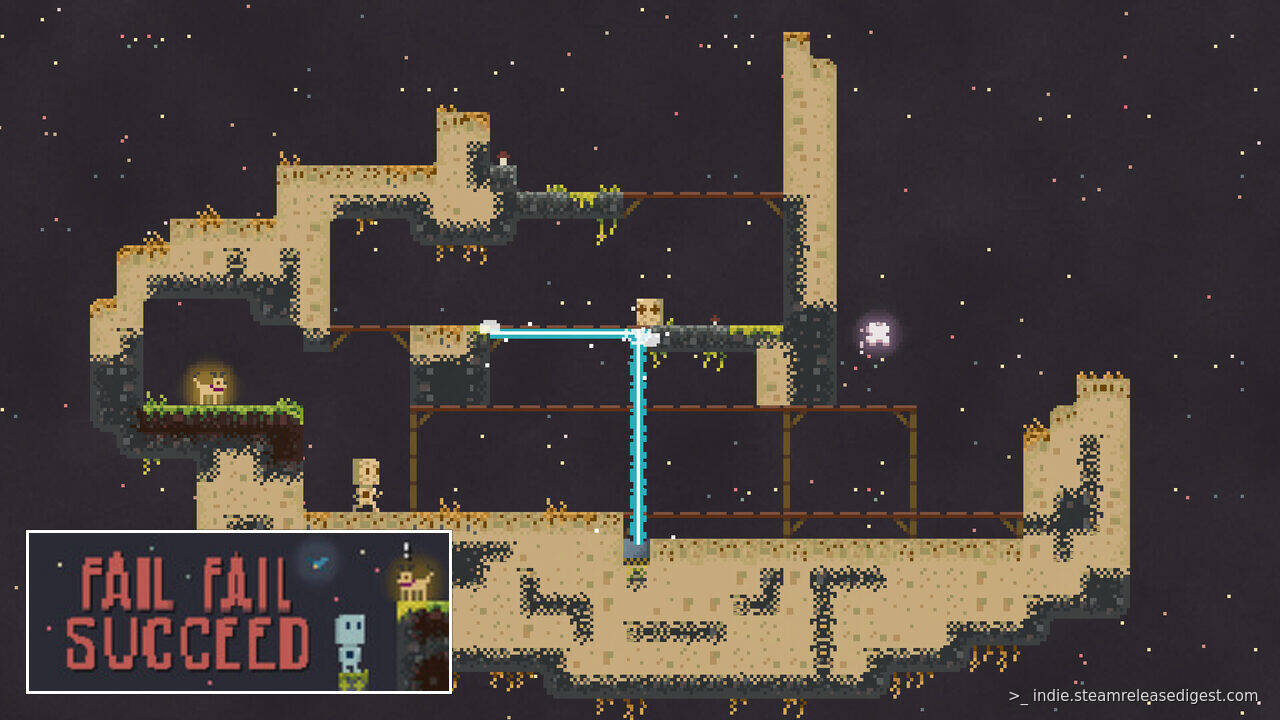
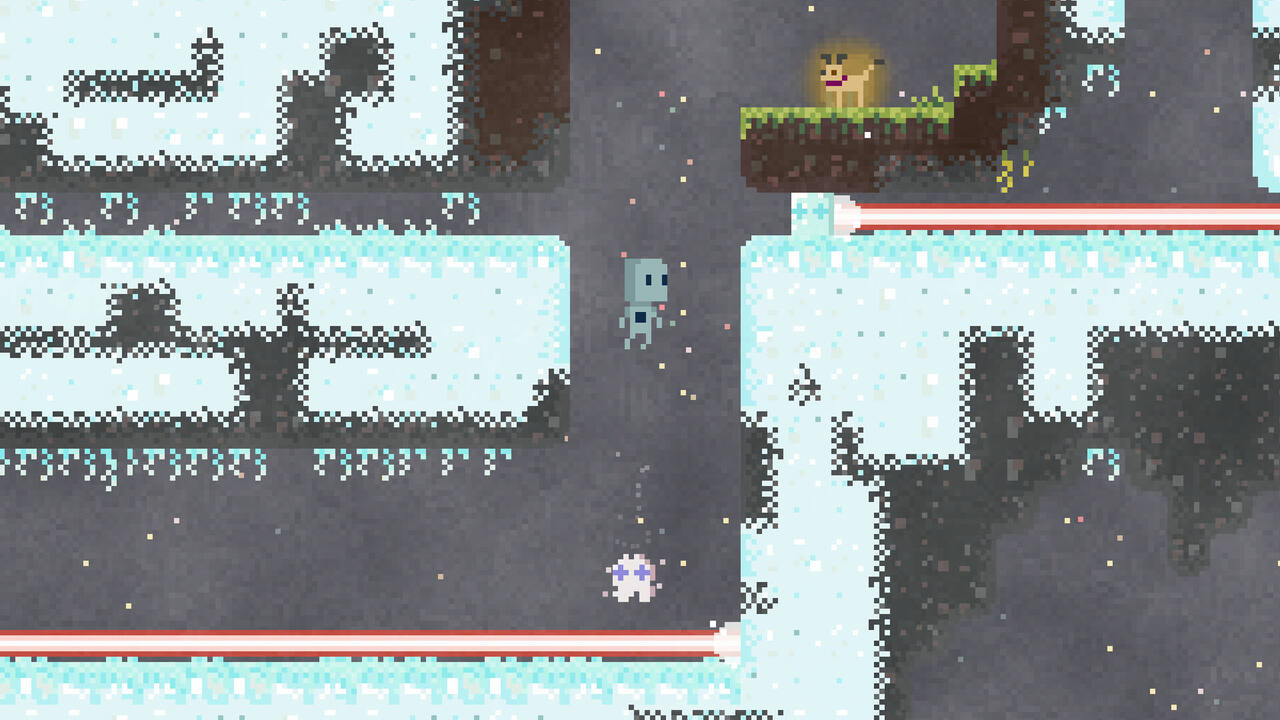
    At its core, the game places you in a surreal, dream-like dimension filled with lethal hazards. You have no grand powers, no weapons, and no high-speed dash. Your primary tool is the ability to die. Scattered throughout the forty handcrafted levels are mysterious orbs. When you collect one and inevitably meet your demise on a spike pit or a laser grid, you leave behind a stone-like fragment of your previous self. This static clone remains in the world, serving as a platform to leap from, a weight to hold down switches, or a shield to block deadly hazards.

    Fail Fail Succeed gameplay screenshot
    Image courtesy of Martin Zetterman via Steam

    Progress is entirely spatial and logic-driven. You cannot brute-force your way through these environments with twitch reflexes. Instead, you must carefully plan where to trigger your next collapse, systematically building a bridge out of your own failures to reach the exit. It is a wordless experience; there is no dialogue or text to explain the world’s rules. Instead, the game relies entirely on visual cues, shifting art styles, and consistent, mechanical logic to teach you how to survive. To keep you grounded in this stark, surreal environment, you are accompanied by a dog of your choice, serving as a guide, a source of comfort, and a silent motivator as you work your way through the darkness.

    What Players Love (and Where the Gears Grind)

    Players who have followed the game since its early public showcases have praised how much the experience has matured. Steam reviewers highlight that the transition from prototype to full release has brought significant visual upgrades, featuring beautifully improved animations and an atmospheric soundtrack that perfectly matches the quiet, reflective tone of the journey. The game captures a compelling “just one more level” feeling, drawing players in with simple mechanics that quickly evolve into deeply clever spatial puzzles.

    Crucially, the puzzle design is incredibly fair. Unlike many puzzle platformers that rely on “cheap” tricks or demand pixel-perfect execution, the puzzles here always have a clear, logical solution. Reviewers note that they never felt forced to look up external guides; the answer is always right there in front of you, waiting to be deduced. This makes every breakthrough feel earned and intellectually satisfying.

    However, this focus on pure logic is exactly where some players might hit a wall. Because the game lacks action-heavy workarounds, your progress is entirely gated by your spatial reasoning. While the developer has implemented near-instant resets to encourage rapid experimentation, the trial-and-error nature of the puzzles can occasionally feel repetitive if a particular layout doesn’t immediately click. If you are not in the mood to sit, reflect, and carefully parse a mechanical system, the loop of failing and restarting can feel taxing rather than therapeutic.

    The Verdict

    This is a deeply thoughtful, beautifully executed puzzle game that respects your intelligence. It takes a heavy, abstract theme—the exhausting cycle of repetitive struggle—and turns it into something gentle, clever, and deeply rewarding. At a highly accessible price point, it offers a polished and memorable evening of brain-teasing challenges.

    If you love spatial puzzles in the vein of games that make you stop, think, and sketch out a plan before touching the controller, this is an easy recommendation. And if the challenge gets too intense, you can always stop to appreciate your chosen canine companion, a small but brilliant touch of comfort in an otherwise stark world.

    Key Facts

    • Developer: Martin Zetterman
    • Publisher: The Notlanders
    • Release Date: May 12, 2026
    • Price: $9.99
  • Clockwork Ambrosia: Breaking the Metroidvania Mold with Steampunk Gunsmithing

    Clockwork Ambrosia: Breaking the Metroidvania Mold with Steampunk Gunsmithing

    Clockwork Ambrosia turns the standard metroidvania progression on its head by swapping out passive stat boosts for a deeply customizable, rule-based weapon-modding engine that lets you rewrite how your arsenal behaves on the fly.

    The Mechanics of Tinkering

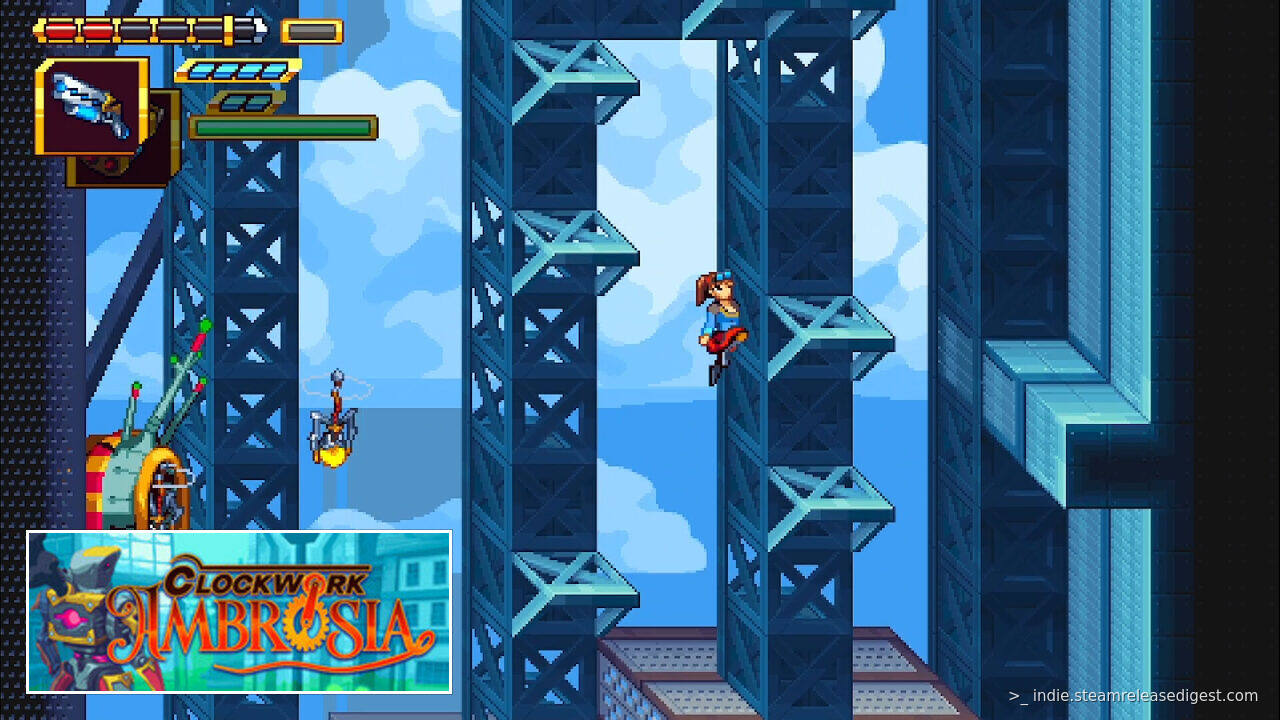
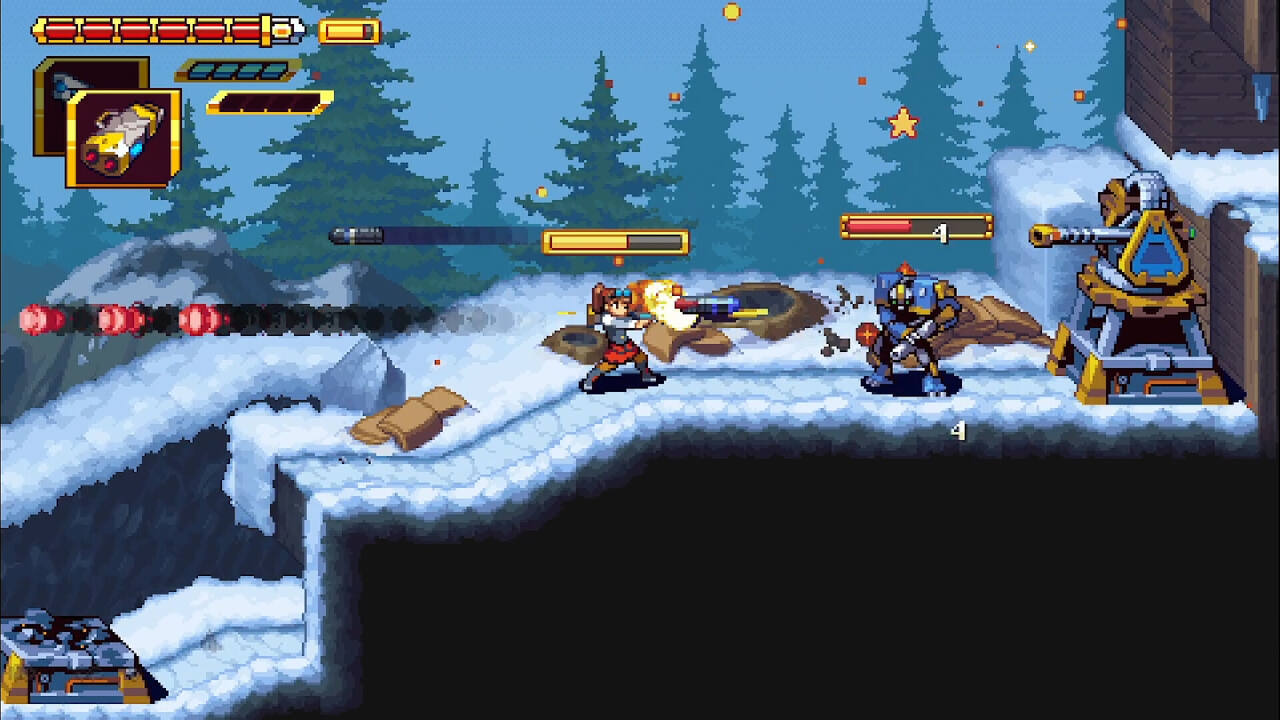
    Instead of chasing minor percentage upgrades to your health or standard ammo capacity, you spend your time on the floating islands of Clockwork Ambrosia hunting for mods. You play as Iris, an airship pilot armed with four baseline weapons: the versatile Pulse Breaker, the armor-shattering Missile Launcher, the rapid-fire Revolver, and the trick-shot Grenade Launcher. On their own, these weapons are standard, reliable run-and-gun tools. The magic happens when you start slotting in some of the game’s 100-plus mods, which are found hidden in secret-choked corners of the map or purchased with scrap in the hub village of Borersville.

    The mod system works on a chain of logical rules that interact with each other in surprising ways. For example, you might equip a mod that powers up your bullets but disables a round in your chamber. To offset this, you can slot in another mod that fires extra bullets whenever a round is disabled, and pair that with a third mod that triggers bonus projectiles when multiple bullets are fired at once. The game actively encourages you to break its combat balance. When a build clicks—like the player-favorite “frosty machinegun setup” that freezes enemies in their tracks—the combat feels incredibly rewarding, allowing you to flatten bosses that would otherwise pose a brutal challenge.

    Clockwork Ambrosia gameplay screenshot
    Image courtesy of Realmsoft via Steam

    This customization extends to your movement. Alongside expected metroidvania upgrades like the wall jump, you will unlock specialized equipment like ceiling-striding gloves that fundamentally alter how you navigate the world. The colorful, whimsical pixel art and upbeat score—reminiscent of titles like Terraria—keep the atmosphere light as you navigate these platforming challenges. It is a 15-to-20-hour adventure that values player curiosity over rigid, hand-held progression paths.

    The Rough Edges in the Machine

    While the game has won over a dedicated pocket of fans, it is undeniably a gem in the rough, launching with several mechanical squeaks that require oiling. Player feedback highlights a persistent battle with launch-week bugs. These are not just minor visual glitches; multiple players have reported game-crashing errors when transitioning between screens, an issue that also plagues otherwise smooth play sessions on the Steam Deck. Audio issues also crop up, with the game’s soundtrack occasionally cutting out for seconds at a time for no apparent reason.

    Navigation is another prominent point of friction. Clockwork Ambrosia offers highly open, non-linear exploration, but it pairs this freedom with a map that is frustratingly sparse. Players find themselves lost due to a lack of progression guidance and a map screen that lacks critical information, such as a zoom feature or clear indicators of where you can actually go. While you can pin custom icons to mark paths for later, the overall map design makes backtracking more of a chore than it needs to be, occasionally stalling the game’s otherwise excellent momentum.

    The saving grace here is the developer, Realmsoft. Players consistently praise the team’s rapid responsiveness and dedication to polishing the experience. They are actively monitoring community forums, pushing out patches to address the crashes, and currently working on highly requested features, including a bestiary and a map zoom function to help players find their way.

    The Verdict

    Clockwork Ambrosia is a playground for theorycrafters and tinkerers who love the freedom of open-ended exploration. If you get a thrill from breaking a 2D action game wide open with ridiculous, self-engineered weapon synergies, and you do not mind navigating some rough launch-state bugs, this is a highly rewarding adventure. However, if you prefer highly polished, tightly guided experiences with pristine maps and no technical hiccups, you might want to give the developers a few more weeks to patch the gears before you climb into Iris’s cockpit.

    Key Facts

    • Developer: Realmsoft
    • Publisher: OI Games
    • Release Date: May 12, 2026
    • Price: $19.99
  • Saint of Chains: A Grimy, Heavy-Hearted Love Letter to PS2-Era Dread

    Saint of Chains: A Grimy, Heavy-Hearted Love Letter to PS2-Era Dread

    Saint of Chains nails the exact flavor of early-2000s survival horror where the protagonist’s emotional ruin is as heavy and oppressive as the rusted iron pipe clutched in his hands. Developed by a two-person team at MystiveDev, this first-person nightmare doesn’t try to reinvent the genre; instead, it digs its fingers deep into the soil of classics like Silent Hill and Condemned: Criminal Origins to pull up something raw, dirty, and surprisingly affecting.

    The Anatomy of a Retro Nightmare

    At its core, the game is a descent. You play as a father navigating shifting, bleeding corridors—from grim apartment complexes to weeping sewers—in a desperate bid to reach the family he neglected in pursuit of his career. It is a psychological rescue mission where the environment refuses to stay still, warping and transforming as your character’s psychological state deteriorates.

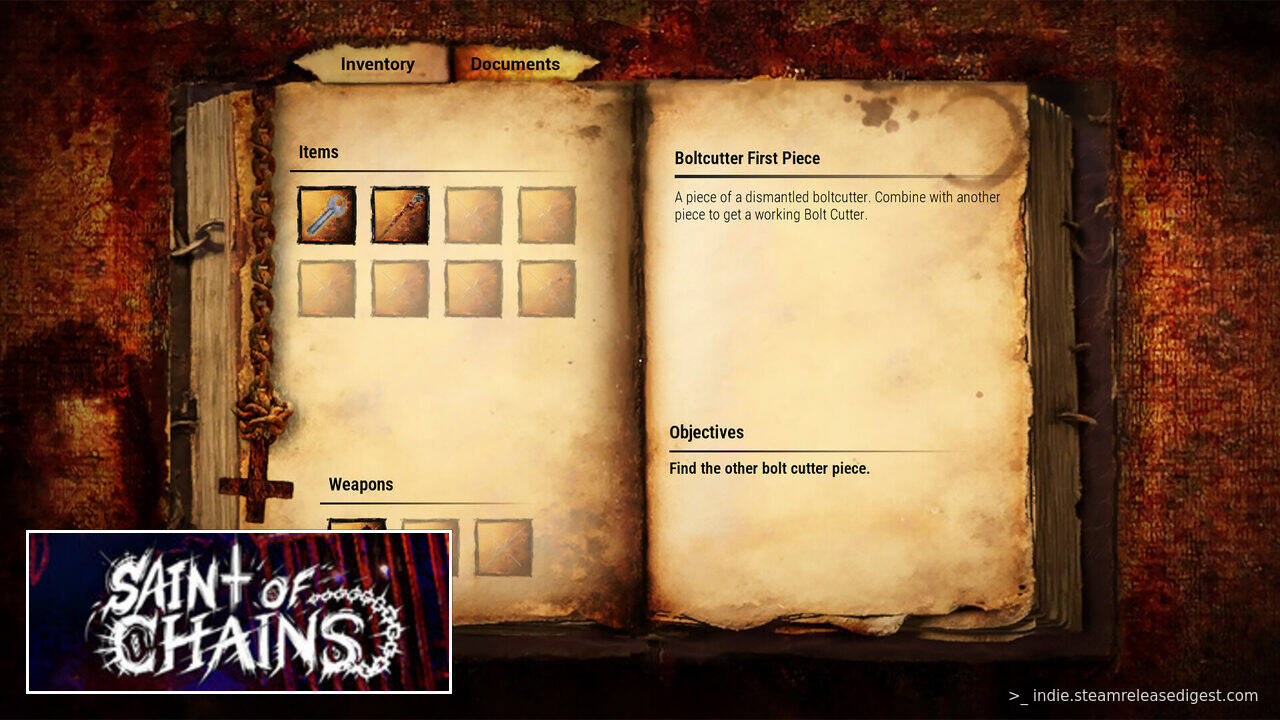
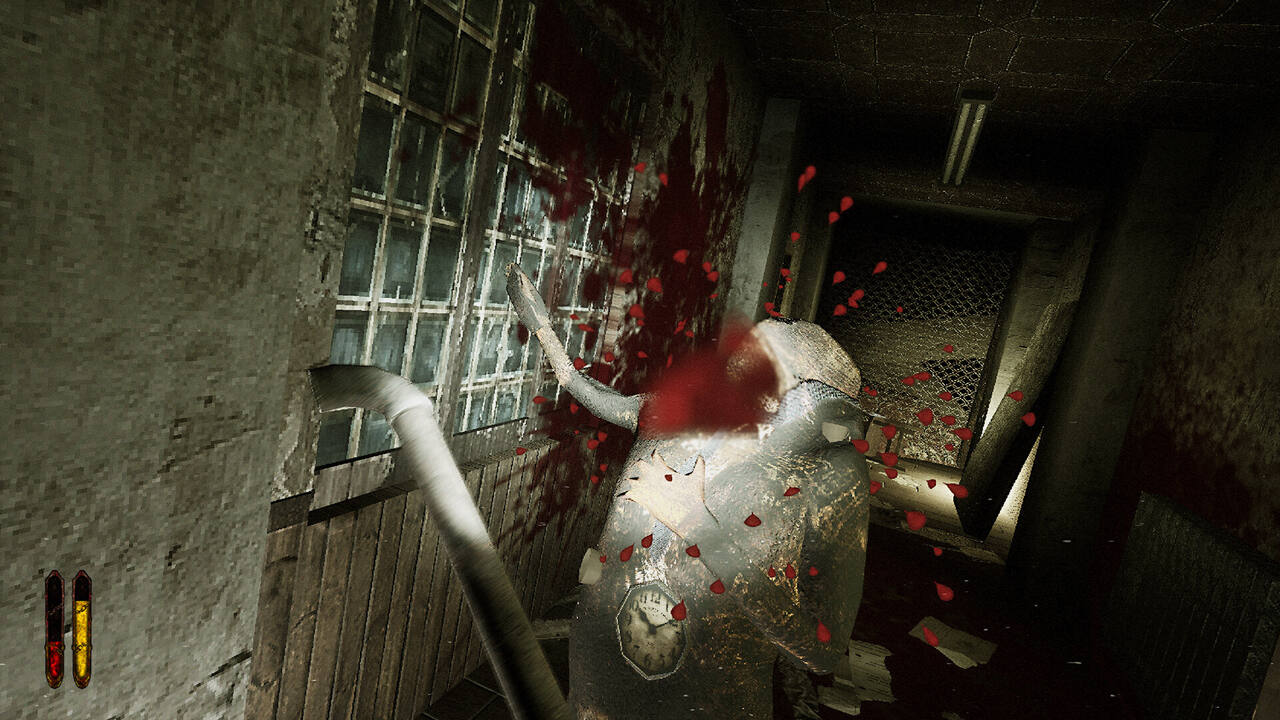
    The combat in Saint of Chains is a frantic, close-quarters scramble. You will find yourself swinging pipes, bats, knives, and cleavers at grotesque entities that feel like the physical manifestations of broken promises. While firearms do exist, ammunition is exceedingly scarce. Every bullet is a luxury, forcing you to make split-second calculations about whether to stand your ground or flee. This desperation is compounded by a classic, restrictive inventory system. Space is at a premium, and you will constantly find yourself agonizing over what to keep: a vital puzzle piece, a healing item, or a weapon that might break on your next encounter.

    Saint of Chains gameplay screenshot
    Image courtesy of MystiveDev via Steam

    What Players Love

    The reception among horror veterans has been remarkably warm, sitting at an 84% positive rating on Steam. Players who grew up on the psychological weight of Team Silent’s work have praised Saint of Chains for genuinely understanding what made those games special. It isn’t just about the retro visual filter; it is about the “feeling of burden” and the thematic weight of loss that hangs over the entire narrative.

    The sound design is a particular standout, earning praise for its ability to build thick, suffocating dread in the quiet moments between encounters. The monster designs are described by players as genuinely horrifying, and the jump scares are deployed with a surgical restraint that keeps players on edge rather than causing cheap exhaustion. For those who pay attention to environmental storytelling, the narrative offers an exceptional, multi-layered depth that lingers long after the credits roll.

    The Rough Edges

    True to its indie roots and retro inspirations, Saint of Chains has some rough edges that might deter players accustomed to modern quality-of-life features. The most prominent hurdle is the complete lack of a checkpoint system. The game requires you to manually save at designated spots; fail to do so, and a single mistake can wipe out hours of progress.

    Some players have also noted that the levels, while atmospheric, are highly linear and can feel somewhat barren. There is little incentive to explore off the beaten path, as the puzzles are relatively straightforward—usually requiring you to simply find a key or an item that is already on your path. Additionally, minor technical hiccups have been reported, including a frustrating bug where picking up a sledgehammer completely locked a player’s inventory screen, forcing a hard restart. Finally, a few players felt the game leaned so heavily on its inspirations—particularly Cry of Fear—that it occasionally struggled to establish its own unique identity.

    The Verdict

    Saint of Chains is a highly specific game made for a highly specific audience. It is not a polished, high-octane modern action-horror game. It is a slow-burn, atmospheric, and emotionally heavy piece of interactive dread. If you miss the era when horror felt dangerous, clunky, and deeply personal, this short and intense journey is well worth your time—just remember to save your game often.

    Key Facts

    • Developer: MystiveDev
    • Publisher: MystiveDev
    • Release Date: May 12, 2026
    • Price: $9.74
  • Poolscape: A Low-Poly Dive into Liminal Nostalgia

    Poolscape: A Low-Poly Dive into Liminal Nostalgia

    Low-poly water ripples gently against repeating turquoise tiles under a pixelated skylight that casts a sterile, static glow. There is no wind, no distant hum of machinery, only the rhythmic, wet echo of your own footsteps wading through ankle-deep water. Suddenly, a strange, dreamcore flower with a giant, unblinking eyeball pops out from behind a matte-colored pillar, stares at you for a heartbeat, and quietly vanishes. You are completely alone, yet you are not in danger. This is the quiet, uncanny world of CosmicArcade’s retro walking simulator, a digital space that feels less like a modern video game and more like a lost Interactive CD-ROM from 1998.

    Wandering the Digital Ether

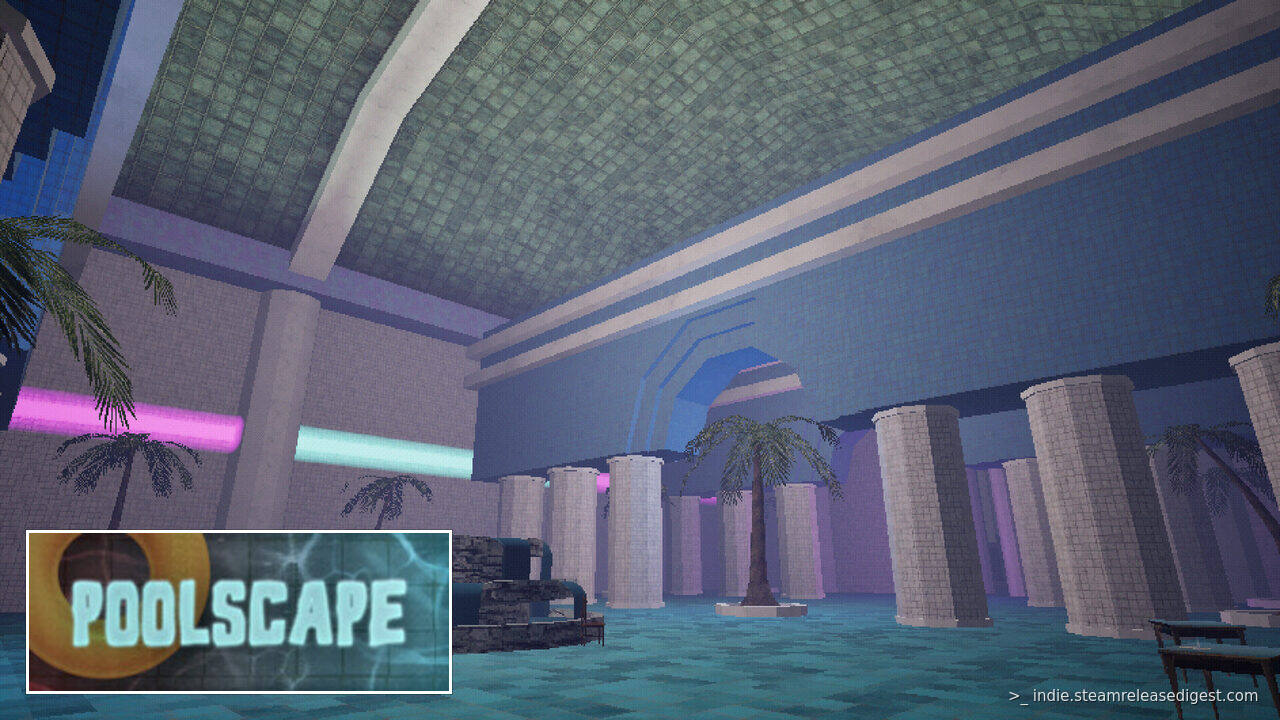
    At its core, Poolscape is an atmospheric walking simulator structured around seven distinct, liminal environments. Rejecting the high-fidelity, photorealistic horror that has flooded the “Backrooms” subgenre in recent years, this game embraces the chunky, textured limitations of the original PlayStation. You explore these spaces from a first-person perspective, moving through a variety of thematic levels accessed via a central hub world.

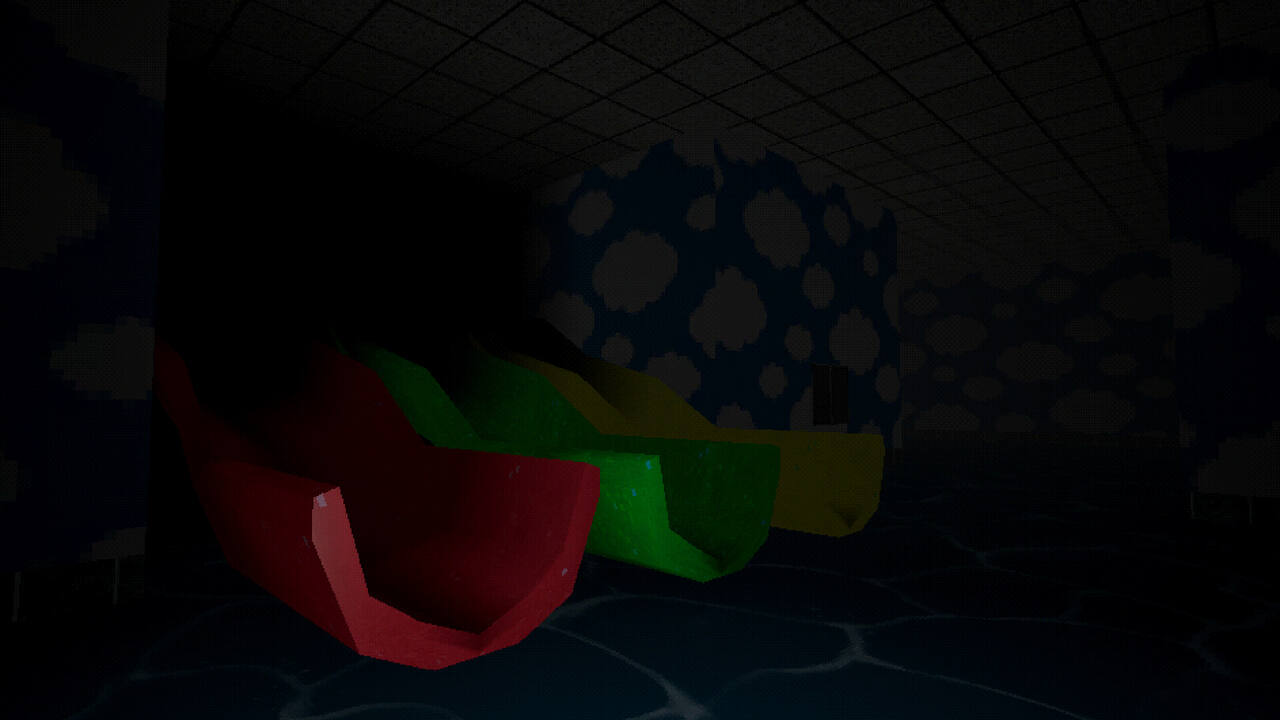
    The levels range from the endlessly repeating tiles of the classic Poolrooms to the crushing, brutalist architecture of the Aquatic Megastructure—an environment specifically designed to trigger a mild sense of megalophobia with its impossibly vast industrial walls. In contrast, the Dreampools level offers a bright, pastel-colored, vaporwave-infused escape complete with low-poly palm trees, while other levels plunge you into near-total darkness where thick black fog limits your vision to the immediate path ahead. There are no puzzles to solve, no keys to find, and no monsters to outrun. Your only objective is to exist within the space, follow the predetermined paths, and soak in the mood.

    Poolscape gameplay screenshot
    Image courtesy of CosmicArcade via Steam

    The Comfort of Isolation (and the Pain of Crawling)

    For players who appreciate the quiet, nostalgic aesthetic of the early 3D era, Poolscape delivers exactly what it promises. Steam reviews heavily praise the game’s stellar sound design and ambient soundtrack. The audio does the heavy lifting here, perfectly capturing the eerie, anxious calm of being somewhere you shouldn’t be. Players have described the experience as a “Disneyland ride” or the closest thing to being trapped inside a classic Windows 98 screensaver. The inclusion of a hub world is another welcome feature, letting you jump straight back into your favorite aesthetic vibe without having to replay the game linearly.

    Crucially, players love that the game respects their heart rates. There are no sudden jump scares or hostile entities actively hunting you down. The giant eyeball flower that occasionally blips into existence is treated more as a quirky, benevolent spectator than a threat, allowing you to appreciate the atmosphere without constantly looking over your shoulder.

    However, Poolscape’s dedication to a slow, methodical pace has proved polarizing. The most common and frustrated complaint from players is the excruciatingly slow movement speed. Even when holding down the run key, your character moves at a crawl. This design choice is compounded by the inclusion of several narrow crawlspaces that force you to crouch-walk for up to twenty seconds at a time—a mechanical hurdle that players note adds nothing to the atmosphere and only serves to artificially drag out the playtime. Furthermore, some players felt the levels were a bit too “manufactured” and linear, lacking the feeling of getting genuinely lost in a vast, infinite maze. Once you walk the single path to the end of a level, there is virtually no reason to return.

    The Verdict

    Poolscape is a highly specific mood piece. If you are looking for a challenging survival horror game or an expansive sandbox to get lost in, you will likely find this to be a boring and pointless stroll. But if you have five dollars to spare and want to spend an hour zoning out inside a gorgeous, low-poly, vaporwave-infused interactive art gallery, Poolscape captures that specific late-’90s liminal nostalgia better than almost anything else on the market.

    Key Facts

    • Developer: CosmicArcade
    • Publisher: CosmicArcade
    • Release Date: May 11, 2026
    • Price: $4.99
  • Duriano: Where Spikes Meet Sagas in a Roguelite Valhalla

    Duriano: Where Spikes Meet Sagas in a Roguelite Valhalla

    Duriano: The Spikiest Hero in Valhalla – An Early Access Roguelite That’s Anything But Rotten!

    Forget your grizzled space marines and stoic fantasy knights. What if I told you the next unexpectedly addictive roguelite hero is a durian? Yes, you read that right. In a sea of generic fantasy and sci-fi, “Duriano” bursts forth with a concept so delightfully absurd, it demands your attention. This isn’t just another top-down arena battler; it’s a Norse mythology epic reimagined with fruit, and somehow, it absolutely works.

    Peeling Back the Gameplay: Durians, Gods, and Glorious Chaos

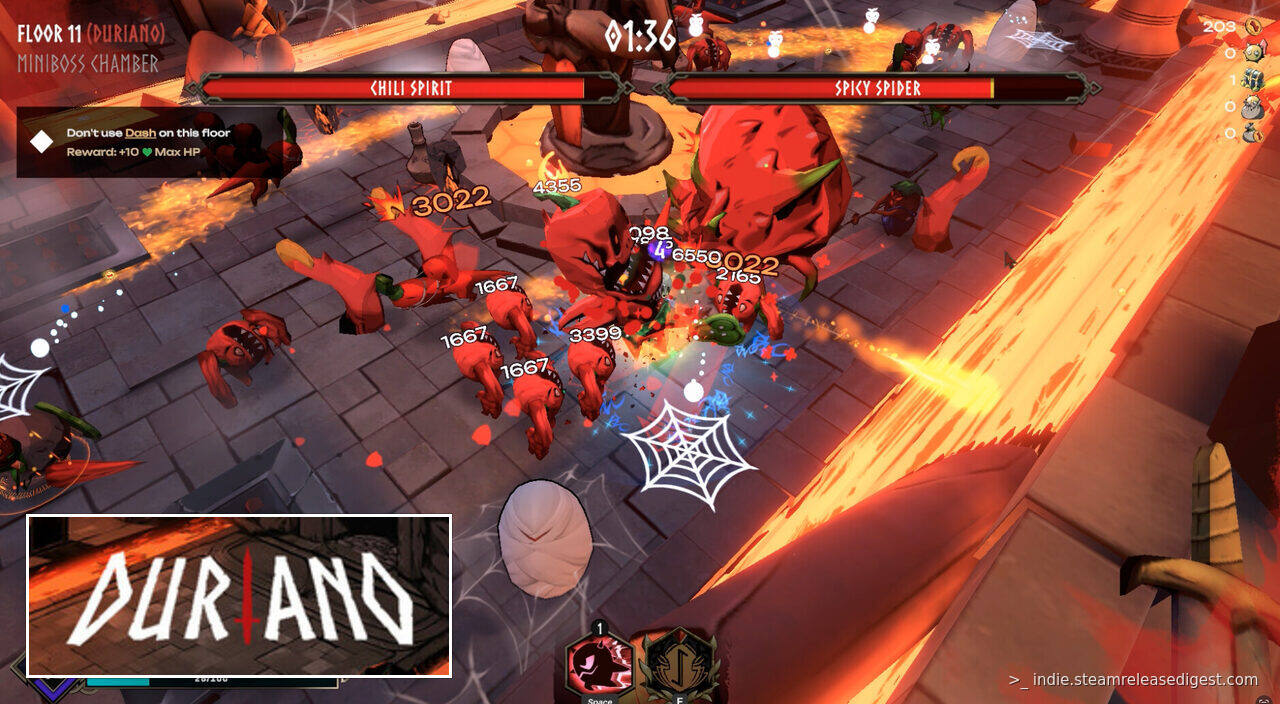
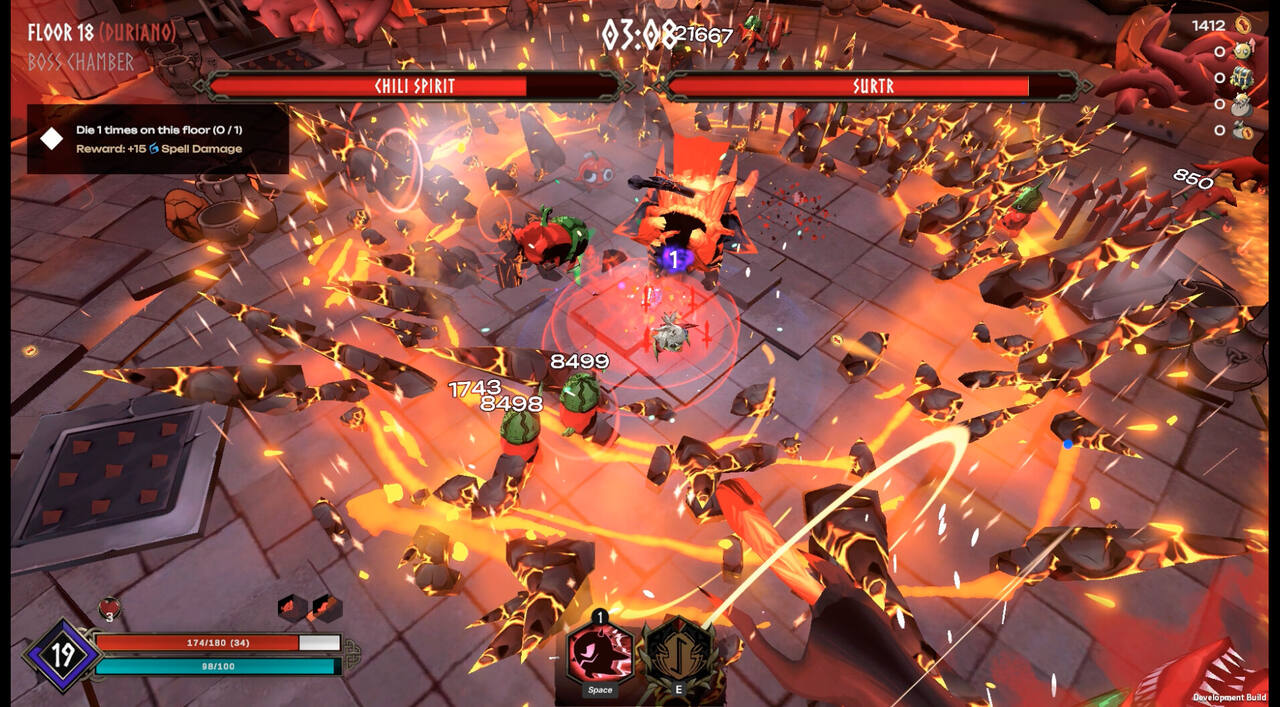
    “Duriano,” currently in Early Access and due for its full launch in May 2026, plunges you into a post-Ragnarök world gone deliciously wrong. A bizarre curse has turned every living being into fruits and vegetables, and you, a resurrected warrior, find yourself in the spiky, armored form of a Durian Hero. Your quest? To journey to the fiery realm of Muspelheim, confront the giant who shattered the old world, and lift this peculiar affliction.

    At its core, “Duriano” is a top-down arena roguelite, but it’s the sheer creativity in its execution that elevates it. You’ll choose from diverse Durian Hero variants, each embodying unique powers inspired by Norse gods. Then, you’ll pick a “God’s Trail” for ultimate combat skills and empower your hero with “Fate’s Flavors” for buffs and abilities. Add to this a collection of “Mythic Weapons” with game-changing effects, and you have a recipe for truly wild, synergistic builds. The moment-to-moment gameplay is a frantic, fast-paced dance of dodging, slashing, and unleashing divine fruit-power against hordes of fire-born monsters. Every run is designed to be unique, pushing you to adapt your strategy and experiment with increasingly outlandish combinations. It’s the kind of game that has you muttering “just one more run” deep into the night.

    What Players Are Saying: A Spiky Mix of Love and… Spikes

    The Steam reviews are overwhelmingly positive (95% at the time of writing), painting a picture of a game with immense potential and an already solid foundation. Players are absolutely charmed by the game’s quirky premise: “You play as a durian warrior fighting Norse gods, sounds wild, but it totally works,” one reviewer gushed after 46 hours. The combat is frequently praised as “smooth,” “fast-paced,” and “addictive,” with satisfying upgrades and a “perfect roguelite loop.” Many appreciate the depth of build customization, allowing for “game-breaking synergies” that keep each run fresh. Some players specifically highlighted how well it plays on handheld devices like the Steam Deck, making it “a better fit for short-break experiences rather than long-hour sessions.” The visuals are considered “decent,” with some enemies even described as “cuter than they have a reason to be,” and the music effectively ratchets up the “tension and atmosphere.”

    However, like any fruit, “Duriano” has its rough spots. Some players found the “endless mode” to be “pretty mindless,” leading to boredom, and noted “poor balance between classes” in its current state. A significant point of contention for a few players revolves around the unique upgrade system. One negative review decried it as “so stupid,” explaining that many upgrades come with a “penalty” – for example, gaining attack power might cost you attack speed. This isn’t a straightforward power gain; it’s a constant trade-off, and while some players might see it as an interesting strategic layer requiring careful build consideration, others find it frustratingly counterintuitive. The game’s current Early Access status means content can feel limited, with requests for “more challenge and content” being common. Lastly, a few skeptical players have raised concerns about the authenticity of some glowing reviews, pointing to accounts with low activity, which is a broader issue on Steam, but worth noting for transparency.

    The Verdict: Who Should Brave the Spikes of Duriano?

    So, who is “Duriano” for? This game is an absolute must-play for anyone craving a unique, fast-paced roguelite experience that dares to be different. If you’re tired of the same old fantasy tropes and appreciate a healthy dose of quirky humor mixed with genuinely fun gameplay, then prepare to be hooked. Fans of arena survival games and reverse bullet hells looking for a fresh spin will find a lot to love here, especially if you enjoy diving deep into buildcrafting and experimenting with wild synergies. Steam Deck owners, take note – this looks like a fantastic pick-up-and-play title for short bursts of glorious chaos.

    However, if you demand perfectly balanced classes, a completely streamlined upgrade path without interesting trade-offs, or a vast amount of content from day one, you might want to wait for the full release. The “penalty” upgrade system, while innovative, isn’t for everyone, and the game is still evolving. But if you value creativity, a strong gameplay loop, and don’t mind embracing a bit of early access jank for something truly fresh, then “Duriano” is a surprisingly sweet, spiky adventure that’s ripe for the picking. Don’t let the fruit fool you; this hero means business!

    Key Facts:

    • Price: $14.99
    • Developer: Adisoft Gaming Co.,Ltd.
    • Release Date: May 11, 2026 (Currently in Early Access)
    • Genres: Action, Indie, Strategy
    Duriano gameplay screenshot
    Image courtesy of Adisoft Gaming Co.,Ltd. via Steam
  • NITRO GEN OMEGA: A Flawed, Heartfelt Shonen Mech Tactics Game Worth the Janky Ride

    NITRO GEN OMEGA: A Flawed, Heartfelt Shonen Mech Tactics Game Worth the Janky Ride

    NITRO GEN OMEGA is a tactical mech RPG that trades cold, sterile military simulation for the hot-blooded, sentimental energy of a Saturday morning 90s anime.

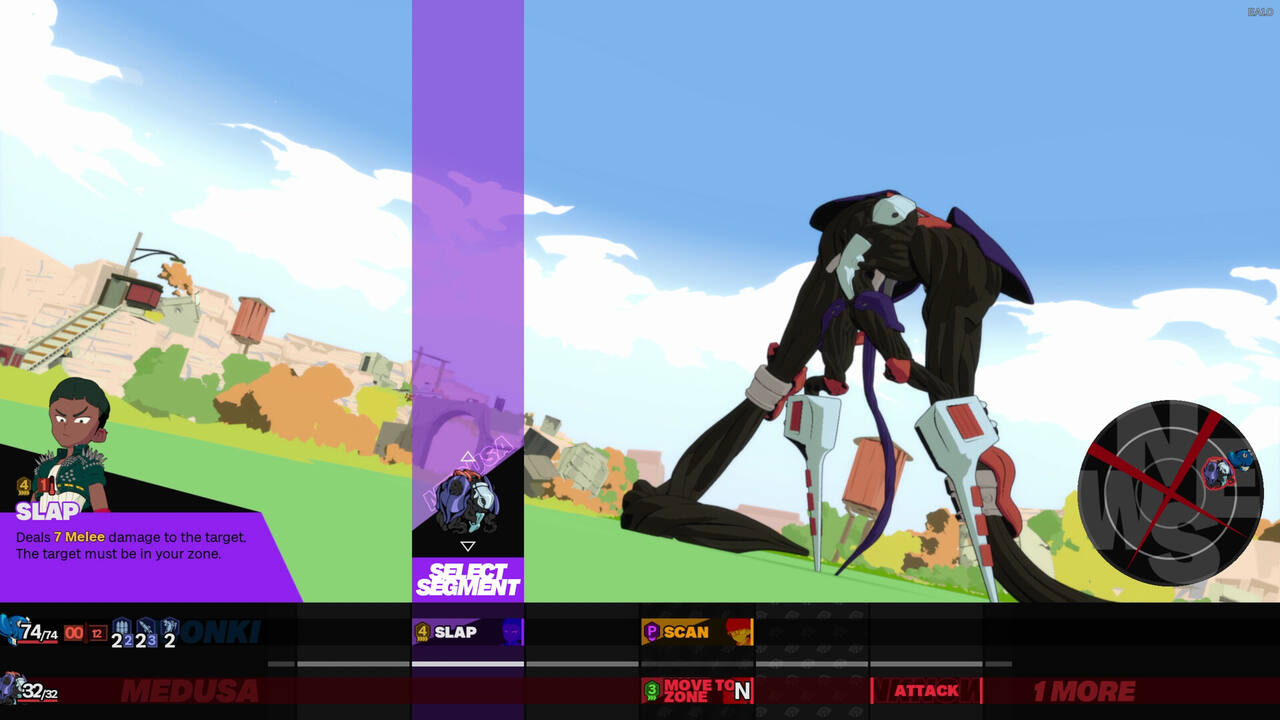
    Instead of commanding an entire army of faceless tanks, you guide a single, highly customized war machine operated by a four-person crew. The game’s mechanical novelty lies in how it divides labor: rather than each pilot getting their own robot, all four of your pilots control a different subsystem of the same mech. The Driver handles the movement and close-quarters melee strikes; the Gunner lines up ballistic shots; the Engineer coordinates heavy missile payloads and deploys essential coolant; and the Operator drops devastating remote-controlled bombs. During the game’s unique Timeline System, you orchestrate these actions together during a tactical Planning Phase, balancing ammo reserves and thermal heat before letting the clock run to watch the actions unfold in fully animated, cinematic combat sequences.

    Between these explosive skirmishes, your mercenary crew returns to a home base on your flying airship. Here, the game transforms into a cozy relationship simulator. Your pilots cook meals, train, and relax together, forming dynamic bonds, deep friendships, or tense rivalries based on their shared downtime. These relationships are far from cosmetic; they directly influence how the crew coordinates and supports each other when they drop back into the wasteland. You will also spend considerable time in the hangar, swapping out parts to balance armor weight, heat generation, and firepower. Crucially, while a ruined mech can always be rebuilt with enough scrap and money, your pilots cannot. Permadeath, panic, fatigue, and permanent injuries are constant threats, meaning the crew you build is always one bad drop away from tragedy.

    NITRO GEN OMEGA gameplay screenshot
    Image courtesy of DESTINYbit via Steam

    With an 86% positive review rating on Steam, the game has clearly struck a chord with players who appreciate its immense charm and nostalgic aesthetic. Reviewers are quick to praise the game’s distinct 90s shonen visual style and its high-energy soundtrack, which together capture a very specific retro-anime vibe. But the real emotional core of the game lies in its character creation tool. Players love the ability to design their own pilots from scratch rather than relying on random generation. For some, this feature has transcended simple gameplay; one reviewer shared a touching story about creating avatars for their wife and their late childhood friend, watching them form bonds in-game and turning a tactical robot-battling sandbox into a deeply personal tribute. It is a testament to how effectively the relationship mechanics can make you care about your digital crew.

    However, players are also highly vocal about the game’s rough edges. NITRO GEN OMEGA is undeniably janky, and those looking for a polished, frictionless experience will likely find plenty to complain about. The open world, which you traverse to fly between settlements and enemy lairs, has been criticized as feeling barren and empty, making travel times feel like a drag. More frustrating is the heavy reliance on random number generation (RNG). As your crew levels up, they need to achieve “breakthroughs” to unlock new skill slots, but these triggers are completely random. If a pilot demands a high-level mission to break through before you have the gear to survive it, and the shop’s randomized inventory refuses to sell the mech parts you need, you can easily find your progression stalled through no fault of your own. Combat balance is similarly erratic, occasionally swinging from laughably easy to brutally punishing from one mission to the next.

    Ultimately, NITRO GEN OMEGA is a game of high peaks and noticeable valleys. It is not a clinical, mathematically precise strategy engine, but rather a character-driven sandbox overflowing with personality and heart. If you can overlook some progression jank and unbalanced encounters in exchange for a deeply charming, mechanical love letter to retro anime, this is a wasteland journey worth embarking on.

    Key Facts

    • Developer: DESTINYbit
    • Publisher: DESTINYbit, Beep Japan Inc.
    • Release Date: May 12, 2026
    • Price: $29.99
  • Don’t Panic! It is Just Turbulence: A High-Altitude Exercise in Screaming at Your Friends

    Don’t Panic! It is Just Turbulence: A High-Altitude Exercise in Screaming at Your Friends

    Asymmetrical co-op games live and die by how quickly they can make two friends scream at each other in laughing frustration, and this panic-filled aviation puzzle game wastes no time putting you in the hot seat.

    The Art of Talking Your Way Out of a Crash

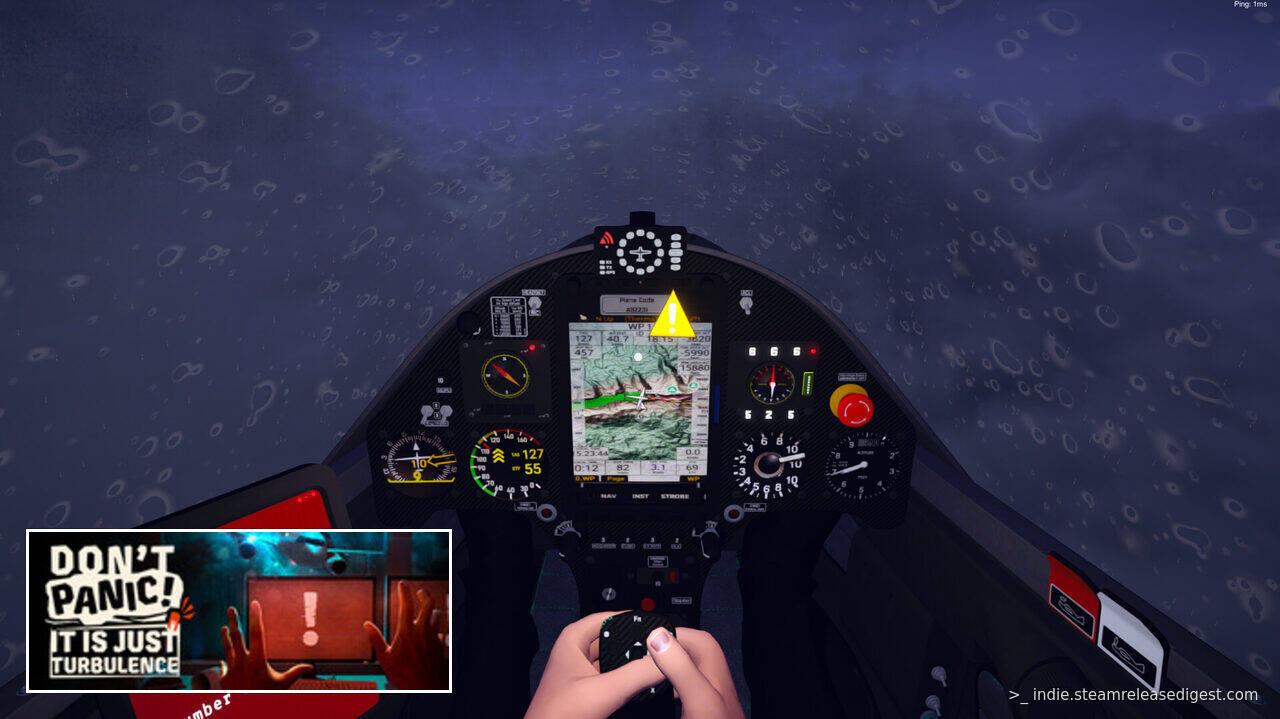
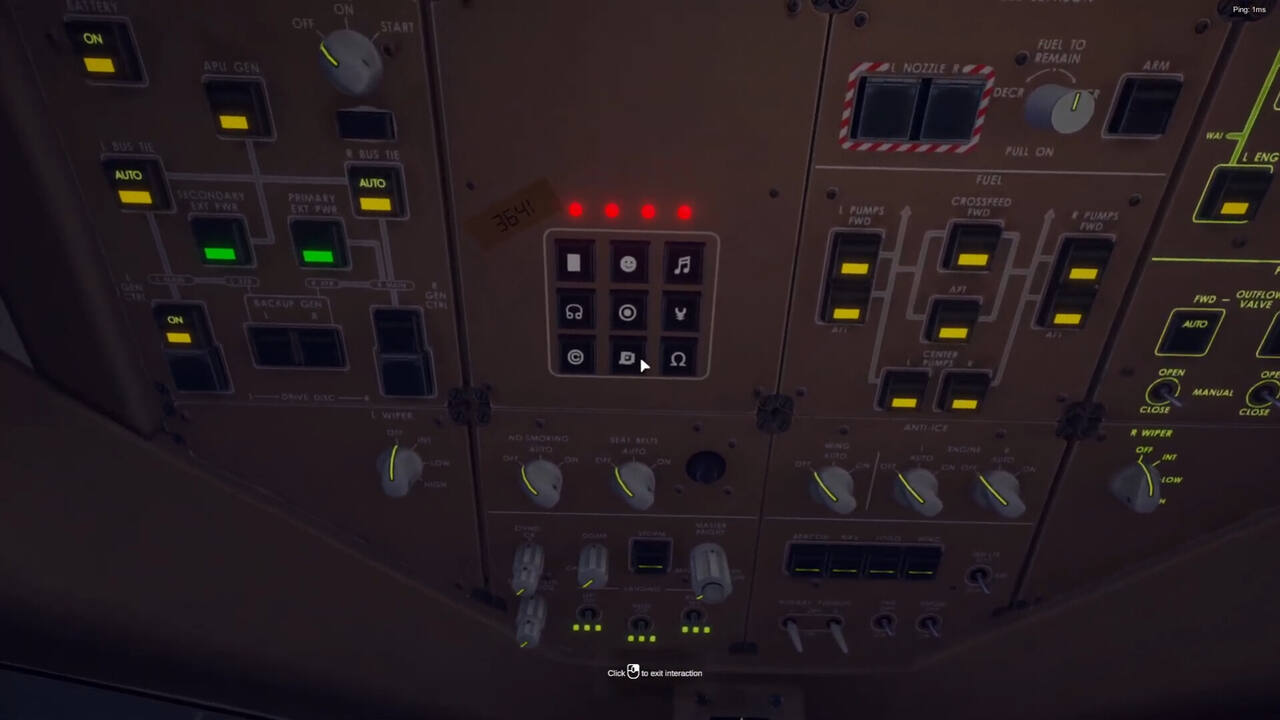
    The game splits its players into two wildly different and highly dependent roles. Inside the shaking cockpit, the Pilot is surrounded by a chaotic array of malfunctioning instruments, spinning gauges, and alarm systems that light up like a Christmas tree. Meanwhile, safe on the ground, the Air Traffic Controller is staring at a set of instruction manuals and clues, trying to translate technical jargon into clear, actionable advice. If the Pilot needs to stabilize the craft, the Controller has to figure out which specific sequence of buttons to push, and the Pilot has to execute it before the plane drifts completely out of control.

    What makes this dynamic work is that talking is your primary control mechanism. The developer emphasizes that silence is the fastest route to a spectacular mid-air meltdown. The moment communication drops, the cockpit devolves into a disaster simulator where errors stack on top of one another until they culminate in a very loud, explosive boom. Different aircraft offer distinct layouts, scaling up the complexity from relatively simple light planes to complex aircraft with unique system quirks, unpredictable failures, and precision timing puzzles.

    Don't Panic! It is Just Turbulence gameplay screenshot
    Image courtesy of Harmonia Games via Steam

    What the Passengers Are Saying

    With a 74% positive rating on Steam, player sentiment highlights a game that excels at delivering fast, uncomplicated fun. For many, it serves as a highly accessible alternative to games like Keep Talking and Nobody Explodes. Reviewers praise the fact that it captures the same frantic spirit but is much easier to jump into, specifically noting that players do not need to scroll through massive PDF files on a second screen or print out a physical manual just to get started. It is a streamlined, pick-up-and-play experience that gets groups laughing and panicking within minutes of booting it up, running smoothly even on modest notebooks for most players.

    However, the flight is not entirely smooth. The most common complaints center around performance issues and technical bugs. Multiple players have pointed out interface glitches and unexpected lag, with one reviewer memorably noting that an absurdly detailed, high-polygon joystick model sent their RTX 4060 Ti graphics card into overdrive. Other seasoned co-op fans feel the experience is a bit on the short and simple side, suggesting that those looking for a deep, grueling puzzle challenge might find it a bit too easy once they get used to the basic mechanics. A few reviewers suggest waiting for further optimization updates before making the purchase.

    The Verdict

    Ultimately, this is a budget-friendly co-op title designed for a quick, chaotic game night rather than a long-term obsession. If you and a friend want to spend an evening shouting instructions over screaming sirens, laughing at spectacular crashes, and testing your communication skills without the hassle of a complex setup, the $6.39 entry fee is an easy sell. Just be prepared to overlook some optimization hiccups and a slightly buggy interface while the developer continues to polish the experience.

    Key Facts

    • Developer: Harmonia Games
    • Publisher: Aiolos Studios
    • Release Date: May 11, 2026
    • Price: $6.39
  • Battlestar Galactica: Scattered Hopes: Your Fleet’s Desperate Roguelite Gamble

    Battlestar Galactica: Scattered Hopes: Your Fleet’s Desperate Roguelite Gamble

    Battlestar Galactica: Scattered Hopes: The Grim, Gripping Roguelite Your Fleet Needs

    So say we all! If those words send a shiver down your spine, if you pine for the gritty, desperate struggle of humanity against an relentless chrome tide, and if you’re tired of mainstream gaming regurgitating the same old tropes, then *Battlestar Galactica: Scattered Hopes* might just be the unsung hero you’ve been searching for. This isn’t just a licensed game; it’s a meticulously crafted roguelite that perfectly encapsulates the brutal, existential dread and impossible choices that defined the acclaimed 2000s series. Forget flashy graphics; this game delivers atmosphere and strategic depth in spades, forcing you to make decisions that will haunt your command chair long after you’ve quit for the night.

    The Long Haul to Survival

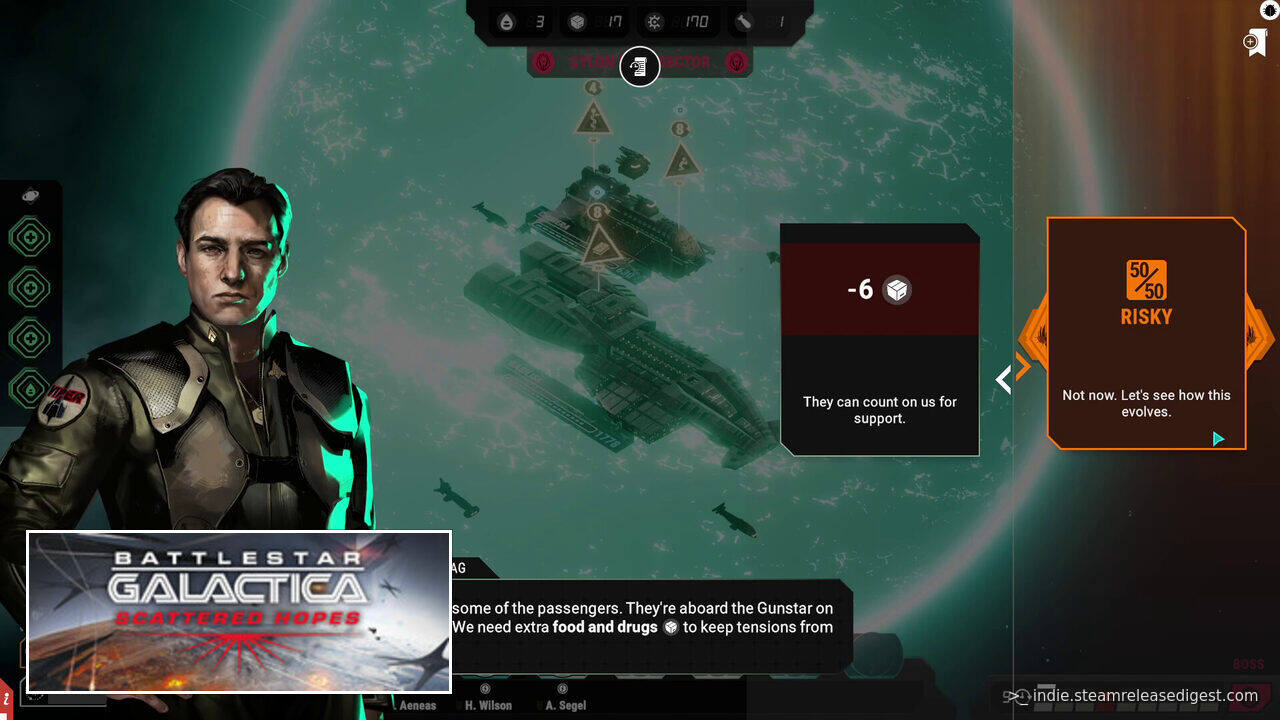
    Alt Shift, with Dotemu publishing, brings us a survival fleet-management roguelite that thrusts you into the boots of a desperate commander. Your mission, should you choose to accept it (and really, what choice do you have?), is to shepherd a ragtag fleet of civilian ships, survivors of the Cylon annihilation of the Twelve Colonies, towards the last known bastion of hope: the Battlestar Galactica. Easier said than done when the Cylon Fleet is constantly on your tail, and every jump is a roll of the dice.

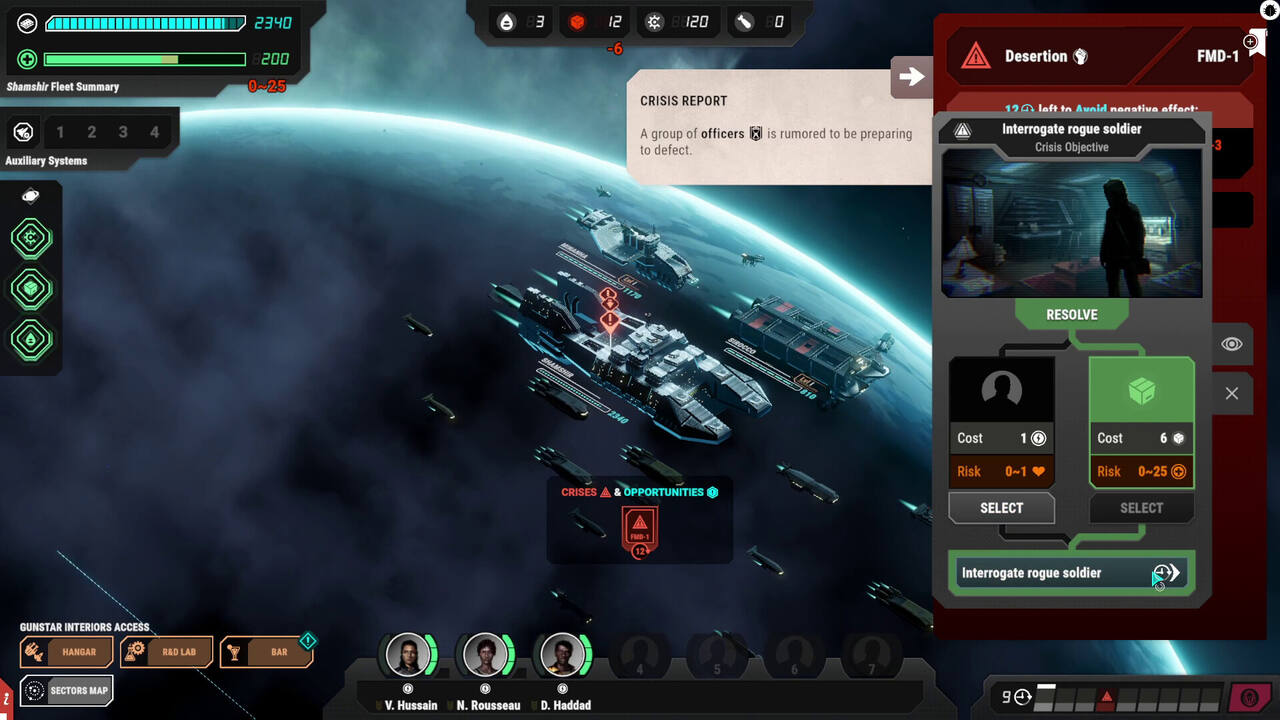
    The core gameplay loop is brilliantly designed around two phases. First, you have the **Fleet Management** phase. Here, time is a precious commodity, measured in “turns” before the inevitable Cylon assault. You’re forced to prioritize with limited resources: dispatching expeditions to scrounge for supplies, allocating personnel to resolve mounting crises, upgrading your vessels for the next inevitable skirmish, and even training your beleaguered crew. The beauty of this phase is how your decisions ripple through the fleet. Every choice impacts faction politics, healthcare, and maintenance levels, dynamically triggering narrative events. Ignore a mounting medical crisis, and an epidemic might break out. Fail to maintain your ships, and critical system malfunctions could cripple your fleet. Even worse, the chilling possibility of a Cylon infiltrator lurks within your ranks, forcing you to choose between costly investigations or the potentially devastating consequences of inaction. These are truly do-or-die decisions, and the game excels at making you feel the weight of every single one.

    Battlestar Galactica: Scattered Hopes gameplay screenshot
    Image courtesy of Alt Shift via Steam

    Then comes the **Real-Time Combat with Tactical Pause** phase. Let’s be clear: you are almost always outnumbered. These aren’t battles to *win* in the traditional sense; they’re battles to *survive*. Your goal is to hold out long enough for your FTL drive to spool up and make that desperate jump to safety. You’ll be coordinating frontline squadrons, calling in powerful Gunstar strikes, and managing your fleet’s defensive posture in real-time, with the crucial ability to hit that tactical pause button to issue precise commands. It’s a frantic, often brutal dance of desperation, perfectly mirroring the show’s combat philosophy.

    What the Fleet is Saying

    It’s clear from the overwhelmingly positive reviews (95% at time of writing!) that *Battlestar Galactica: Scattered Hopes* has struck a chord. Players universally praise its ability to “perfectly evoke the feeling of the early 2000s Battlestar Galactica show.” Many compare it favorably to the excellent Battlestar Galactica board game, highlighting the constant “tough choices, using your limited resources and weighing pros and cons.” For fans of the roguelite genre, the common refrain is that it’s a “themed FTL-like,” a “more brutal and narrative version of FTL” or a spiritual successor to Alt Shift’s own *Crying Suns* – a comparison that should immediately perk up the ears of indie strategy aficionados. The integration of show’s music snippets and sound effects, like the iconic “fast bzz bzz bzz of an incoming call,” are noted as fantastic touches that deepen the immersion.

    However, no journey through space is without its turbulence. A few players expressed minor frustrations, such as the “sudden, random invention of new ships and the redesign of ships like the Raptor into having a huge railgun on it.” While the game doesn’t break new ground in terms of core mechanics (it builds upon established roguelite formulas), some felt it didn’t add “anything to the Battlestar Lore” itself, so don’t expect deep dives into untold histories or characters. One pilot noted the “camera during battle is a bit too ‘close’,” which might be a minor adjustment for some. And while the game is generally lauded for its quality, one review, the only mixed one, called it “average,” suggesting it might not blow everyone’s socks off, but it’s certainly not a “rip-off” or “unplayable.” It’s good, solid, indie fare.

    The Verdict: Who Should Join This Fleet?

    So, is *Battlestar Galactica: Scattered Hopes* for you? If you’re a Battlestar Galactica fan who cherishes the show’s dark tone, complex moral dilemmas, and the sheer desperation of humanity on the run, then the answer is a resounding “yes!” If you adore games like FTL, Crying Suns, or the BSG board game, and thrive on high-stakes resource management paired with tactical, real-time combat, this is absolutely a title you need to pick up. It’s a game for those who appreciate innovative gameplay and atmospheric storytelling over photorealistic graphics, for players who want to feel the weight of command and grapple with impossible choices. If you’re looking for a comfortable, casual experience or groundbreaking new lore, you might want to adjust your trajectory. But if you’re ready to make hard choices, fight desperate battles, and truly feel like you’re commanding the last vestiges of humanity, then strap in, commander. Your fleet awaits.

    Key Intel:

    • Price: $19.99
    • Developer: Alt Shift
    • Publisher: Dotemu
    • Release Date: May 11, 2026
  • Super Night Riders S1: Your Synthwave-Fueled Return to Arcade Glory!

    Super Night Riders S1: Your Synthwave-Fueled Return to Arcade Glory!

    Remember the golden age of arcade racers? The sun in your eyes, the wind in your hair, the pure, unadulterated thrill of the open road stretching endlessly before you, all set to a pumping synthwave beat? If those memories make your heart ache for simpler, purer times in gaming, then you absolutely need to put Super Night Riders S1 on your radar. This is a game that doesn’t just tap into nostalgia; it revs its engine and races headlong into it, blending classic arcade mechanics with a fresh, indie aesthetic that just begs to be experienced.

    The Spirit of the Open Road, Reimagined

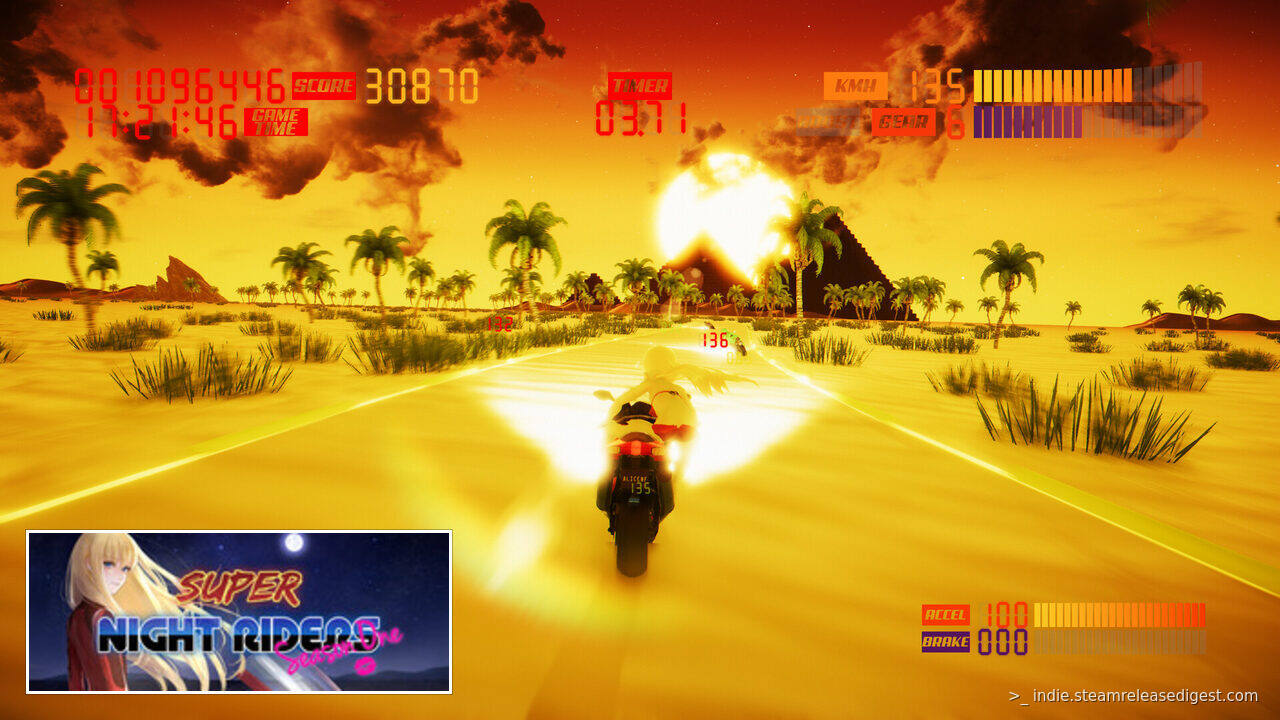
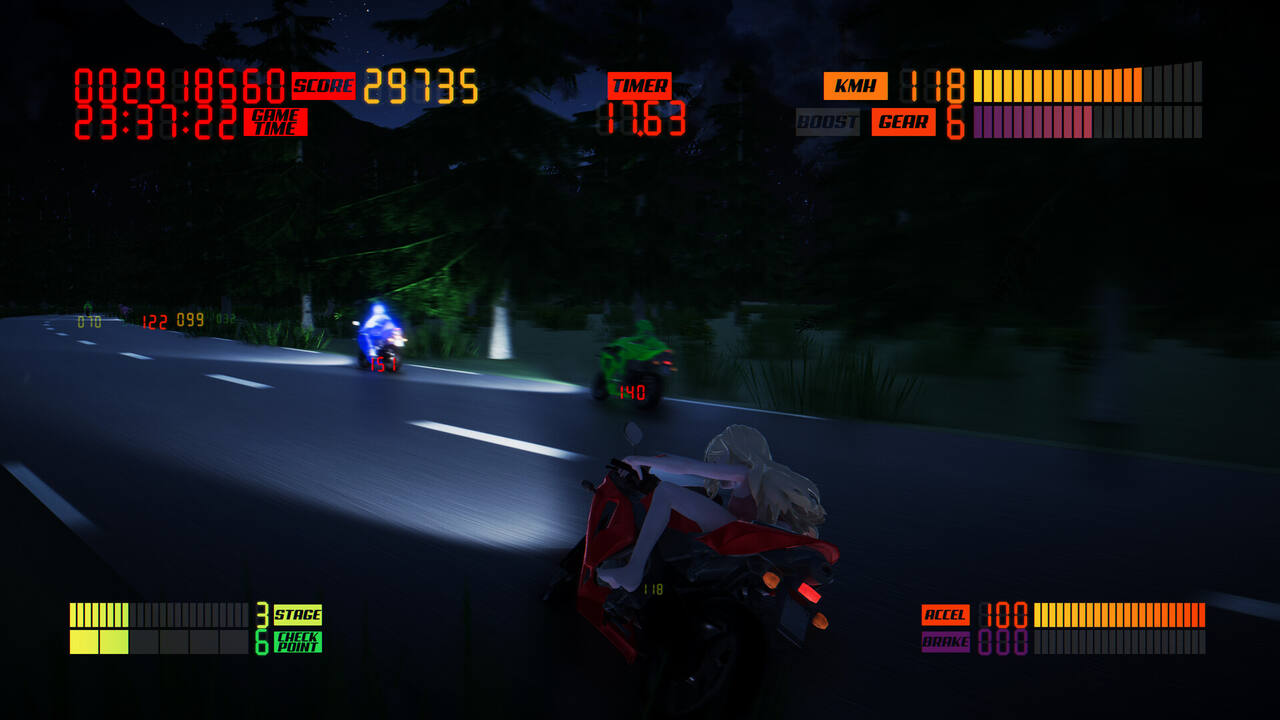
    Super Night Riders S1, currently speeding through Early Access, isn’t here to reinvent the wheel – it’s here to polish it to a dazzling sheen and let you burn rubber. This isn’t your complex, gear-shifting, hyper-realistic sim. Oh no. This is pure, unadulterated arcade racing, ripped straight from the ’80s playbook and given a modern, indie twist. You step into the sleek boots of Alice, the ‘Red Rider,’ a charismatic pro racer who isn’t interested in battling for first place. Her mission, should she choose to accept it, is far more primal: travel as far as humanly (or feline-eared, as the case may be!) possible before the clock hits zero.

    Each of the 12 stages sees you racing against time, dodging rival riders, and hitting checkpoints to extend your run. What starts under the bright afternoon sun will see you carving through the neon-lit night, eventually chasing the sunrise, a true test of endurance and focus. It’s a beautifully simple premise that hides a deceptively addictive challenge, demanding precision and quick reflexes without bogging you down in convoluted mechanics. Just you, the bike, and the endless road.

    Pedal to the Metal, Anime Style

    But Super Night Riders S1 offers more than just nostalgic thrills. It wraps its retro heart in a distinct, modern indie package. The visual style, while clearly honoring its ’80s ‘Super Scaler’ ancestors – think Out Run with its pseudo-3D parallax scrolling – injects a healthy dose of anime cool. Our protagonist, Alice, is not just ‘a racer’; she’s got style, charm, and yes, even optional cat ears, adding a delightful dash of personality that genuinely endeared her to at least one player. The synth-heavy soundtrack, an unspoken but vital part of any ’80s-inspired racer, completes the atmospheric package.

    Super Night Riders S1 gameplay screenshot
    Image courtesy of miyu.works via Steam

    This isn’t about cutting-edge graphics; it’s about crafting an evocative mood. miyu.works understands that sometimes, a distinct art style and a clear vision are far more impactful than a million polygons. It’s a testament to indie development – doing a lot with a focused vision, creating an experience that feels both familiar and refreshingly unique.

    What the Riders Are Saying

    So, what do the early adopters think of Alice’s journey? The consensus, while based on a small sample, is largely positive, albeit with some tempered observations. Players are absolutely loving that Super Night Riders S1 ‘scratches an itch’ they’ve had, specifically for that ‘cute anime girl racing a bike’ vibe. The performance is consistently praised – ‘solid’ and ‘well made,’ with no reported bugs, which is a fantastic sign for an Early Access title. The game’s ability to evoke ‘the spirit of the Super Scaler’ is its biggest triumph, drawing in those who long for that specific brand of arcade racing. It encourages practice, tempting players to ‘get good enough to challenge the higher difficulties.’

    However, it’s not without its bumps in the road, which, as an honest curator, I must highlight. One reviewer found it ‘very basic, straight forward,’ not quite a positive, not quite a negative, simply ‘okay.’ They also pointed out that ‘some stages are not pleasant to look at and can be a distraction (too bright and sometimes the ground looks off).’ This is a valid piece of feedback, hinting that while the artistic vision is strong, its execution might occasionally lead to readability issues or visual discomfort for some players. Being in Early Access, these are exactly the kind of things that a responsive developer can refine and polish. The potential is clearly there, and players recognize it.

    Our Verdict: Who Should Ride?

    Super Night Riders S1 is not for everyone, and that’s precisely its strength. If you crave photorealistic graphics and sprawling open worlds, look elsewhere. But if you are:

    • A nostalgic veteran: Someone who fondly remembers pumping quarters into Out Run, Power Drift, or Enduro Racer machines.
    • A lover of unique aesthetics: You appreciate anime influences, a distinct visual style, and charm over pure fidelity.
    • Seeking pure arcade thrills: You want a game that’s easy to pick up, hard to master, and laser-focused on one core mechanic.
    • An indie game enthusiast: You value creativity, atmosphere, and innovation, and are willing to embrace a game that might not be flawless but oozes personality.
    • An Early Access supporter: You’re keen to jump in early, enjoy what’s already great, and potentially see the game evolve based on feedback.

    Then Super Night Riders S1 is absolutely calling your name. It’s a focused, stylish, and genuinely fun take on a classic genre, offering a refreshing break from the usual gaming fare. It’s got heart, it’s got speed, and it’s got Alice. What more could you ask for?

    Ready to Rev Your Engine?

    Ready to hit the road with Alice? Here are the vital stats for Super Night Riders S1:

    • Price: $8.99
    • Developer: miyu.works
    • Current Status: Early Access (with a full release currently projected for May 11, 2026)

    Jump in now and help shape the future of this promising retro-inspired racer!