Author: sitemill

  • All Your Wrestling Pro Manager: A High-Stakes Booking Sim Fighting Through Its Own Rough Edges

    All Your Wrestling Pro Manager: A High-Stakes Booking Sim Fighting Through Its Own Rough Edges

    Running a show in All Your Wrestling Pro Manager feels less like auditing a financial ledger and more like standing at gorilla position, making split-second calls into a headset while backstage fires burn around you.

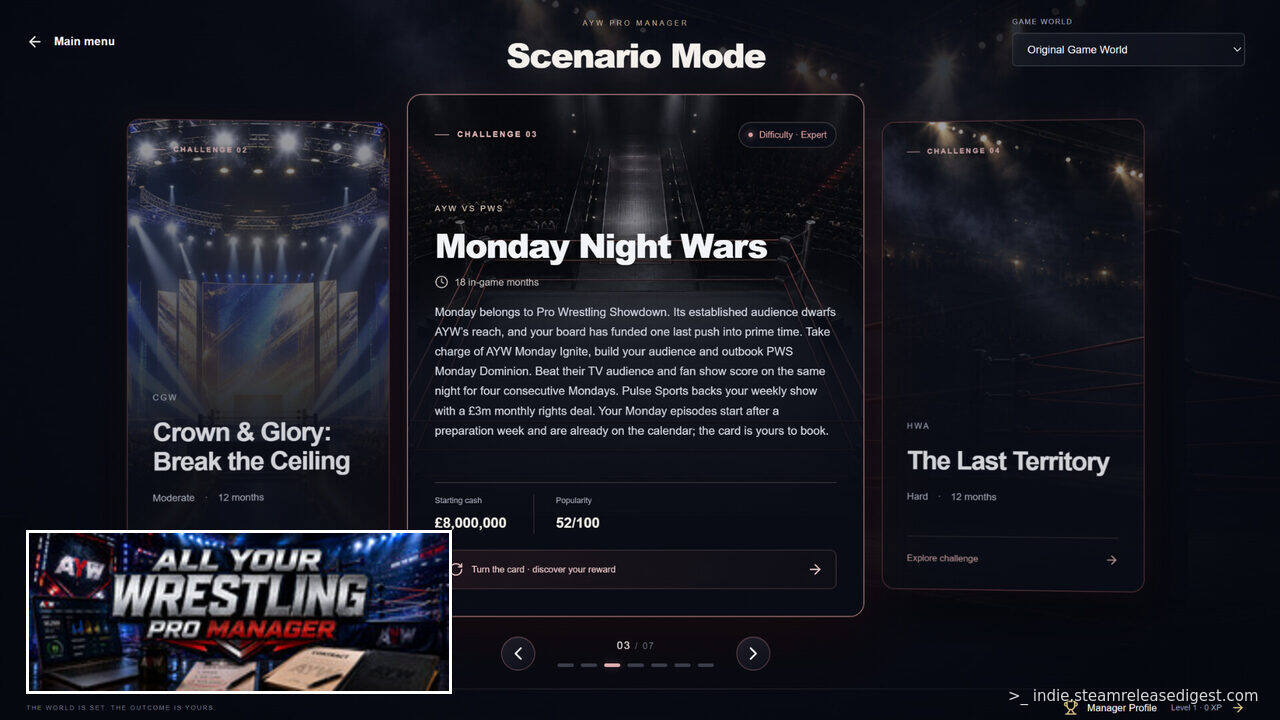
    Developed and published by All Your Games Studios, this $13.39 simulation hands you the steering wheel of one of 30 wrestling promotions and puts the entire burden of survival on your shoulders. You aren’t just signing talent, offering contract perks like merchandise cuts and performance bonuses, or negotiating transfer and loan deals for rival superstars. You are constantly balancing a three-way trust meter between the board of directors, TV networks, and the fan base. Your standings are updated monthly, culminating in actual end-of-year performance reviews. Fail to maintain trust across these factions and you receive formal warnings; accumulate three warnings and you are unceremoniously fired, forced to restart your management career at a new promotion with an entirely fresh batch of stars.

    The rhythm of the game revolves around a live dashboard and an active inbox managed by your assistant, Maya, who delivers weekly updates, monthly reports, and direct tips. Designing an event requires choosing venues ranging from modest local gyms and town halls to massive stadiums, setting show times, uploading custom artwork, and crafting ongoing storylines. For players who want total control over every segment, the game offers painstaking micro-management. However, you can also hire backroom staff to shoulder the burden: bring in a head booker to handle match cards or hire a writer to draft storylines. Crucially, these decisions have immediate consequences—if your head booker fixates solely on main-event champions and superpower talent, undercard morale drops, dragging down overall fan trust over time.

    All Your Wrestling Pro Manager gameplay screenshot
    Image courtesy of All Your Games Studios via Steam

    Among text-based management veterans—especially those who grew up on classic booking games like Extreme Wrestling Revenge (EWR) and Total Extreme Wrestling (TEW)—this dynamic approach to running a promotion has struck a heavy chord. Positive reviews, coming from players with anywhere from 40 to 150 hours logged, single out the deep customization options, extensive editor tools, and the genuine thrill of handling live mid-show chaos. The single biggest point of praise is the developer’s relentless update cycle. In the first few weeks after release alone, four major patches arrived to directly address community feedback, adding quality-of-life toggles and delegation options for players who were initially overwhelmed by micro-management.

    Yet, that rapid patch pace cuts both ways, exposing the game’s biggest flaw: it launched as a full 1.0 release despite blatantly needing an Early Access period. Players highlight missing character portraits, empty wrestler bios, and frustrating gaps in basic booking options, such as being unable to specify whether a promo segment is a taped video package or an in-ring interview. Far worse are the technical casualties of these rapid updates. Multiple players have reported corrupt or wiped save files following patches, turning early praise into sharp frustration when dozens of hours of promotional booking vanished overnight.

    The Verdict

    All Your Wrestling Pro Manager is an energetic, feature-packed labor of love that is currently wrestling with its own technical polish. If you demand pristine databases, bug-free save files, and polished visual presentations from day one, it is best to leave this one on your wishlist for a few months while development stabilizes. But for hardcore booking sim fans who miss the glory days of EWR and want a deeply customizable, stress-filled management game backed by a developer who actively listens to community feedback, it offers tremendous ambition for its modest price tag.

    Key Facts

    • Developer: All Your Games Studios
    • Publisher: All Your Games Studios
    • Release Date: Aug 17, 2026
    • Price: $13.39
  • Alice’s Night at the Mansion Is a Hand-Drawn Mystery That Feels Like a Lost 90s Cartoon

    Alice’s Night at the Mansion Is a Hand-Drawn Mystery That Feels Like a Lost 90s Cartoon

    At first glance, Alice’s Night at the Mansion looks like a breezy Saturday-morning cartoon about a girl trying to rescue her stolen dog, but beneath its nostalgic 4:3 frame-by-frame animation lies a surprisingly rigid web of logic puzzles, item delivery routes, and light stealth mechanics. Players walking into Madvox Games’ point-and-click comedy expecting a linear, two-hour stroll will quickly discover that getting the mansion’s monster guests to their annual party requires meticulous note-taking, careful inventory management, and a willingness to reload saves when a puzzle goes sideways.

    The premise sets up a classic animated setup: Alice’s dog, Dinah, chases a cat into a looming manor and gets trapped by a trio of mischievous ghosts. To win Dinah’s freedom, Alice must help the ghosts host the ultimate Monster Party. That means convincing five eccentric guests—including a gentlemanly Werewolf, a kind Witch, an eccentric Mummy, and a cranky Vampire—to leave their locked rooms. How do you coax a reluctant monster into a party mood? By exploring the mansion’s halls, searching the library’s books for character clues, and matching lost items to their rightful owners.

    Alice's Night at the Mansion gameplay screenshot
    Image courtesy of Madvox Games via Steam

    The core loop combines environmental searching with contextual logic puzzles. Reading books in the mansion library isn’t just flavor text; it provides vital hints about garlic revenge plots, past romances, and specific item requirements. Choices and crafting details carry real weight. For instance, making a regular sandwich instead of a gourmet sandwich can fail a puzzle, permanently locking you out of optimal story branches unless you reload a previous save. Adding friction to your mansion stroll is Pete, an obsessive thief NPC who stalks the corridors to snatch items right out of your bag. Until you locate a specialized detector, dealing with Pete drains Alice’s limited stamina bar fast, turning simple fetch quests into a nerve-wracking game of hide-and-seek.

    Player sentiment highlights a clear affection for the game’s distinct visual identity and nostalgic texture. Reviewers compare the look and feel of the experience to late-90s anime or the golden age of Flash and Nickelodeon web games. The completely hand-drawn, non-AI art style gives Monster Mansion a cozy, distinct personality, and players praise the accessible, story-rich narrative alongside its low price point. With playtimes ranging from a quick single-hour playthrough to an 18-hour deep dive exploring every branching choice, it offers surprising depth for a small project.

    The reception isn’t without its caveats, however. The game’s atmospheric gimmicks can grind on player patience. Reviews frequently complain about how often the lights randomly go out, stalling exploration momentum. Others highlight the frustration of Pete’s ambush mechanics early in the run, where a lack of advance warning leads to swift stamina depletion. Furthermore, the unforgiving nature of item consumption—where handing off the wrong object burns it permanently—forces players to treat manual save slots as an essential gameplay tool rather than an safety net.

    Alice’s Night at the Mansion is best suited for players who hold a soft spot for early-2000s browser adventure games, cozy point-and-click logic puzzles, and retro cartoon aesthetics. If you enjoy piecing together branching story outcomes, don’t mind managing manual saves to dodge puzzle lockouts, and love hand-drawn character design, this budget indie project is well worth a look.

    Key Facts

    • Developer: Madvox Games
    • Publisher: Madvox Games
    • Release Date: Jul 27, 2026
    • Price: $4.99
  • PsyUp: A Psychological Physics Puzzle: Relaxing Block-Busting with a Baffling Theme

    PsyUp: A Psychological Physics Puzzle: Relaxing Block-Busting with a Baffling Theme

    “Don’t let a few easy initial levels fool you,” one early player warns, capturing the unexpected difficulty shift at the heart of N2kStudio’s minimalist physics puzzler. On its clean surface, the title presents itself as a serene, stress-relieving space designed for breaking blocks and clearing inner clutter at your own pace. Beneath that calm visual aesthetic, however, lies a physics loop that quickly cranks up the challenge, paired with a heavy-handed psychological motif that leaves players questioning what breaking geometric blocks actually has to do with clinical mental health.

    Order Out of Chaos

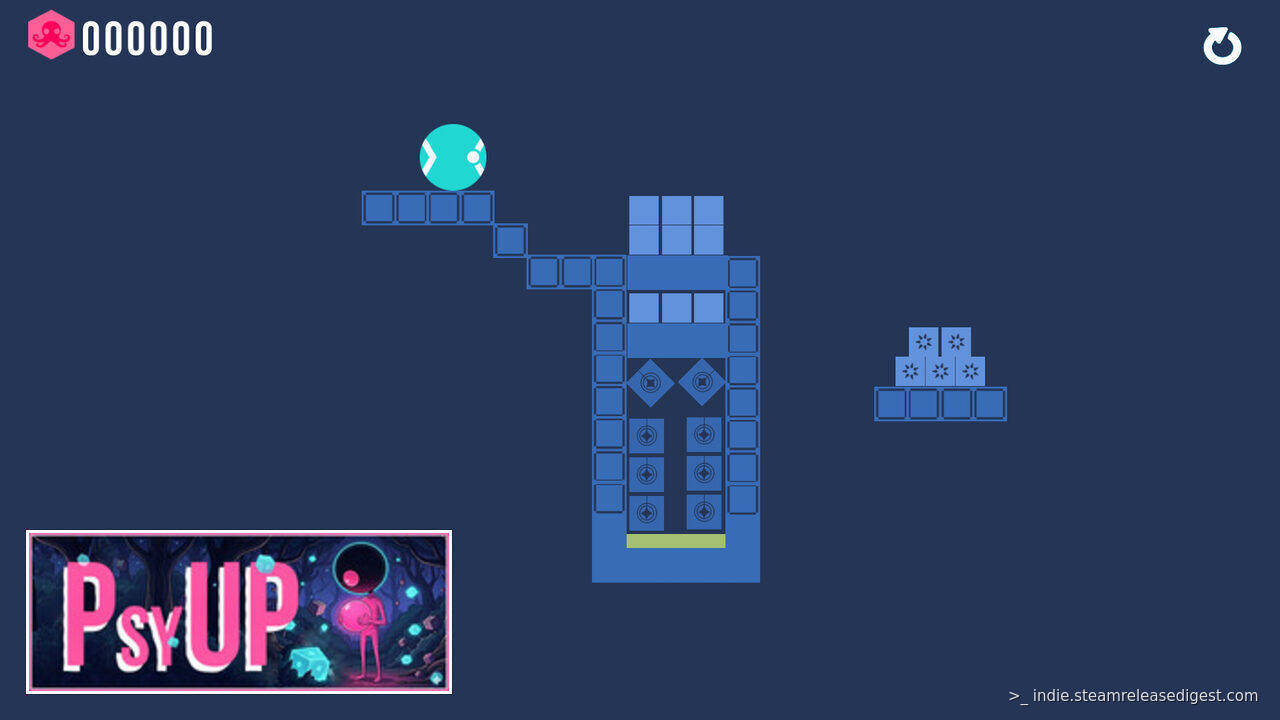
    At its core, the interaction in PsyUp is straightforward and tactile. Built to be played entirely with a mouse and explicitly free from timed inputs, you are presented with minimalist structures made of colored blocks. Tapping a block destroys it instantly, triggering a cascade of physics interactions as remaining shapes shift, tumble, and collapse under gravity. The goal is simple: clear the screen, find the underlying pattern, and let the chaos settle into order.

    The game attempts to frame these physics interactions around psychological states. Each stage sequence is inspired by human mental phenomena, attempting to give levels distinct “personalities”—arranging shapes to simulate the rapid instability of anxiety, the scattered chaos of ADHD, or the rigid, unyielding structures of perfectionism. Supported by clean visuals, custom audio controls, and an instant-reset feedback loop, it aims to act as a brief emotional breather during a busy day, letting players save anytime and work through stages without pressure.

    PsyUp: A Psychological Physics Puzzle gameplay screenshot
    Image courtesy of N2kStudio via Steam

    Chilling Sounds vs. Baffling Themes

    With an 86% positive rating across its initial wave of reviews, PsyUp succeeds for players looking for a quiet, low-cost puzzle fix. Steam reviewers repeatedly highlight the relaxing atmosphere, praising the game’s “chilling sounds” and clean presentation that make the simple act of destroying blocks feel tactile and soothing. Casual achievement hunters also appreciate its brief runtime, noting that it serves as an easy, satisfying game to complete 100% in under two hours. Furthermore, players who stick around past the deceptively simple opening stages find a surprisingly stiff physics challenge that forces real spatial problem-solving.

    However, the game’s thematic foundation is precisely where player satisfaction begins to fracture. The decision to name levels directly after mental disorders is a central point of confusion across multiple reviews. Laymen and puzzle fans alike report an absolute disconnect between the gameplay mechanics and the clinical labels attached to them, with players left asking why the thematic connection exists at all if breaking a stack of blocks bears no observable link to the disorder in question.

    Technical execution also draws sharp critique. Critical reviews highlight sporadic physics bugs and unrefined collision detection, arguing that the title feels more like an early alpha test than a fully polished product. When physics fail to behave consistently, players note that progression often devolves into tedious trial-and-error clicking rather than satisfying puzzle solving—leading some frustrated users to question how much intentional level design went into the project in the first place.

    The Verdict

    PsyUp: A Psychological Physics Puzzle works best if you ignore its loftier clinical ambitions and treat it purely as a low-cost, ambient physics distraction. If you want a $1.99 coffee-break game with smooth mouse controls, ambient audio, and a quick set of achievements to unlock, its block-busting loop provides a pleasant enough distraction. Just don’t expect a profound journey through human psychology, and be prepared to contend with a few physics glitches along the way.

    Key Facts

    • Developer: N2kStudio
    • Publisher: N2kStudio
    • Release Date: May 12, 2026
    • Price: $1.99
  • Evil Girls Party!: Don’t Let the Waifus Fool You, This Dungeon Crawler Has Real Teeth

    Evil Girls Party!: Don’t Let the Waifus Fool You, This Dungeon Crawler Has Real Teeth

    A bottom-tier lich girl named Lyuelle stepping into a ramshackle labyrinth alongside her loyal subordinate Flamme looks, on paper, like standard fan-service fluff. Players picking up a budget-priced eroge JRPG usually expect lightweight, turn-based combat designed merely to speed you toward the next unlockable CG scene. Instead, Project FW’s subterranean adventure delivers a surprisingly rigid 20-floor dungeon crawler where mindlessly grinding levels will still see your party wiped out by the very first major boss encounter.

    Into the Aberrant Maze

    The narrative grounds itself in the world of Filtwiz, where the ongoing war between humans and demons is suddenly overshadowed by the Erosion—a terrifying third force of parasites that hunts both races indiscriminately. Seeing a chance to escape the bottom tier of the Grave Digger Royal Guard, Lyuelle dives into the Aberrant Maze to hunt down the threat, build up her reputation, and earn a long-overdue promotion. What follows is a substantial tactical loop built around party assembly, floor-by-floor exploration, and base management.

    Combat relies on deliberate choice rather than auto-battling. You form a four-member squad and venture into turn-based battles where enemy action queues and health bars are fully visible. Victory depends heavily on careful observation and proper tactical setup. Before tackling the formidable bosses guarding the labyrinth’s deeper layers, you are encouraged to consult the Owl Sage to gather intel on boss patterns and prepare appropriate countermeasures. Beyond standard fights, each floor conceals discreet hidden rooms filled with rare loot, secret materials, and rival Royal Guard members whose defeat boosts Lyuelle’s overall Guard Rank.

    Evil Girls Party! gameplay screenshot
    Image courtesy of プロジェクトFW, Project FW via Steam

    Between expeditions, gameplay shifts to Lyuelle’s underground hideout and the surrounding territories of various demon clans. Here, you turn in quests, recruit new allies, negotiate with rival demon factions, and synthesize items. As your roster expands, you can even cultivate an underground garden to harvest raw materials for high-tier crafting, making subsequent floor runs significantly smoother.

    What Players Are Saying

    With a 94% positive sentiment across its launch reviews, players who have logged anywhere from 4 to 25 hours are consistently surprised by the game’s depth. The primary point of praise is the combat design: reviewers regularly highlight that level grinding alone will not carry you through the maze if you ignore squad composition and tactical turn management. The inclusion of full controller support, customizable volume controls, and adjustable difficulty toggles also earns quick praise for overall playability.

    The criticisms are equally direct. While the optional adult scenes feature solid artwork, players note that their connection to the main storyline is weak at best. Rather than weaving naturally into the narrative of the Erosion threat or Lyuelle’s climb through the demon ranks, these moments often feel like isolated rewards pasted onto the campaign. Furthermore, players who dislike material gathering or base-building maintenance may find the synthesis loop slows down the pace between dungeon dives.

    The Verdict

    This release is built specifically for JRPG fans and dungeon-crawler enthusiasts who genuinely enjoy party optimization, tactical turn-based combat, and resource loops—and who do not mind anime waifu tropes alongside them. If you want a mechanically crunchy subterranean campaign for under $12, this quiet release is well worth exploring.

    Key Facts

    • Developer: プロジェクトFW (Project FW)
    • Publisher: BokiBoki Games
    • Release Date: May 22, 2026
    • Price: $11.99
  • Curse or Love: Teaching Human Ethics to a Crying Monster

    Curse or Love: Teaching Human Ethics to a Crying Monster

    Fresh college graduate Moqi Jie takes an entry-level internship as an Ethics Supervisor at a high-security prison, only to find that her first assigned inmate is a weeping, dangerous non-human entity locked in a cell who wears her missing younger sister’s face and begs, “Onee-chan, why did you only find me now?” That unsettling collision of mundane career anxiety and surreal existential terror sets the stage for Curse or Love, a budget-priced visual novel that leans heavily into the strange, melancholic atmosphere of “denpa” psychological fiction.

    An Internship in Limbo

    The game takes place on the fringes of Arcadia, a fabricated metropolis bordering the mysterious Black Forest, where humans silently coexist with bizarre, non-human species. Under the public facade of a standard maximum-security prison for heavy criminals, the top-secret “Limbo Project” exists to isolate and experiment on supernatural beings that have harmed humans. Moqi Jie thinks she is stepping into a standard corporate gig with decent pay and approachable supervisors, but the Warden quickly hands down a far stranger mandate: “Make a beast into a human.”

    As the narrative unfolds, player interaction relies on navigating the uncomfortably intense, forthright feelings of the facility’s prisoners through critical narrative choices while attempting to untangle truth from hallucination. Your childhood friend insists the tearful prisoner is absolutely an impostor, the Warden’s genial warmth feels increasingly performative, and the boundaries between life, death, and sanity begin to blur within Limbo’s clinical corridors. The core loop operates as a classic choice-driven visual novel, steering you through branching dialogue paths, sudden horror spikes, and a major plot twist designed to recontextualize the entire story across multiple endings.

    Curse or Love gameplay screenshot
    Image courtesy of 小橘子糖_official via Steam

    Surprising Depth and Denpa Quirks

    Holding an 88% positive review score from its player base, Curse or Love has struck a chord with visual novel enthusiasts who appreciate its distinctively eerie, disquieting texture. Players consistently praise the game’s tone, which balances whimsical bishoujo charm with an underlying sense of psychological instability and decay. For a modest $4.49 price tag, reviewers note that the narrative hits surprisingly hard, delivering emotional tension, subtle dread, and compelling narrative turns that reward repeat playthroughs to uncover every conclusion.

    However, the experience carries specific quirks that will split potential players. Those expecting visceral jumpscares, complex gameplay systems, or intense gore will likely come away disappointed; the horror here is explicitly marked as “mild,” relying on eerie dialogue, surreal visual shifts, and psychological suspense rather than visceral shock tactics. Furthermore, the story’s “denpa” roots—a Japanese narrative subgenre defined by fever-dream surrealism, disjointed logic, and character motivations driven by obsession—mean the plot can occasionally feel disorienting or deliberately convoluted. If you require grounded, hyper-logical worldbuilding, the dreamlike narrative style might feel more alienating than engaging.

    The Verdict

    Curse or Love is a focused, eccentric narrative curio built for players who appreciate late-night psychological suspense, tragic character dynamics, and the uncanny feeling of a good mystery unraveling in real time. It does not attempt to reinvent visual novel mechanics, but its low price point, haunting aesthetic, and willingness to lean into strange, atmospheric dread make it a compelling pick for fans of indie psychological horror looking for something quietly unique.

    Key Facts

    • Developer: 小橘子糖_official
    • Publisher: 小橘子糖_official
    • Release Date: May 26, 2026
    • Price: $4.49
  • Your Weight: The Unforgiving Life Sim Where Willpower Always Runs Out

    Your Weight: The Unforgiving Life Sim Where Willpower Always Runs Out

    “Select a diet with a small calorie deficit and spam the ‘End Today’ button and you won the game,” reads one disgruntled zero-hour review, comparing the entire experience to a glorified cookie clicker before promptly issuing a refund. Yet despite that sharp critique, HaoHao Games’ budget life sim boasts a 90% positive review score from players who find its low-stakes struggle against the scale surprisingly endearing. Your Weight does not offer a flashy weight-loss power fantasy; instead, it turns the slow, unglamorous grind of personal fitness into a tightly constrained resource management puzzle.

    The daily routine revolves around managing a tight bank of action points alongside six interconnected meters: weight, calories, hunger, stamina, willpower, and those daily action points. Every decision creates a chain reaction. Burning calories through physical activity drains your stamina and eats up your willpower. Restoring stamina requires rest, but time is scarce. Meanwhile, cutting down on meals maintains the required calorie deficit to shed weight, but it steadily fills your hunger bar—and when hunger starts yelling at you, making questionable choices becomes far more tempting.

    Your Weight gameplay screenshot
    Image courtesy of HaoHao Games via Steam

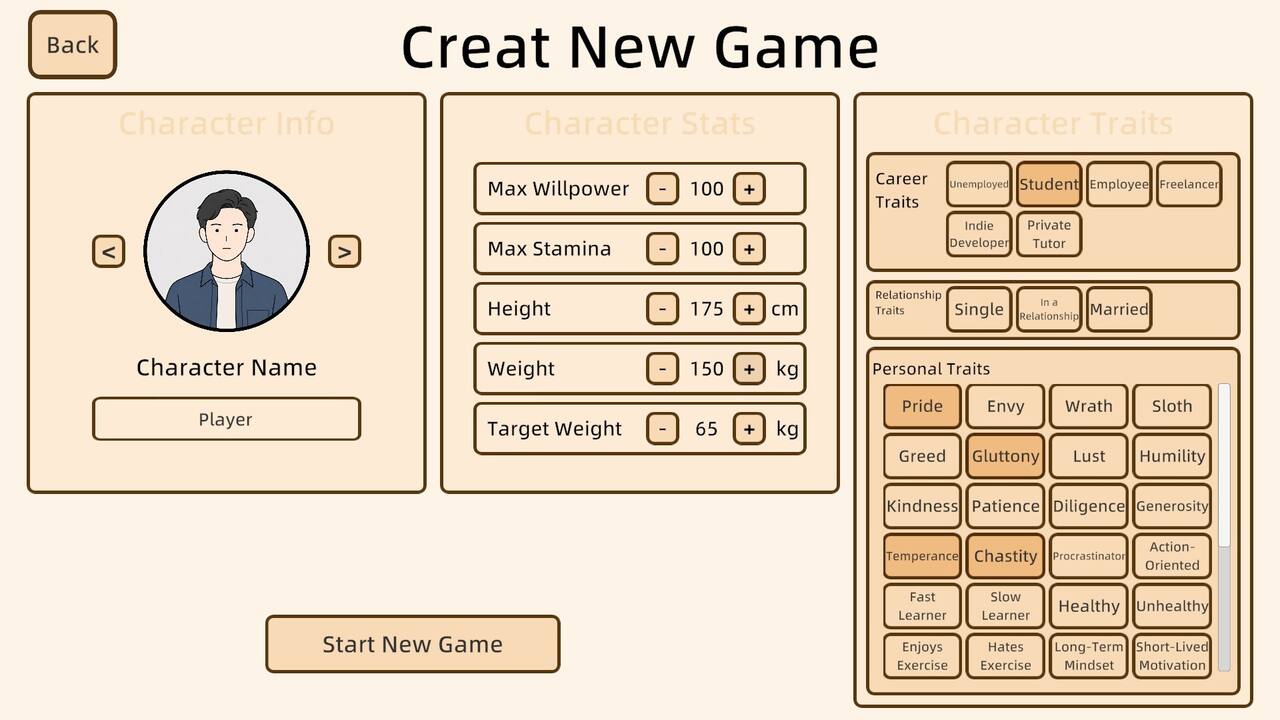
    To break up the routine, the game features over 40 distinct exercise options scattered across four scenarios, including home workouts, outdoor activities, and commercial gyms. Each activity demands its own action point investment, carries varying difficulty levels, and impacts your stats differently. Pushing through a heavy session might burn calories quickly, but leaving your character exhausted leaves them vulnerable to over 500 random events. Cravings, sudden stress, social gatherings, bad habits, and terrible excuses constantly threaten to undo your week of hard work. To tackle these hurdles, you can jump in using three preset characters with distinct starting stats and traits, or use the custom character creator to build custom initial stats and traits after yourself—or a friend who needs a gentle nudge toward fitness.

    A Conflict Between Strategy and Simplicity

    This structural simplicity is precisely where player opinion splits. For critics, the lack of real-time mechanics and strict optimal paths can make the game feel dry. Because the title offers mouse-only navigation, allows you to play at your own pace, and features no timed inputs, players looking for deep tactical friction might feel like they are merely clicking through menus to watch numbers tick down. If you optimize purely for low risk and ignore the flavor text, the game can indeed feel like an idle clicker.

    For the vast majority of players who review it positively, however, the charm lies in how accurately it gamifies the subtle psychology of self-discipline. The game shines in those small moments where a sudden burst of motivation collides with low stamina, or when a random work event stresses your character into snatching a high-calorie snack. It treats weight loss not as an epic transformation sequence, but as an ongoing tug-of-war between daily willpower and the fridge.

    The Verdict: Who Is It For?

    At a modest $0.99 price point, Your Weight is a deliberate, ultra-focused life sim designed for casual strategy fans who appreciate turn-based habit management. If you expect high-octane action, deep skill trees, or complex mechanics, you will likely join the reviewers seeking a refund. But if you want a cozy, low-stress resource management game that gamifies real-world fitness trade-offs with humor and honesty, it is well worth taking a look at.

    Key Facts

    • Developer: HaoHao Games
    • Publisher: HaoHao Games
    • Release Date: May 26, 2026
    • Price: $0.99
  • Ropeman: The Knife-Throwing Climber That Turns Simple Physics into Pure Agony

    Ropeman: The Knife-Throwing Climber That Turns Simple Physics into Pure Agony

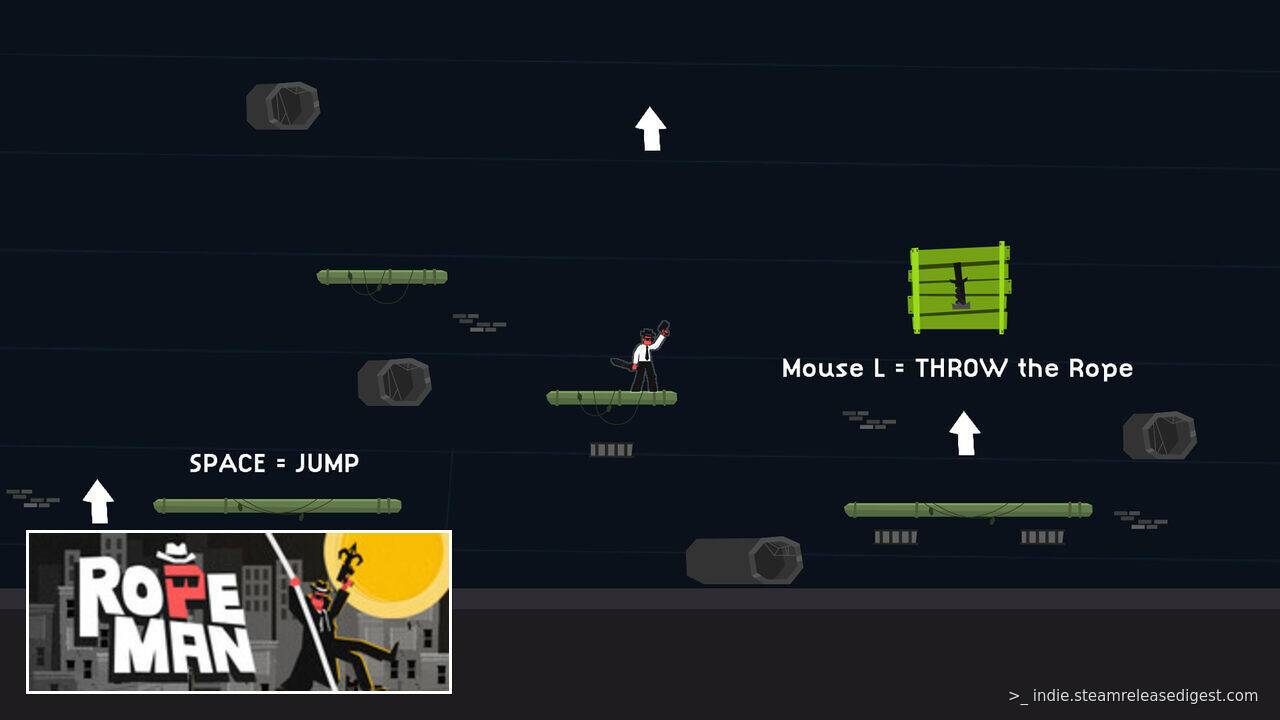
    You chuck a steel knife into a sheer cliff face, latch a single length of rope to the hilt, and convert gravity into violent momentum as you pendulum-swing toward the moon.

    The Kinetic Art of the Pendulum

    That single mechanics loop is the entirety of 2D platformer 1K Project has constructed with this minimalist release. There are no power-ups to collect, no enemies to bounce on, and no safety checkpoints scattered along your route. Your upward progress relies entirely on your ability to pin a blade into a wall to establish a temporary anchor point, connect your line, and read the kinetic arc of your body as you swing side to side.

    What makes the movement loop compelling is its commitment to momentum physics. A gentle sway will carry you across modest horizontal gaps, but ascending the sheer vertical faces requires real velocity. Build up enough speed along your arc, and your character locks into a full 360-degree loop, turning your rope into a high-speed centrifuge. Releasing the tether at the absolute apex of that circle launches you into an explosive vertical vault; releasing a fraction of a second too late slams you sideways into an overhang or shoots you out into empty space.

    Ropeman gameplay screenshot
    Image courtesy of 1K Project via Steam

    High Stakes and Instant Regret

    The structure borrows directly from the masochistic lineage of precision climbers, where every inch of height is hard-won and instantly fallible. Your ultimate destination is whatever mystery awaits on the moon at the very top of the world. Because the level is a seamless vertical column, falling is not just a soft restart—it is a catastrophic, stomach-churning plummet. Miss a knife placement near the ceiling, and you will watch minutes of painstaking acrobatic timing vanish as your character bounces down the geometry back toward the dirt floor.

    Despite holding a pristine 100% positive rating across its initial Steam reviews, player feedback points to a game designed around deliberate, friction-heavy frustration. As one reviewer blurted out after their first hour: “This game makes me so mad when I play it!!!” That visceral exasperation is the point. The high player rating isn’t born from smooth, easy comfort; it comes from the brutal honesty of the mechanics. When you plunge three hundred feet down the shaft, you know exactly which bad angle or greedy release ruined your run.

    Simple Presentation, Severe Learning Curve

    At a pocket-change price of $1.79, developer 1K Project isn’t offering elaborate visual flourishes or complex audio landscapes. The graphics are clean and utility-focused, giving you clear readouts of wall angles and swing arcs without decorative clutter. There is zero hand-holding. If a particular choke point seems impossible to clear, the game offers no alternative paths or assist modes; you simply have to practice the timing until your muscle memory catches up with the physics engine.

    The Verdict

    This is a game specifically tailored for the masochistic platforming crowd—players who find satisfaction in controller-gripping tension and high-stakes precision. If you enjoy the unforgiving vertical climbs of games like Jump King or Getting Over It, this budget release cuts away all narrative fat to focus purely on the art of the swing. Just make sure you have the patience to handle the inevitable drop back to earth.

    Key Facts

    • Developer: 1K Project
    • Publisher: 1K Project
    • Release Date: May 25, 2026
    • Price: $1.79
  • Roommate Lover: Love in Progress: A Rough-Around-The-Edges FMV That Knows Its Audience

    Roommate Lover: Love in Progress: A Rough-Around-The-Edges FMV That Knows Its Audience

    At $3.95, Roommate Lover: Love in Progress asks its players to accept a very specific compromise: you get four impeccably styled lead actresses in costume-heavy romance scenes, but you might also clearly hear a sound technician breathing into the microphone during a tender moment. Released by LumaGate Games, this first-person live-action dating simulator doesn’t try to hide what it is. It relies almost entirely on visual charm to carry a low-budget production burdened by shaky audio engineering and a light narrative structure.

    Living the FMV Fantasy

    The game puts you in the shoes of a young urbanite with a secret identity who rents out an extra room in his apartment to cover a heavy mortgage. That simple financial dilemma quickly spirals into an improbable web of romantic availability. Across its short runtime, you navigate relationships with four distinct heroines: Yang Yan, your cold and powerful CEO boss who softens only around you; An Xiaotang, a live-in dance streamer; Li Zhixuan, a college sweetheart working part-time as a housekeeper; and Lin Xia, the nostalgic childhood friend living next door.

    Gameplay follows the standard interactive video format. You watch scenes play out entirely from a first-person perspective, making timed choices during key moments to steer the conversation. These decisions dictate which character you grow closer to, unlocking romantic dates, heroic workplace rescues, and ambiguous domestic encounters. Successfully navigating a route rewards you with ending scenes and unlockable bonus videos, featuring wardrobe shifts that span flight attendant uniforms, maid outfits, and bunny suits.

    Roommate Lover: Love in Progress gameplay screenshot
    Image courtesy of LumaGate Games via Steam

    Stunning Cast, Rough Production

    With an 81% positive review score on Steam, player sentiment splits neatly between the game’s polished visual presentation and its glaring technical shortcomings. The praise focuses almost exclusively on the cast. Players consistently compliment the styling and wardrobe variety, noting that the actresses bring genuine effort to their roles despite the thin script. Yang Yan’s performance as the stern executive is frequently singled out for praise, while Li Zhixuan and An Xiaotang stand out as community favorites.

    However, players are equally vocal about the game’s flaws. Many reviews point out that the title is a blatant, lower-budget imitation of the popular Korean FMV release Five Hearts Under One Roof, borrowing direct stylistic cues and tropes without matching its depth. Sound design is the primary source of frustration: the audio mix is uneven, line delivery quality varies wildly, and ambient room noise or crew breathing occasionally bleeds into the tracks. Furthermore, with a total playtime of just two to three hours and minimal branching paths that impact the overall plot, the story feels rushed. Technical hiccups are also present, including broken compatibility for Mac users on Apple Silicon hardware.

    The Verdict

    Roommate Lover: Love in Progress is built strictly for dedicated FMV romance fans who know what to expect from a bargain-bin price tag. If you are looking for deep narrative branching, high production values, or complex game mechanics, this will leave you disappointed. But if you are after a short, breezy interactive visual novel with an attractive cast, fun costumes, and don’t mind laughing off some noticeable audio flaws along the way, it offers just enough campy entertainment to justify its pocket-change asking price.

    Key Facts

    • Developer: LumaGate Games
    • Publisher: LumaGate Games
    • Release Date: May 25, 2026
    • Price: $3.95
  • UNDERKING KINGDOM: Flashy Arcade Combat Meets Heavy Moral Ambition

    UNDERKING KINGDOM: Flashy Arcade Combat Meets Heavy Moral Ambition

    The animations are remarkably crisp and the combat hits with a visually impressive, intense punch—right up until you realize the game is blasting at maximum volume with no audio settings menu in sight. That stark contrast captures the reality of playing this debut action title, where undeniable artistic passion and kinetic flare collide directly with missing basic quality-of-life options and baffling interface design.

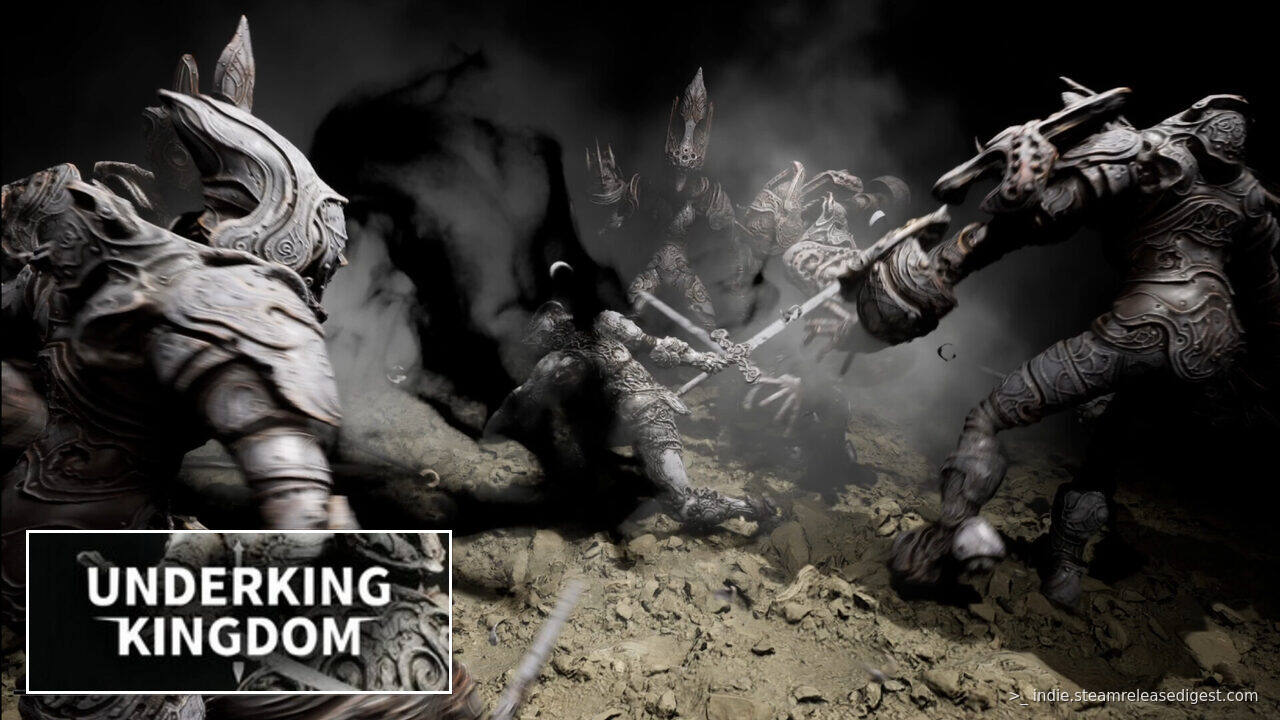
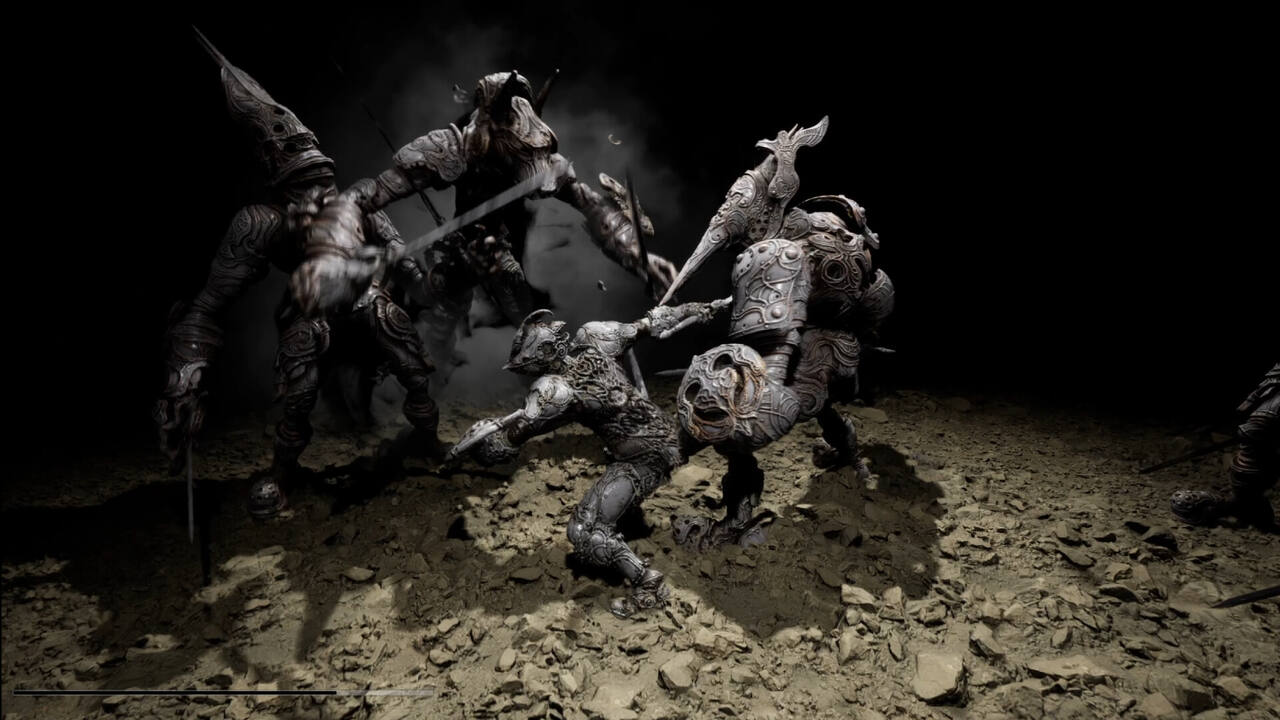
    Built in Unreal Engine 5.4 by a self-taught solo developer, the game presents itself as a modern revival of the classic arcade belt-scroller. Rather than sticking purely to standard side-scrolling button mashing, it attempts to bridge two distinct flavors of combat: the sweeping, crowd-clearing chaos of a hack-and-slash brawler and the deliberate, high-stakes tension of a Souls-like. Players move through isometric brawling spaces, managing stamina and spatial positioning while laying down flashy combos against wave after wave of aggressors.

    Underneath the brawling sits a unexpectedly heavy narrative core. The game frames its violence not as mindless entertainment, but as a backdrop to examine the horrors of war, the erosion of common sense, and the search for personal humanity amidst absurdity. Critical crossroads and moral judgments are placed in front of the player, asking you to weigh good and evil rather than simply marching forward to clear the next screen.

    UNDERKING KINGDOM gameplay screenshot
    Image courtesy of UNDERKING via Steam

    At its best, the core action delivers a surprisingly strong visual splash. Strikes feel weightily animated, character models move fluidly, and visual effects light up the screen during high-intensity encounters. The developer’s sincerity is evident in every frame; this is clearly not a quick asset flip, but a deeply felt attempt by a solo creator who learned engine tools from online lectures to build something genuine and personal.

    However, that passion doesn’t completely soften the game’s rough operational edges, as player feedback quickly points out. The user interface suffers from microscopic scaling, leaving players squinting to figure out which icons are interactive buttons and which are purely decorative. Button functions are largely unexplained, dropping you into combat scenarios without clear instructions on what your immediate mechanical tools actually do or how systems connect to your broader objective.

    This lack of clear framing can make the experience feel aimless after the initial visual excitement wears off. Without explicit tutorial guidance or a clear sense of long-term progression, engagement can stall out within ten minutes of play. Compounding this issue is the total absence of a settings menu, meaning players who find the default audio overwhelming have no in-game method to adjust sound levels or tweak performance settings.

    For players who value polished user experiences, clean interfaces, and granular control menus, these omissions will likely be immediate dealbreakers. But for those willing to overlook severe interface rough patches in exchange for seeing a self-taught developer’s raw, ambitious first outing, there is genuine charm here. At a $3.99 price point, it stands as an earnest, rough-edged experiment in giving classic belt-scrolling brawlers a punchy visual upgrade and a surprisingly thoughtful soul.

    Key Facts

    • Developer: UNDERKING
    • Publisher: UNDERKING
    • Release Date: May 23, 2026
    • Price: $3.99
  • Exit, Seriously?: Memes, Glitches, and Student Dev Chaos in a Hallway

    Exit, Seriously?: Memes, Glitches, and Student Dev Chaos in a Hallway

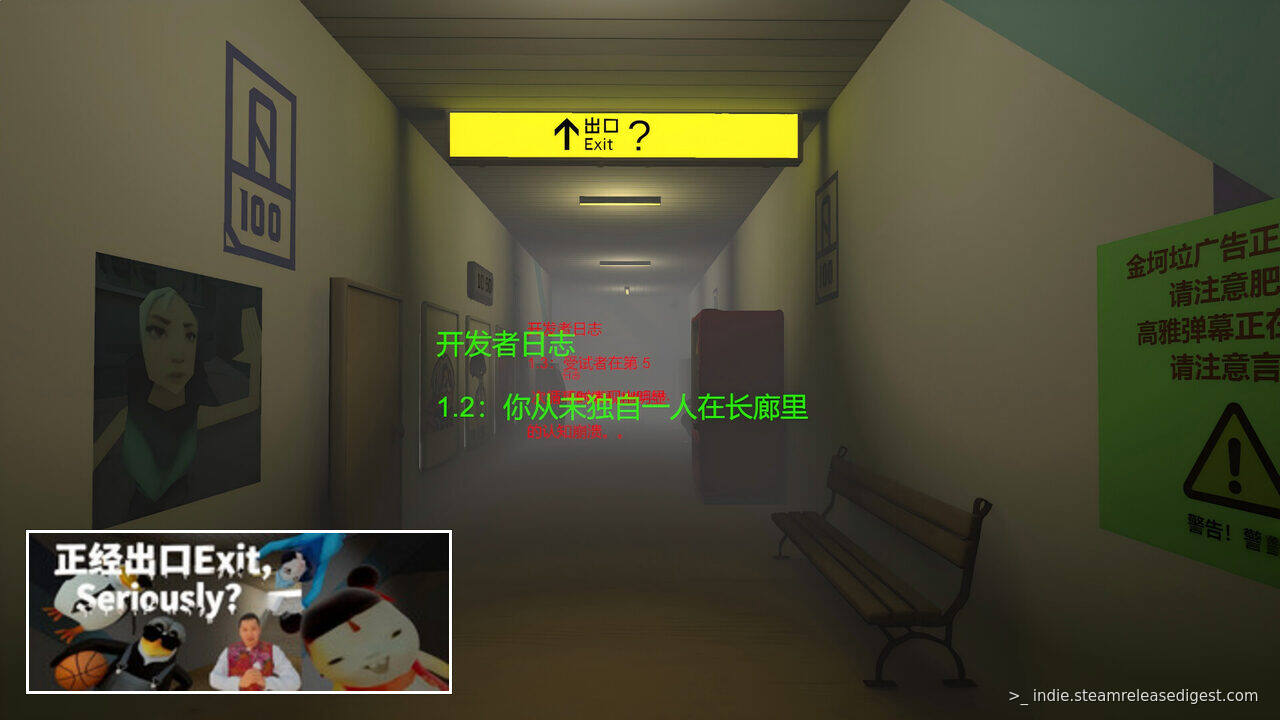
    A parade of absurdly obvious penguins blocks the corridor, scrolling bullet-chat comments drift across the screen like an unhinged live stream, and you are forced to ask a fundamental question: is that strange visual artifact a deliberate anomaly, or did the developer’s AI assistant mess up the shader compiler again?

    Welcome to Exit, Seriously?, a bite-sized observation game developed and published by solo creator Forbidden. Built on a self-admitted recipe of 30% logic, 20% luck, and 50% blind faith in an AI helper after dozens of compiler errors, this raw student release takes the rigid corridor-loop framework popularized by The Exit 8 and subjects it to a heavy dosage of internet culture, self-deprecating humor, and post-modern chaos.

    The Logic of the Hallway

    At its core, the gameplay follows the established rules of the observation horror subgenre. You walk down a plain, repeating hallway and inspect every detail. If the corridor appears standard, you press forward to the next section; if you spot anything out of the ordinary, you must immediately turn around and walk back the way you came. Making the correct call advances your progress, while a single wrong judgment resets your streak.

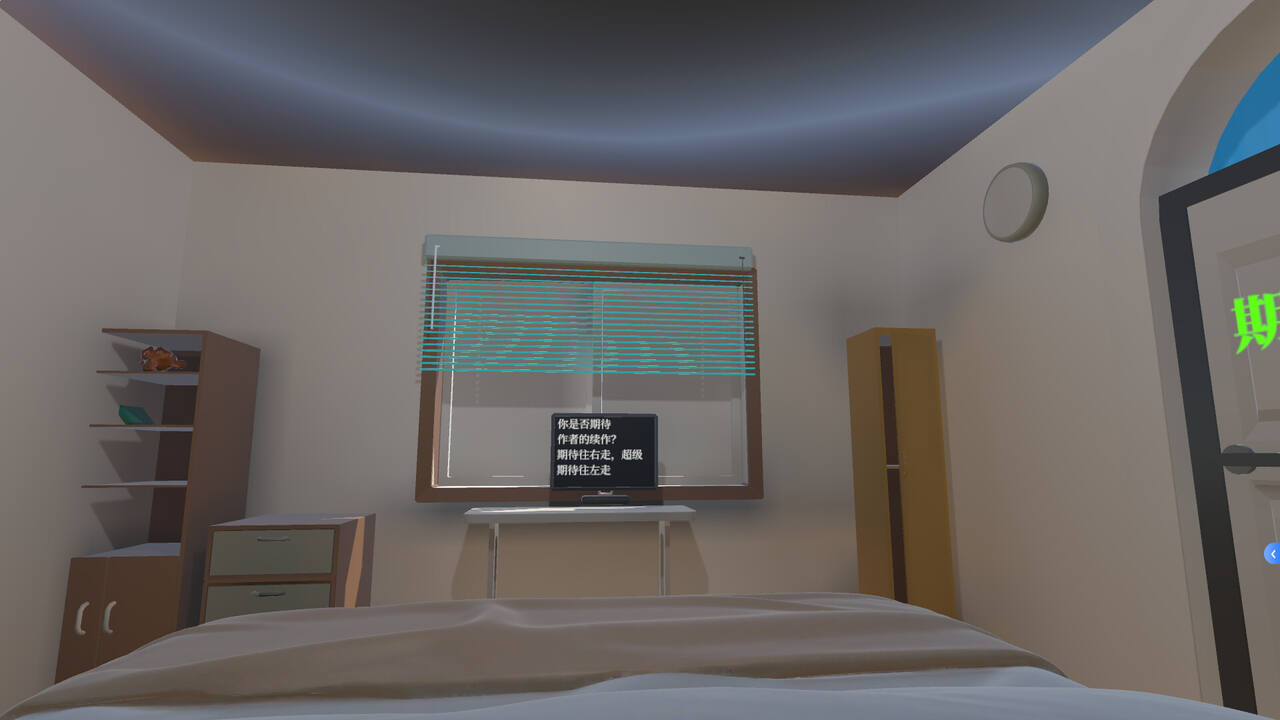
    Where Exit, Seriously? diverges from its peers is in its sheer refusal to take itself seriously or offer traditional videogame amenities. The developer explicitly designed the experience with no save system whatsoever, requiring players to complete the entire run in a single sitting. More strikingly, there is no pause screen, no settings menu, and no option to rebind controls. You load directly into the corridor with whatever default setup the game gives you. To top off the sensory clutter, a live bullet chat (danmaku) overlay constantly streams abstract rants and internet wisdom across your view, ensuring you never feel truly alone in the corridor, even if you might wish you were.

    Exit, Seriously? gameplay screenshot
    Image courtesy of Forbidden via Steam

    Genuineness, Memes, and Rough Edges

    The reception surrounding Exit, Seriously? highlights a fascinating divide between appreciative amusement and technical frustration. Players who enjoy the game point directly to the creator’s genuine humility and potential. Rather than attempting subtle, terrifying visual tweaks, the game embraces wonderfully loud, unavoidable anomalies. Encounters featuring random penguins or references to the viral “Kun Kun” meme deliver genuine laughs, leaning into the comedic potential of a genre that usually takes itself far too seriously. Even technical hitches are folded into the joke, with developer notes warning that if the game runs smoothly, it is a miracle, and if it crashes, it should simply be considered “Atmospheric Horror.”

    However, those same rough edges are precisely what will deter players looking for a traditional product. The experience is exceptionally brief, with players noting that the total playtime is so short that many will feel it fails to justify its $3.99 asking price. The complete lack of an options menu or customizable keybinds means there is zero flexibility for basic quality-of-life adjustments. If a shader stutters or a control scheme feels uncomfortable, you have no choice but to push through or quit entirely.

    The Verdict

    Exit, Seriously? is less of a polished commercial release and more of a playable, self-aware time capsule of student game development. It is rough, unpolished, and mechanically bare, but it carries a distinct charm born from total transparency and joke-dense design. If you expect a sleek, terrifying psychological horror experience with robust menu options and hours of content, this will feel overpriced and incomplete. But if you have a soft spot for quirky indie experiments, enjoy absurd internet humor, and want to support an earnest student dev taking their first chaotic steps into game creation, this quick walk down an AI-assisted hallway offers a memorable laugh.

    Key Facts

    • Developer: Forbidden
    • Publisher: Forbidden
    • Release Date: May 12, 2026
    • Price: $3.99