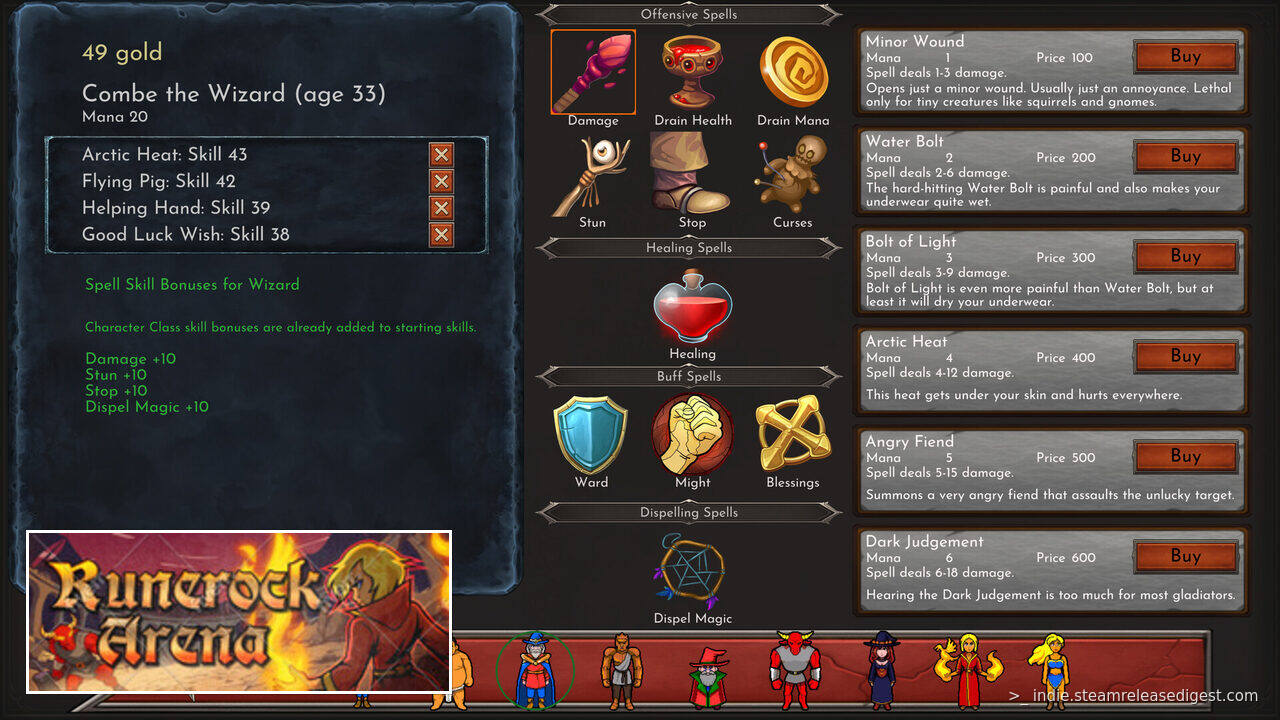
A halfling recruit with 50 Bow skill and 45 Dexterity appears in the recruitment market, and your entire starter bankroll immediately vanishes to buy him an 8–19 damage weapon. He is small, morally dubious, and fully capable of demolishing rival stables before they even cross the mid-line. It is an unhinged piece of early-game optimization, and it captures the exact spirit of what makes this game tick.
This turn-based strategy sim is the modern Steam incarnation of a Finnish shareware institution. Created by Seppo Suorsa—the mind behind the long-running Areena series that captured Scandinavian PC gamers in the late 1990s and early 2000s—it strips away modern bloat in favor of clean tactical friction and light management math.
Managing the Pit
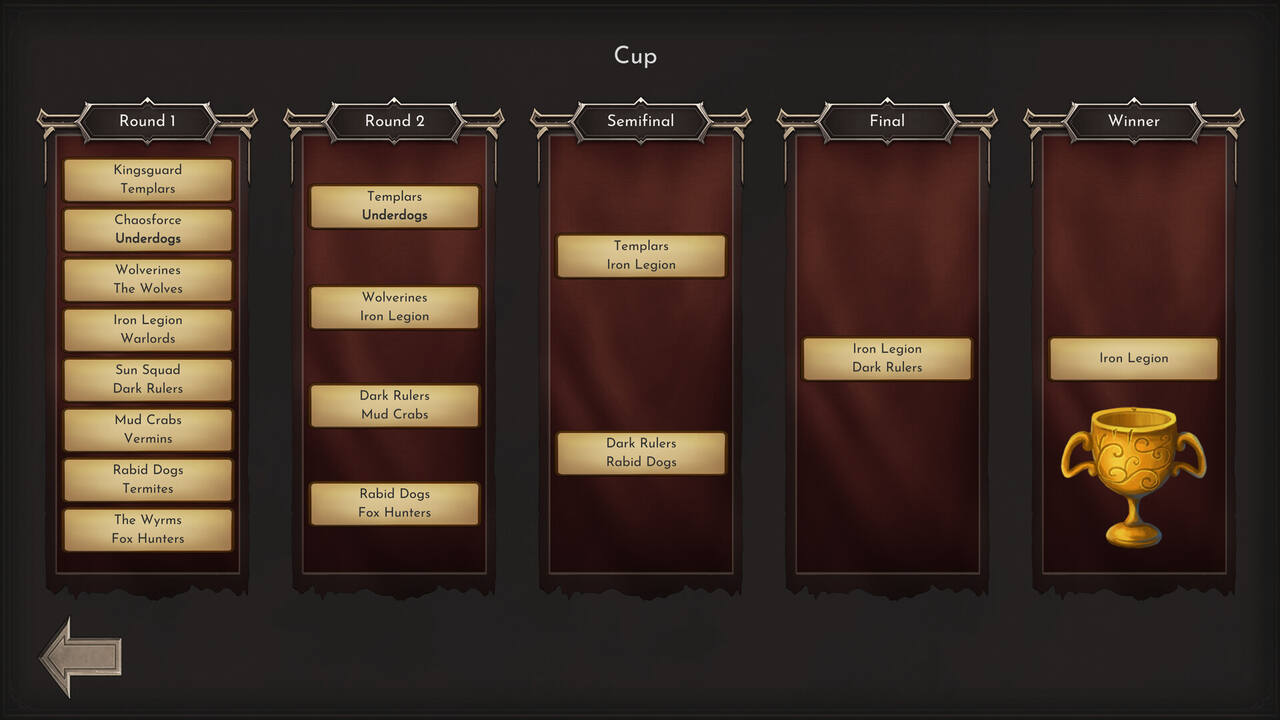
The structure is intentionally straightforward. You take control of a fledgling gladiator stable at the bottom of the league and attempt to climb the ladder toward the championship. Between matches, you scout upcoming opponent rosters, handle financial overhead like ticket revenues and player salaries, and buy new gear or spells. On the arena floor, combat plays out on a grid where position, line of sight, and spell skills determine who leaves in a stretcher.
What gives the management layer real texture is its organic progression and built-in mortality. Gladiators do not gain arbitrary experience points to dump into a menu; their skills improve directly through use in battle. Swing a broadsword enough times and your melee stats creep upward; cast flame spells under pressure and your spellcasting skill sharpens. With 36 character classes—ranging from stout Stonemen and bulky Minotaurs to delicate Sorceresses—building a cohesive team requires balancing stats, dodge chances, and magic resistance.
Crucially, nobody fights forever. Age is a real, ticking clock here. Your prize fighter will eventually grow old, lose their edge, and retire, forcing you to constantly maintain a pipeline of cheap, young prospects while spending money on veteran salaries.
Dopamine and Broken AI
Steam reviewers who grew up with the original shareware releases describe playing this new entry like stepping back into a childhood bedroom, complete with the brain-tickling satisfaction of big red damage numbers popping up over hit targets. It is an easy game to learn, requiring only mouse controls, and it plays entirely at whatever pace you choose without forcing timed inputs or twitch reactions.
However, the experience is not without its sharp edges. The primary complaint from seasoned strategy players centers on the artificial intelligence. Opposing managers in single-player do not react intelligently to player-invented meta strategies. Once you figure out how to abuse specific stat combinations—like over-investing in high-dexterity ranged attackers or stacking specific crowd-control spells—the computer fights back with predictable inefficiency. For players looking for a brutal, long-term strategic opponent that continually adapts to their tactics, the AI’s shortcomings undercut long-term replayability.
The visual presentation is also unapologetically retro. There are no dramatic camera cuts or elaborate animations here; the game relies entirely on functional icons, combat logs, and clean UI elements. If you require flashy visuals to stay invested, this arena will feel sparse.
The Verdict
This release is built for strategy purists, stat-nerds, and fans of classic sports-management loops who prefer quick, low-stress tactical decisions over cinematic bloat. If you miss the era of 90s shareware classics like Gladiator Manager or simply want a breezy, highly addictive management game to play at your own pace, it is well worth the asking price. Just do not expect the computer opponent to outsmart your worst impulses.
Key Facts
- Developer: Areena Games
- Publisher: Areena Games
- Release Date: August 11, 2026
- Price: $11.99