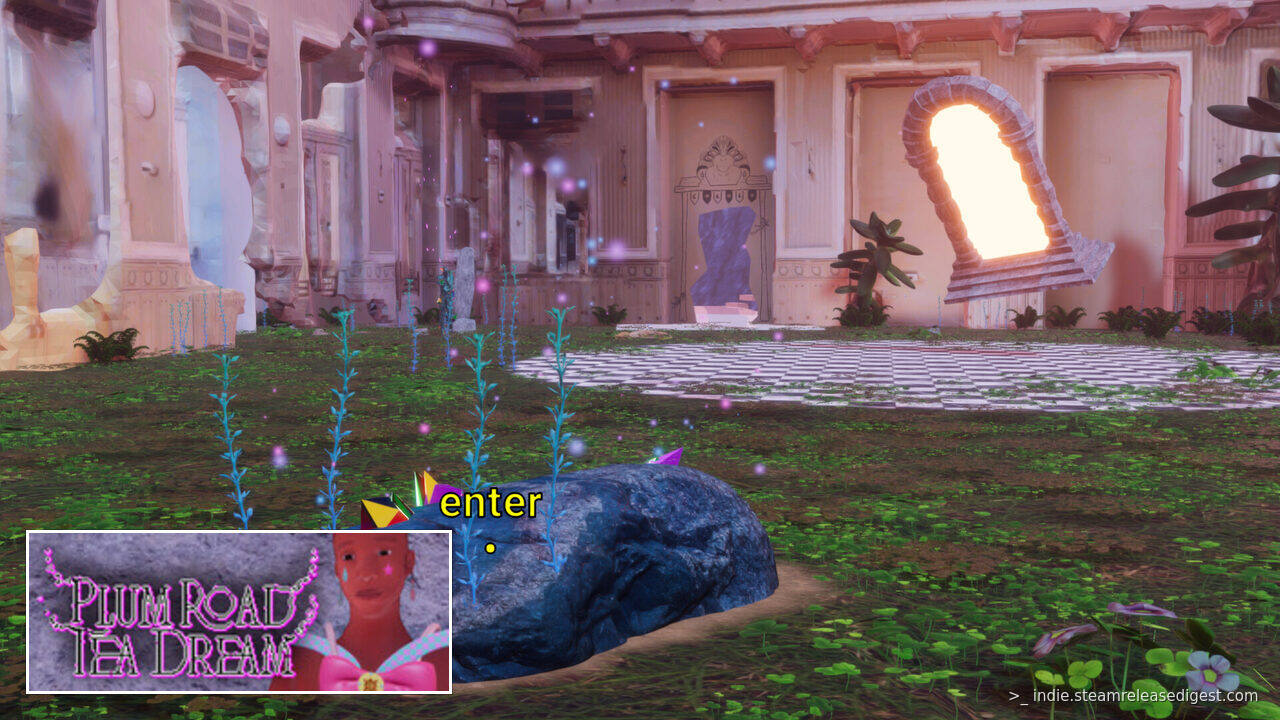
By walking through raw, 3D-scanned digital spaces, typing into an in-game journal, and assembling animistic gods from scattered tablets, you step directly into the virtual healing ritual of a young, queer game designer of color known only as S.
An Intimate Tour of Someone Else’s Mind
This is a semi-autobiographical interactive memoir that functions as a patchwork of digital sanctuaries. Over the course of seven distinct chapters, you navigate a series of surreal spaces built by S. to process profound personal grief and explore identity. The mechanics here are deliberately slow and unhurried: you walk, you sit, you listen, and you read. But the way these simple actions are textured makes the experience feel remarkably tactile and raw.
Visually, the game is an eclectic collage. It shifts dynamically from hyper-realistic modern environments to the nostalgic, pixelated charm of PSX-era graphics. Crucially, the game makes heavy use of real-world 3D scanning. Rather than walking through perfectly polished, sterile digital assets, you wander through slightly warped, scanned captures of real-world spaces. Within these environments, you engage in abstract mini-games: collecting tablets to construct animistic deities using futuristic machinery, or facing quiet trials of empathy to manifest a weapon called the “Sword of Sadness.” Throughout it all, a personal journal invites you to type out your own thoughts, turning a highly specific autobiographical story into a mirror for your own life.

Where the Magic Lands and Where it Chafes
Player reception highlights a deeply moving, if polarizing, experience. Those who connect with the game describe it as incredibly “generous.” Players note that while they initially set out to help S. process their grief, the game sneakily carves out a massive, quiet space for the player to confront their own emotional baggage. The implementation of the in-game journal is a particular triumph; players report that the prompt to write appeared precisely when they felt the need to reflect, making the narrative feel deeply collaborative. For many, the gentle direction and raw vulnerability of the writing culminated in a genuinely emotional, tearful ending.
However, this is a game with sharp, deliberate edges that will alienate some players. It is, unapologetically, a walking simulator with a very slow movement speed and a massive amount of reading. If you do not enjoy slow-paced, text-heavy art projects, you will likely find yourself frustrated. Furthermore, the game’s aesthetic choices have caused some friction. One dissatisfied player criticized the 3D-scanned environments as looking cheap and low-quality, dismissing the game as a collection of poorly scanned empty spaces filled with crude objects. While most players view these glitchy, imperfect scans as a deliberate and beautiful artistic choice that reflects the fractured nature of memory and grief, it is a texture that can easily feel unpolished to those looking for traditional visual fidelity.
The Verdict: Who Is This For?
This is a game for players who value emotional resonance over mechanical complexity. If you loved the meta-narrative intimacy of The Beginner’s Guide or the earnest, character-driven heart of Undertale, this game occupies a similar, highly personal space. It is a quiet, contemplative three-hour experience designed to be played slowly, preferably with a warm cup of tea beside your keyboard. However, if you have little patience for slow walking speeds, extensive reading, and the rough-around-the-edges aesthetic of mixed-media indie art, you may want to skip this particular dream.
Key Facts
- Developer: Samuel Baidoo, Reveal Game Studio
- Publisher: Reveal Game Studio
- Release Date: Jul 27, 2026
- Price: $9.99