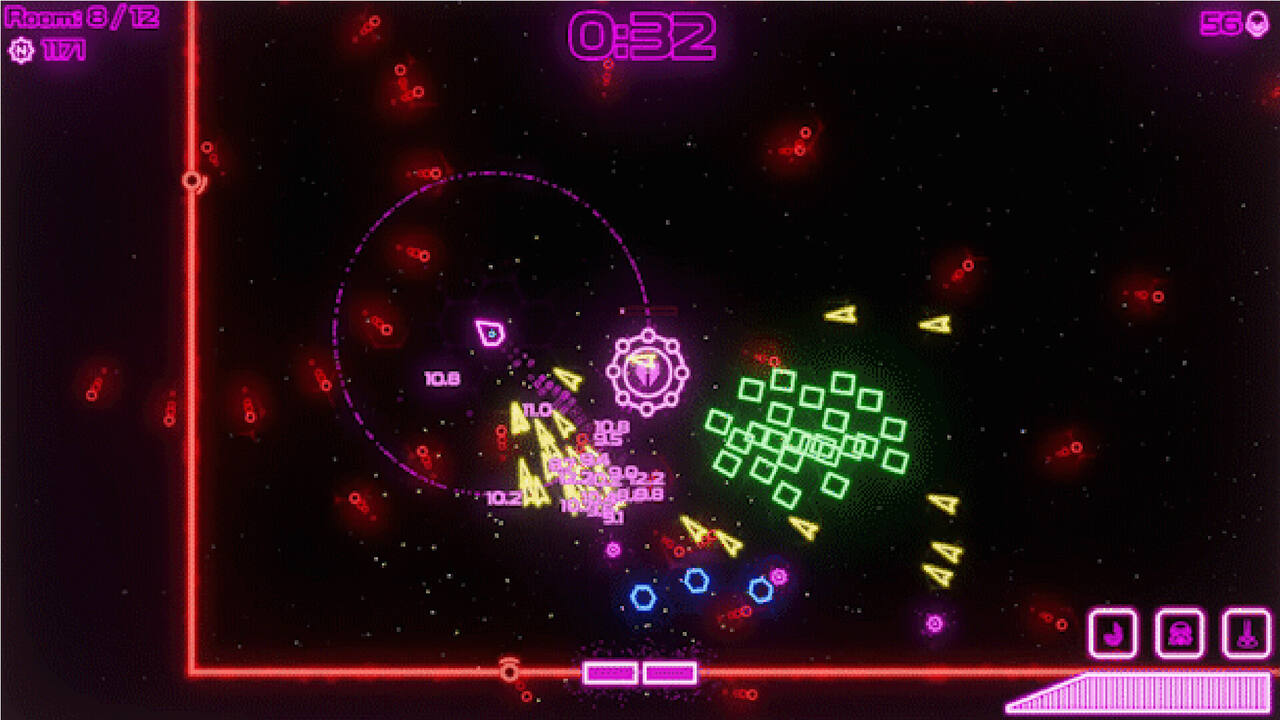
With zero ship momentum and pixel-precise hitboxes, the gameplay in Neon Pulsefire lets you pull off the kind of split-second, needle-threading dodges that make you feel like an absolute gaming god. While many space-themed survival shooters introduce a floaty, inertia-driven drag to your ship, this minimalist roguelite opts for immediate, digital responsiveness. You stop the exact microsecond you let go of the analog stick, allowing you to weave effortlessly through dense, overlapping clouds of hostile projectiles and aggressive swarms without fighting your own controls.
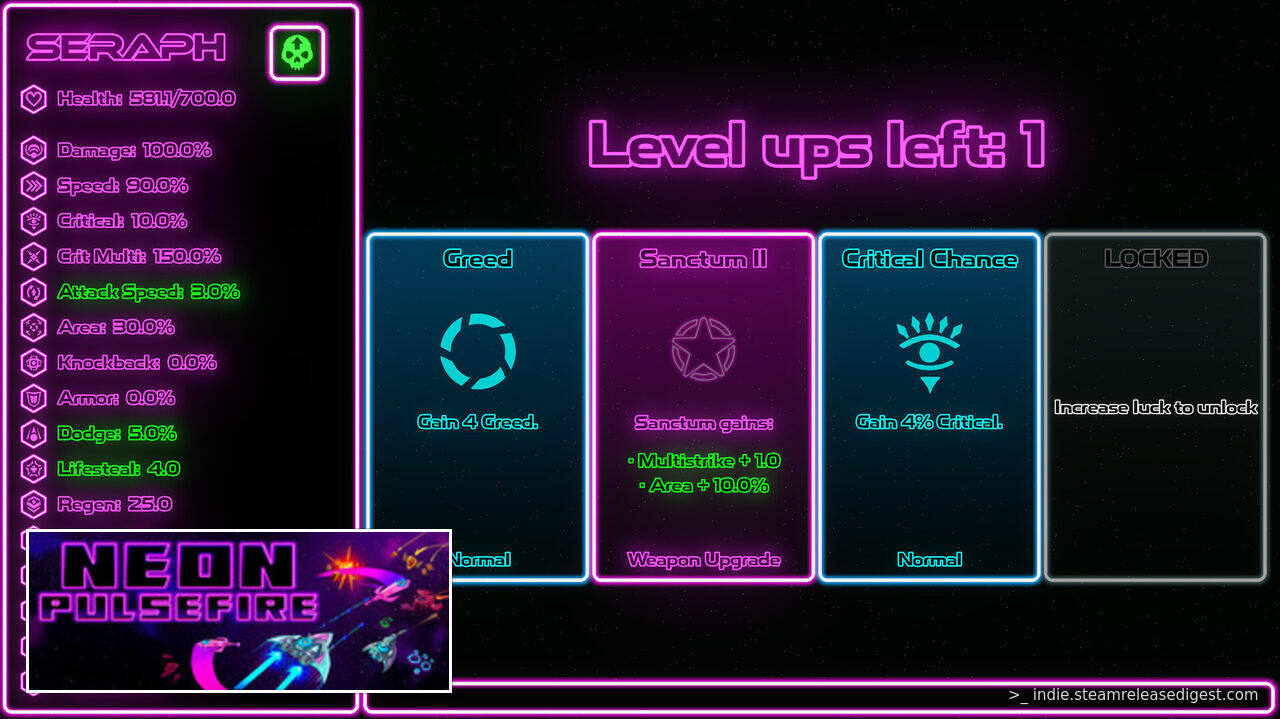
At its core, this is a tight, fast-paced bullet heaven designed around bite-sized, 10-to-20-minute runs. You select from ten distinct ship classes—such as the defensive Aegis, the industrial Forge, or the mysterious Baron—and drop into a series of increasingly hectic arena floors. Your vessel automates the shooting, firing up to three distinct weapons simultaneously. This leaves you to focus entirely on positioning, dodging, and collecting the glowing Neon shards dropped by vaporized enemies. Between waves, you visit a shop stocked with over a hundred items, spending your Neon to tailor your build. It is a system that allows you to chase hyper-specific synergies, balancing traditional offensive upgrades like Crit and Haste with deeper utility stats like Luck, Greed, and Wisdom.
What players are celebrating most is how successfully these mechanics feed into a compulsive, “just one more run” loop. The progression system feels meaningful rather than padded; there are over 40 in-game achievements that directly unlock new classes, weapons, and items to expand your pool of options. The difficulty scaling is also a high point. Rather than just making enemies bullet sponges, the game’s seven difficulty tiers introduce active hazards, special enemy variants, and projectile assaults that force you to completely adapt your defensive strategy on the fly. On top of that, it has quickly become a quiet darling for handheld players, running at a locked 60 FPS on the Steam Deck OLED at a meager 10W TDP.
However, this is a solo-developer project with a budget-friendly price tag of $3.19, and it wears those development constraints plainly on its sleeve. The user interface and menu aesthetics are barebones, crying out for a visual polish. On the battlefield, the enemy AI is remarkably simple; as one player pointed out, enemies largely use basic pathfinding that simply dictates they march directly toward your coordinates. This can make early waves feel somewhat repetitive, and players have expressed a desire for more complex enemy behaviors, such as foes that actively lay mines or fire counter-projectiles. There is also a frustrating, recurring bug reported by some players where the game crashes immediately after defeating the boss, cutting a successful run short before the rewards can be fully savored. Thankfully, the solo developer has been highly praised by the community for transparency and a swift approach to squashing bugs.
The Verdict
If you are looking for a highly polished, big-budget spectacle, the spartan presentation here might underwhelm you. But if you want a laser-focused, mechanically sound challenge that respects both your time and your wallet, this is an absolute steal. It is tailor-made for bullet heaven veterans who crave precise movement, quick gameplay sessions, and deep build craft without the fluff. For the price of a cheap coffee, it is an easy recommendation to add to your daily handheld rotation.
Key Facts
- Developer: Marian Kunz
- Publisher: MKBW Games
- Release Date: Jun 22, 2026
- Price: $3.19