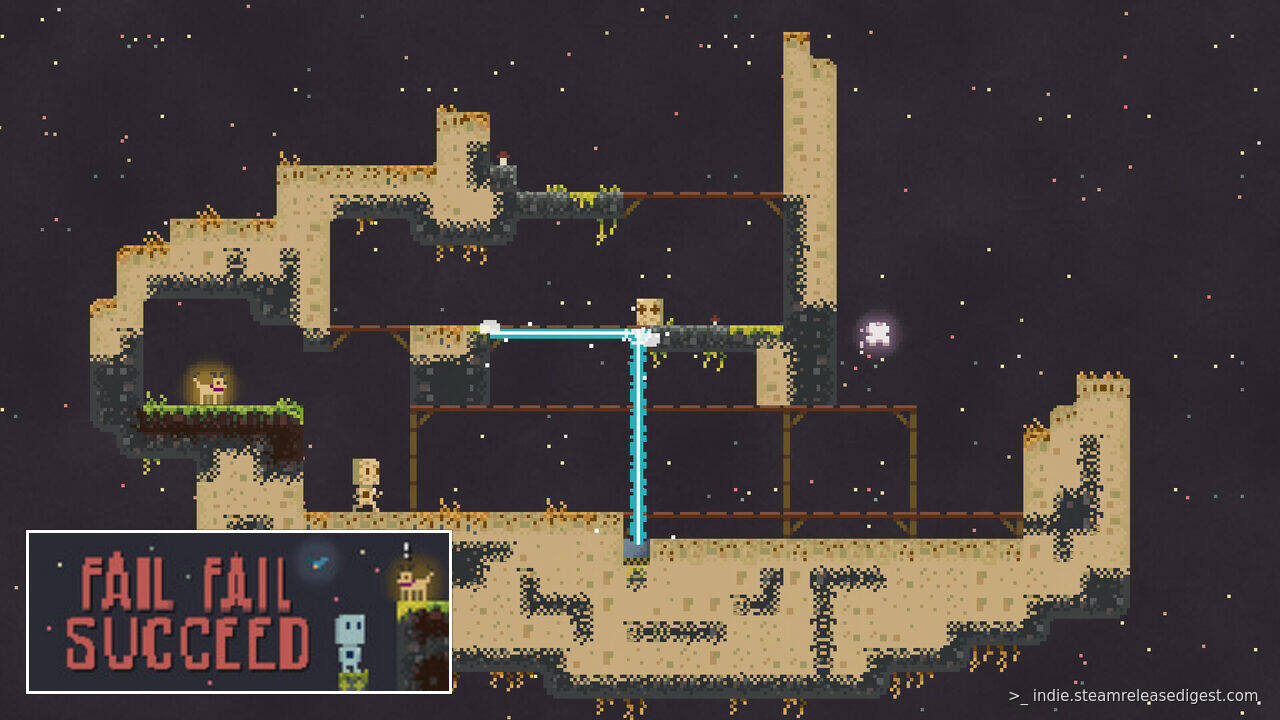
You might expect a game inspired by its developer’s personal struggles with manic highs and depressive lows to be a grueling, punishing ordeal designed to make you suffer. Instead, this puzzle platformer greets you with a remarkably cozy atmosphere, a selection of loyal dogs to act as your emotional anchor, and an incredibly clean logic system. It transforms the grim concept of repeated failure into a series of satisfying, bite-sized epiphanies. Rather than beating you down, it gently asks you to look at your missteps as the very foundation of your eventual victory.
Created by solo developer Martin Zetterman, the project grew from a student prototype into a fully realized experience. The thematic core of the game is deeply personal, serving as a metaphor for navigating mental health struggles where progress often feels nonexistent, yet tiny traces of forward momentum are left behind with every attempt. It is a heavy concept, but the execution is light on its feet, focusing on charm, clever design, and a surprising amount of warmth.
The Anatomy of a Helpful Mistake
At its core, the game places you in a surreal, dream-like dimension filled with lethal hazards. You have no grand powers, no weapons, and no high-speed dash. Your primary tool is the ability to die. Scattered throughout the forty handcrafted levels are mysterious orbs. When you collect one and inevitably meet your demise on a spike pit or a laser grid, you leave behind a stone-like fragment of your previous self. This static clone remains in the world, serving as a platform to leap from, a weight to hold down switches, or a shield to block deadly hazards.
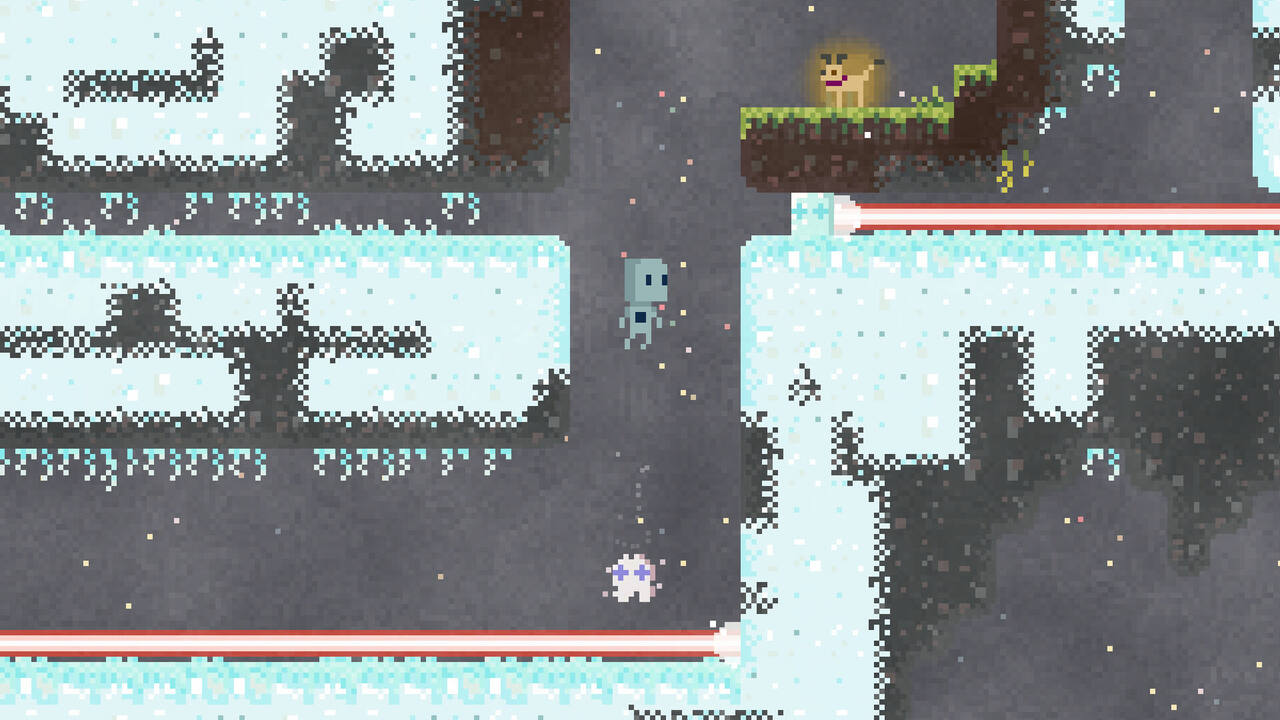
Progress is entirely spatial and logic-driven. You cannot brute-force your way through these environments with twitch reflexes. Instead, you must carefully plan where to trigger your next collapse, systematically building a bridge out of your own failures to reach the exit. It is a wordless experience; there is no dialogue or text to explain the world’s rules. Instead, the game relies entirely on visual cues, shifting art styles, and consistent, mechanical logic to teach you how to survive. To keep you grounded in this stark, surreal environment, you are accompanied by a dog of your choice, serving as a guide, a source of comfort, and a silent motivator as you work your way through the darkness.
What Players Love (and Where the Gears Grind)
Players who have followed the game since its early public showcases have praised how much the experience has matured. Steam reviewers highlight that the transition from prototype to full release has brought significant visual upgrades, featuring beautifully improved animations and an atmospheric soundtrack that perfectly matches the quiet, reflective tone of the journey. The game captures a compelling “just one more level” feeling, drawing players in with simple mechanics that quickly evolve into deeply clever spatial puzzles.
Crucially, the puzzle design is incredibly fair. Unlike many puzzle platformers that rely on “cheap” tricks or demand pixel-perfect execution, the puzzles here always have a clear, logical solution. Reviewers note that they never felt forced to look up external guides; the answer is always right there in front of you, waiting to be deduced. This makes every breakthrough feel earned and intellectually satisfying.
However, this focus on pure logic is exactly where some players might hit a wall. Because the game lacks action-heavy workarounds, your progress is entirely gated by your spatial reasoning. While the developer has implemented near-instant resets to encourage rapid experimentation, the trial-and-error nature of the puzzles can occasionally feel repetitive if a particular layout doesn’t immediately click. If you are not in the mood to sit, reflect, and carefully parse a mechanical system, the loop of failing and restarting can feel taxing rather than therapeutic.
The Verdict
This is a deeply thoughtful, beautifully executed puzzle game that respects your intelligence. It takes a heavy, abstract theme—the exhausting cycle of repetitive struggle—and turns it into something gentle, clever, and deeply rewarding. At a highly accessible price point, it offers a polished and memorable evening of brain-teasing challenges.
If you love spatial puzzles in the vein of games that make you stop, think, and sketch out a plan before touching the controller, this is an easy recommendation. And if the challenge gets too intense, you can always stop to appreciate your chosen canine companion, a small but brilliant touch of comfort in an otherwise stark world.
Key Facts
- Developer: Martin Zetterman
- Publisher: The Notlanders
- Release Date: May 12, 2026
- Price: $9.99